If you want to get better at sim racing, there is one setting on your car that has a huge impact on your performance: brake bias. Yet few sim racers really use this tool effectively. In this article, I will teach you step by step what brake bias is, how to apply it, and how you can benefit from it in different cars and situations - whether you drive a GT3, LMP2 or Formula car. I share my experience as an avid sim racer, give you practical tips and show you how small adjustments can make a world of difference.
What is brake bias?
Brake bias is the distribution of braking force between the front and rear wheels. This distribution is expressed as a percentage, e.g. 54% to the front and 46% to the rear. The higher the percentage, the more braking power goes to the front wheels.
Its influence is huge: it determines how stable your car is when braking, how much rotation you get in corners and how you can respond to changing grip levels. The beauty is: brake bias doesn't just work theoretically on paper - you feel it directly in your steering wheel and in your body. And that is precisely what makes it such a powerful tool for anyone who wants to improve every lap.
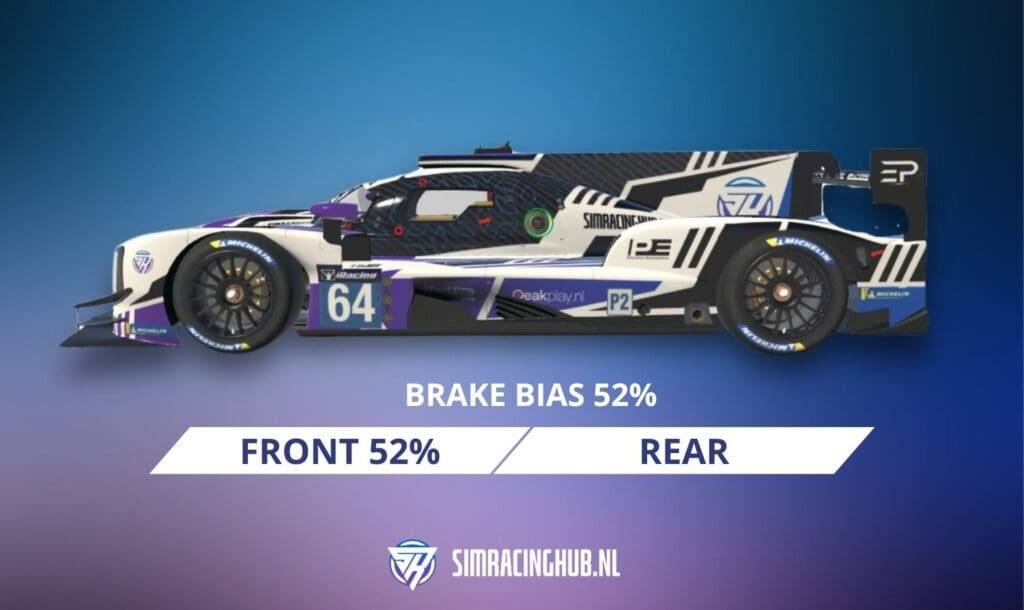
You can set brake bias in the setup menu before the race, but in all popular sims such as iRacing or Assetto Corsa Competizione, you can also adjust it while driving - a powerful tool to fine-tune your driving live.
Tip: Do you have a handlebar with six paddles? Then use the top two to move the brake balance. This allows you to make on-the-fly adjustments without taking your hands off the wheel. This is not only faster, but also safer and less distracting than a knob or rotary.
What happens if you shift the brake bias forward?
When you more braking power to the front wheels sends:
- The car becomes more stable when braking. The rear stays calmer, which prevents the car from breaking out.
- You get more understeer when turning in. The front end keeps wanting to go straight, so you might miss the apex.
- Braking distance gets slightly longer. Because the front wheels lose grip faster when overloaded, especially in low-grip situations.
Practical examples:
- First laps on cold tyres or in rain.
- In corners with low camber or with bumps in the braking zone.
- If you have a tendency for the rear to break out on hard braking.
In endurance races or stints with a lot of brand fabric, this is also often the safer choice, as you have more weight forward. A margin of error of 1% extra forward then provides much more peace of mind in the balance.
[affegg id=2]
What happens if you shift the brake bias backwards?
When you more braking power to the rear wheels sends:
- The car becomes more agile when turning. You can cut the corner more sharply.
- The car becomes more unstable. The rear end moves faster, which can lead to oversteer or spins.
- Braking distance can be shortened. Because the rear tyres participate more actively in deceleration.
Situations where this is useful:
- Short hairpins or corners that curve quickly towards the apex.
- Corners where you apply a lot of trail braking.
- If you are looking for just that little bit of extra rotation to gain a tenth in qualifying.
But: especially without ABS, this is a setting you need to build up slowly. Too far back causes rear wheels to lock up and possibly spin on braking. Especially in short-wheelbase cars like a Formula Ford or Radicals, caution is needed.
How brake bias affects your rotation
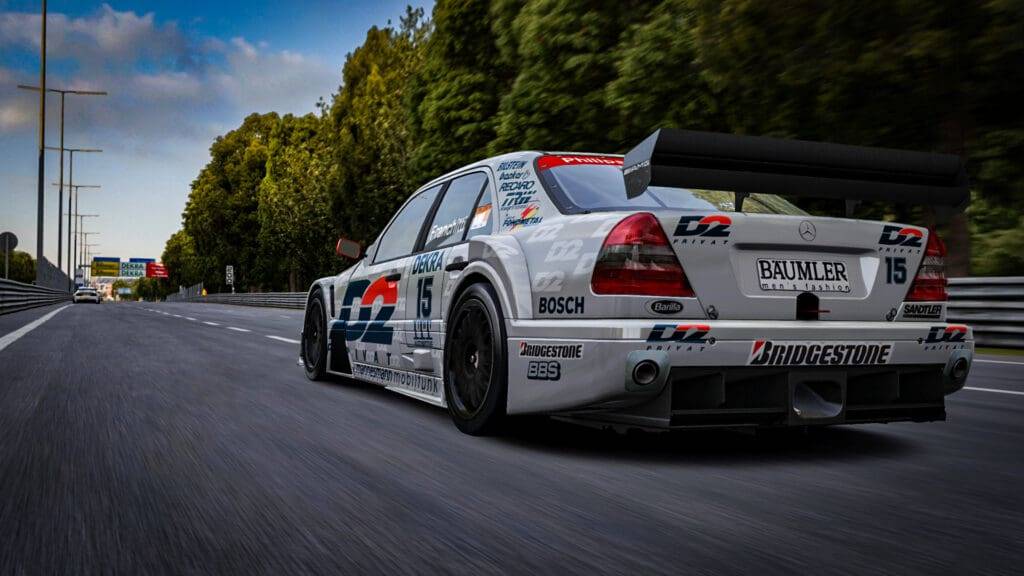
If you hold the brake pressure slightly while steering in when braking (trail braking), the brake bias literally determines how your car reacts to that transition moment. More rear bias makes the rear end want to turn slightly - as if the car is being ‘pulled’ into the corner. This gives extra rotation without having to give more steering input. Less steering input means less slip, and thus hitting the apex faster.
But here is also the risk: if you tip the balance, the rear will break out even before you enter the corner. This is the crucial balance you need to learn: just enough rear bias to push the nose into the turn without losing control.
Therefore, learn in small steps. Practice trail braking on a track you know well, adjusting -0.5% each time to feel the behaviour change. Drive 2 laps, return to standard, and compare rotation and braking distance.
Brake bias in different types of cars
Not every car responds the same to changes in brake bias. Aerodynamics, weight, braking technology and vehicle layout largely determine how sensitive the car is to adjustments in brake bias - and how to take strategic advantage of this.
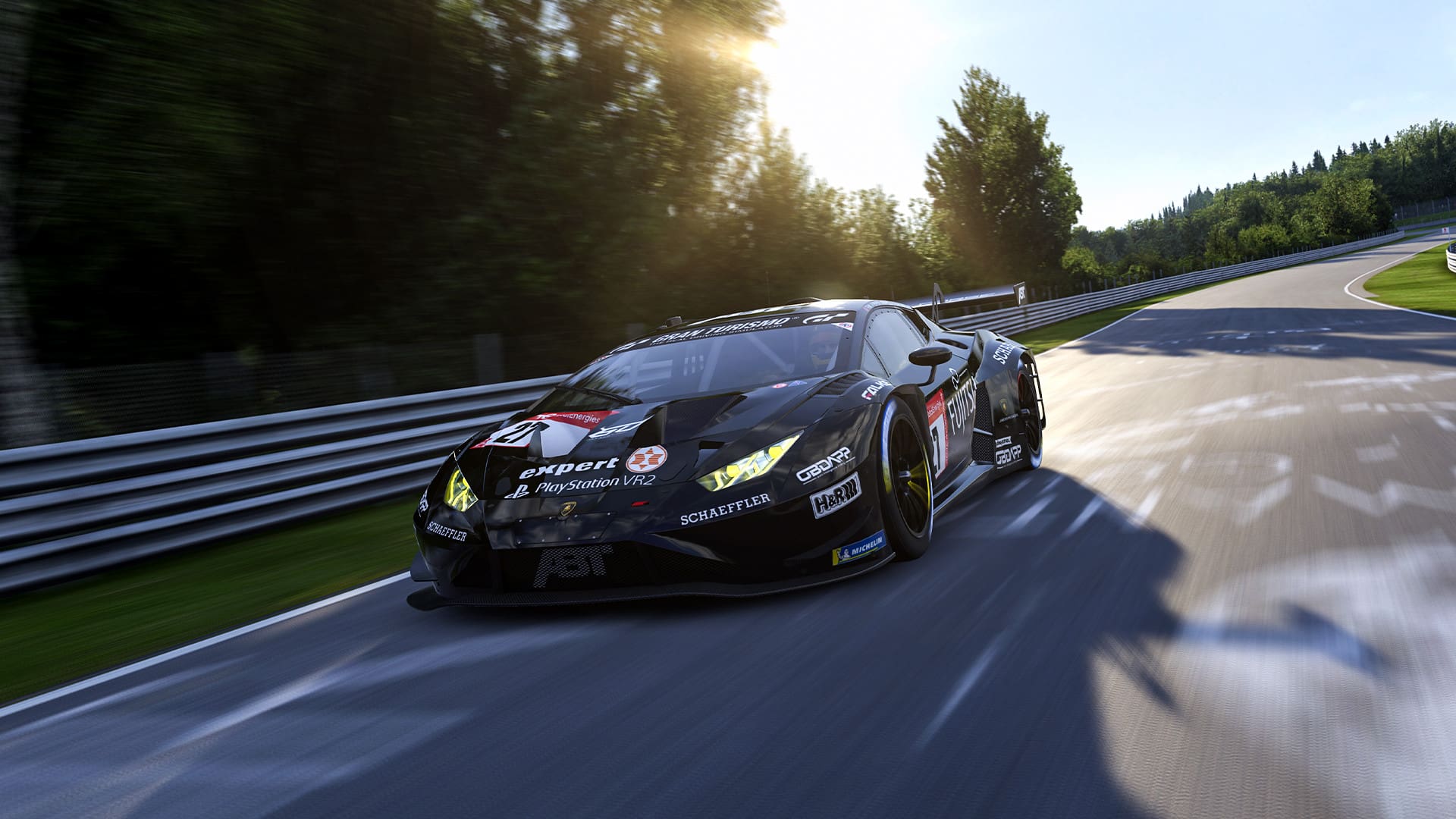
GT cars (e.g. GT3, GT4)
These cars are relatively heavy and almost always have ABS. This means that you have a bit more freedom in your bias without getting instantly locking wheels. A slightly more backward bias gives extra rotation, but you have to watch out for asymmetrical brake slippagetage or overheated rear brakes in longer stints. Brake bias in GT cars is mainly about brake confidence: the car should feel stable when braking in a straight line, but also not turn too slowly when you steer in with brake pressure.
Summary:
- Mostly relatively neutral in balance.
- Brakes mostly with ABS, which gives a little more room for adjustments.
- Use brake bias to create confidence when braking hard or steering in.
- Typical range: 53% - 56% forward.
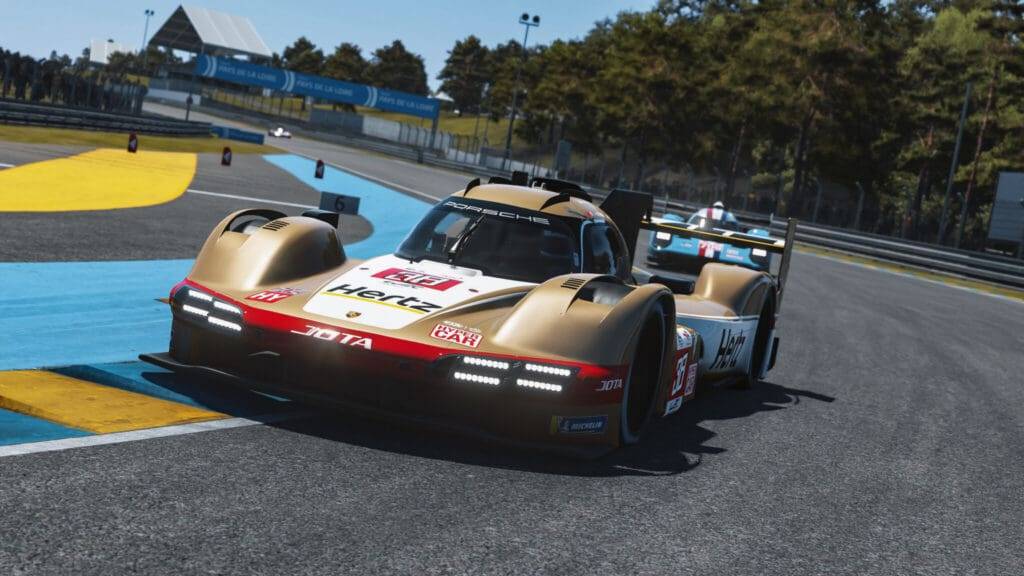
Prototypes (e.g. LMP2, LMDh)
These cars are extremely sensitive to aero and weight distribution. At low speed, where downforce disappears, a slightly too aggressive rear bias can cause instability. But at high speed, you can actually benefit from more rear bias to induce rotation in turnarounds or fast entries. Here, brake bias is a tool you have to learn to use almost corner by corner. Prototypes punish mistakes immediately, so every click counts.
Summary:
- React extremely sensitively due to aerodynamics and weight.
- Low speed = less downforce = instability with too much rear bias.
- At high speed, rear bias can actually help improve rotation.
Formula cars (e.g. F3, F4, F1)
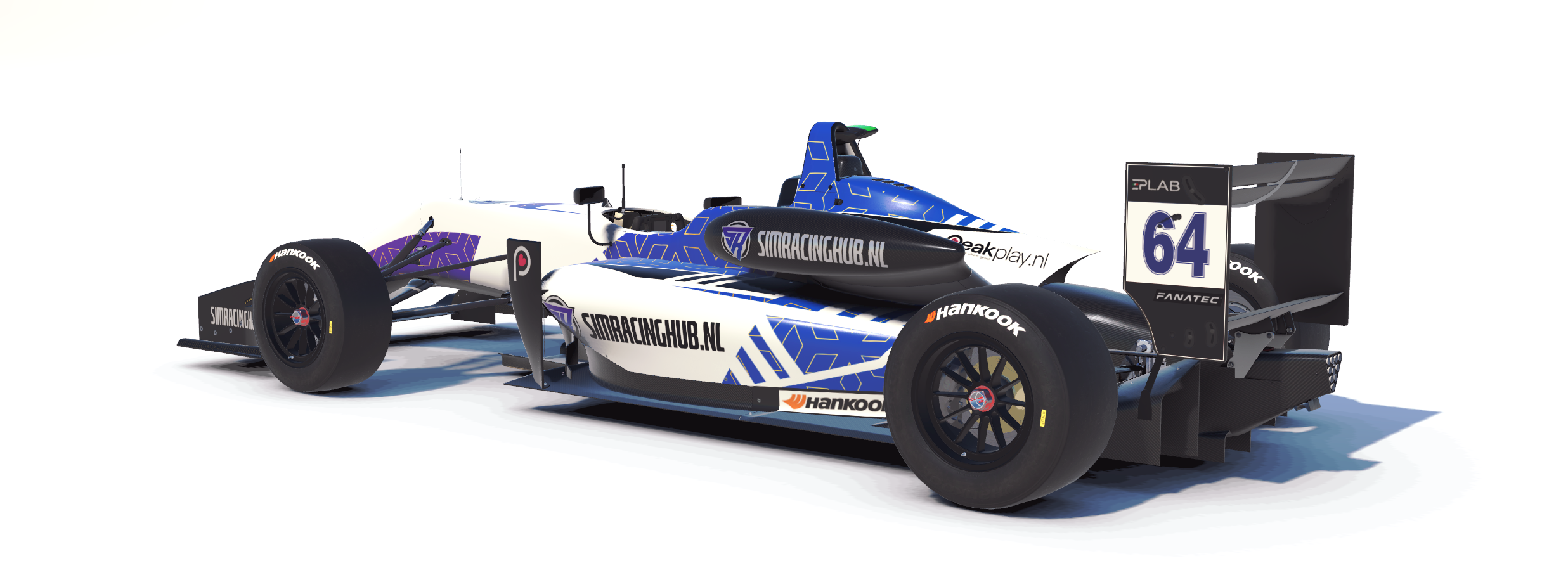
Here it is all about trail braking and finesse. The adjustment of brake bias here is more an extension of your technique than a setup parameter. In F1, it is not unusual to choose different settings per corner via dynamic bias mapping. In the sim, you can partly mimic this with shifters or encoders. The lower your bias, the more the car wants to turn when braking - and that's golden in technical sectors like Sector 2 of Spa or the first sector of Barcelona.
Summary:
- Trail braking is essential, so brake bias determines cornering behaviour.
- Large differences between circuits and brand fabric weights.
- Many F1 cars even have dynamic brake bias mapping that changes per corner.
Note that a brake bias of 60% in iRacing means something different from 60% in ACC. Simulation logic differs from platform to platform. Learn the basics in one sim, but don't be surprised if it feels different in another.
Practical use while racing
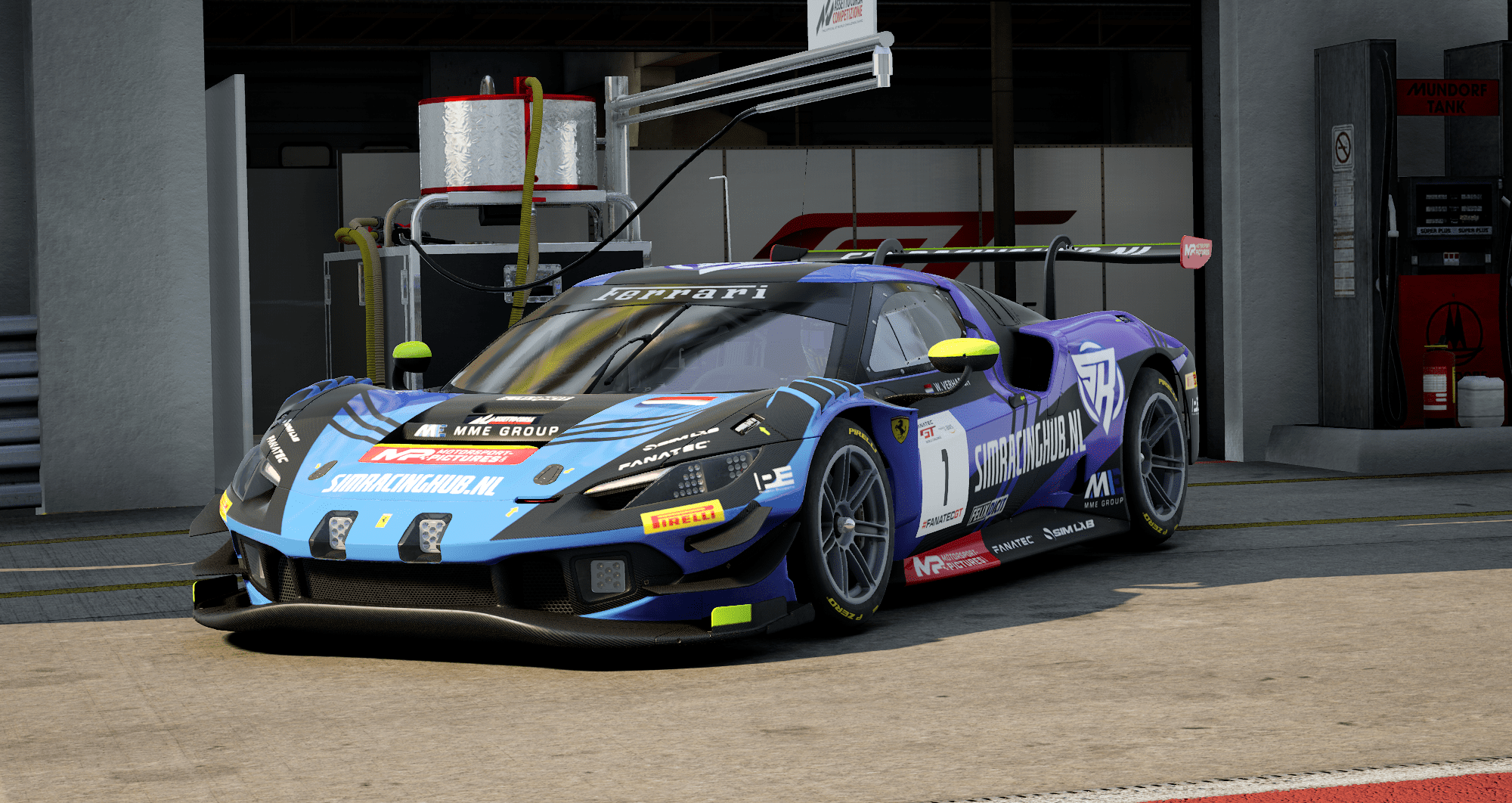
Brake bias is often the only adjustment point in fixed setup races. Yet many drivers only use it when things ‘go wrong’ - when you should be using it pre-emptively. Think ahead.
My established approach:
- Race start: +1% forward for rest and traction.
- Sharp sectors: back to standard, or -0.5% for rotation.
- Push rounds / hotlaps: up to -1.0% backwards for maximum rotation, provided the car remains stable.
- Last stint with old tyres: slightly forward again for control.
Bring structure to how you use brake bias. Don't let it be something arbitrary - treat it just like your racing line or throttle input.
Checklist: when and how do you adjust brake bias?
- Want more rotation in turn entry? Try -0.5% backwards.
- Is the rear end restless when braking? Set the bias slightly forward.
- Are your tyres warm and stable? Then you can experiment with rear bias for faster lap times.
- Rain, cold tyres or downhill braking? Opt for conservative front bias.
- Are you in a fight or driving defensively? More front bias prevents mistakes.
- Are you pushing for a fast sector? More rear bias helps with aggressive steering, provided you maintain control.
Impact on tyres, brakes and balance
Brake bias not only affects your handling, but also has a subtle impact on the technical balance of your car. On longer stints, for example, the temperature of your tyres can become unbalanced. A common example: left rear gets hotter than right front. This is no coincidence - it has to do with how you brake, and which wheels do the most work.
By consciously playing with your brake bias, you can keep these temperature differences in check. Especially in endurance races or stints with lots of turns to one side, cleverly distributing the brake bias can help keep the weartage and temperature more even.
In addition, the balance of the car changes during the race. As you consume brand dust and the car becomes lighter, the centre of gravity shifts forward - and so does the grip ratio between front and rear wheels. The rear becomes more sensitive, especially during braking. This calls for a subtle shift of the brake bias forward to maintain control and avoid oversteering.
Therefore, pay attention to the following signals and effects:
- Asymmetric brake loads can lead to uneven tyre weartage.
- Small imbalances in balance become increasingly visible as the stint progresses.
- The ideal brake bias shifts continuously and is rarely static during a race.
In short: brake bias is thus not a one-off setting, but a dynamic part of your race that constantly requires adjustment and can vary from corner to corner. Take advantage of this!
Advanced tips and racing insights: brake bias as a refined tool
How do you use brake bias as a strategic tool? You need to see brake bias no longer as a static setup value, but rather as an active tool that you can deploy in the flow of each stint to make decisive difference. This not only increases your racecraft, but also your race intelligence.
Braking at altitude: understanding uphill and downhill dynamics
Braking zones on sloping sections, such as the iconic Corkscrew at Laguna Seca or the steep Raidillon at Spa-Francorchamps, change the way weight displacement occurs. What seems like a stable brake balance on a flat section can suddenly feel nervous or cumbersome here. On slopes, the centre of gravity shifts more aggressively, leading to changes in balance. In situations like this, it helps to consciously choose a temporary adjustment to your brake bias - or a compromise setting that remains workable over the entire lap. This also applies to compression or crest turns.
Strategic application in racing battles
During a duel, your mindset is different than during a qualifying lap or a quiet stint. If you drive defensively, you often opt for a slightly forward braking balance. This prevents oversteer and increases control, especially when you are under pressure and want to avoid mistakes. But when you are putting pressure on your opponent, a slightly backwards bias can generate more rotation in corner entry. This allows you to brake just a little later or steer tighter - exactly what you need to make the difference. So deliberately set brake bias as a race craft tool, adapted to your position on the track.
Refining trail braking by track and corner type
Trail braking - continuing to brake while steering - is an advanced technique that requires a lot from your sense of balance. How you adjust brake bias accordingly is essential. A car that responds well to trail braking often benefits from a slightly lower front bias. This increases rotational capacity without the rear end breaking out immediately. But it's a fine line: too much rear bias results in oversteer or spins, while too much front bias makes you inert and slow in technical corners.
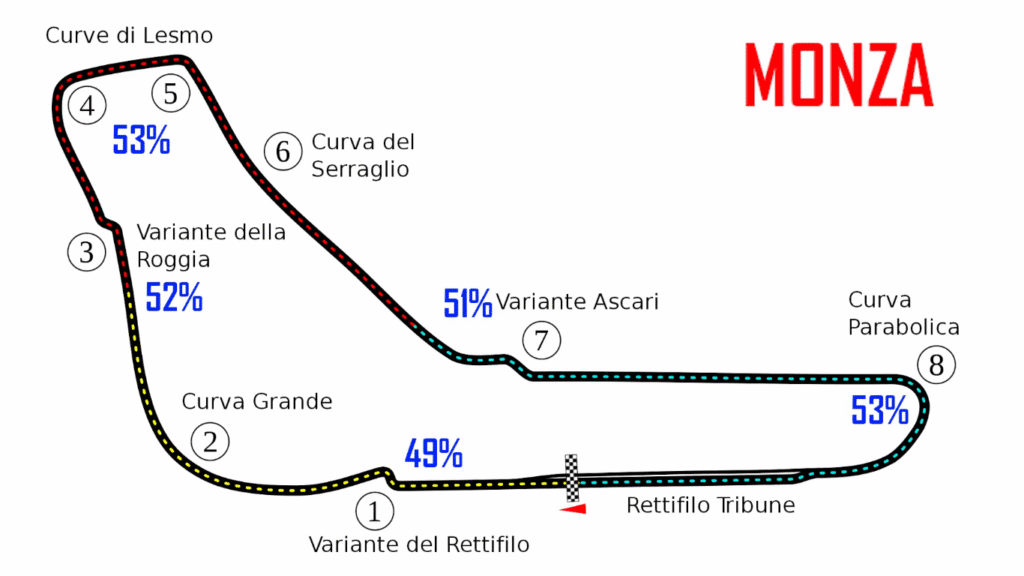
At tracks like Imola or Zandvoort, where trail braking occurs several times a lap, it pays to brake a little more backwards than you would as standard. Experiment per corner and feel where the sweet spot is: just enough rotation without the risk of instability. The difference is often in nuances of 0.5%.
Common mistakes when using brake bias
- Excessive adjustments: +2% or -3% all at once makes behaviour unpredictable.
- Forgot to reset bias after tricky corner - resulting in a spin 3 corners later.
- Blind reliance on defaults.
- Responding to error rather than anticipating behaviour.
Learn to listen to what your car is saying. If you feel a locking wheel or you consistently miss the apex - it is probably a sign that your bias is just wrong.
Conclusion: summary advice on brake bias use
Brake bias is one of the most powerful tools you can use as a sim racer. It helps you continuously tune your car's balance to your own driving style, track and conditions. Whether you are looking for more stability or extra rotation - a small adjustment in brake bias often makes the difference between just off the apex or perfect steering.
- Start conservatively and get to know your default setting.
- Adjust in small increments: 0.5% to max 1% at a time.
- Be alert to changes in brand fabric weight and tyre temperature.
- Use brake bias as a racing tool, not a panic reaction.
- Test per circuit and per car what works - no value is universal.
By employing brake bias proactively and strategically, you make the step from “just riding along” to consciously faster driving. It gives you control, confidence and speed - and these are exactly the ingredients you need to improve yourself structurally.
Learn to feel what your car needs. Play with it, experiment and use it as an extension of your driving technique. Want to keep getting tips like this? Follow SimRacingHub.nl or download my eBook ‘Mastering the Art of Sim Racing‘.
Download the ebook now and become a better sim racer
- From beginner to competitive racer
- Useful tips
- Practically applicable
Have any thoughts?
Share your reaction or leave a quick response - we'd love to hear what you think!
-
 0
0
-
0
-
0
-
0
-
0
-
0


 Nederlands
  Deutsch
  English (UK)
  Français