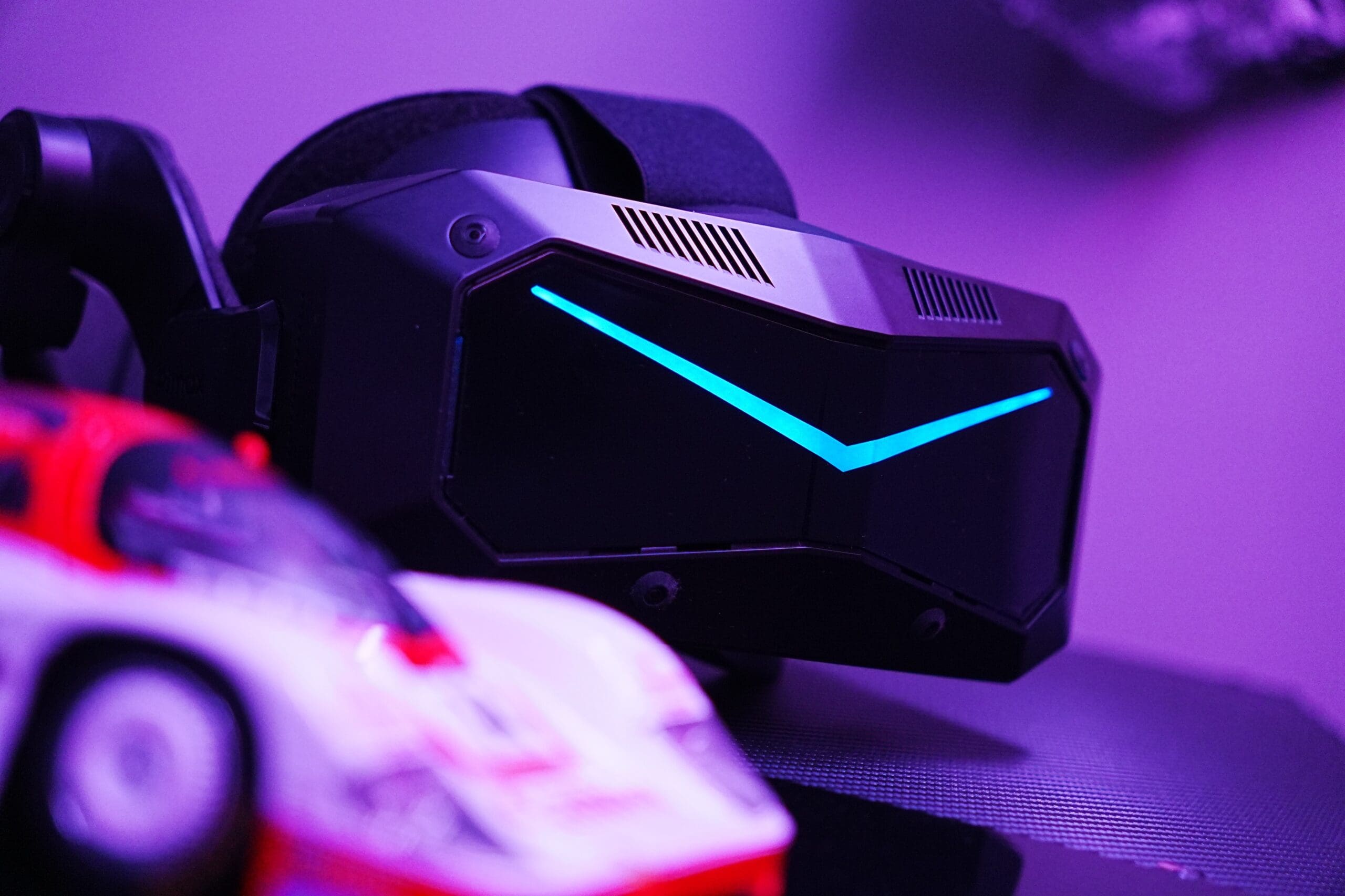
The Pimax Crystal Super is the latest high-end VR headset from Pimax and promises to be a big step up from its predecessors. With impressive resolution, optional eye-tracking, modular design and a hefty price tag, this headset clearly targets the avid sim racer and VR enthusiast who doesn't want to compromise. But does the Pimax Crystal Super those promises true in practice?
In this comprehensive Pimax Crystal Super review I take you through my personal experiences with the Pimax Crystal Super within my own sim racing cockpit. I compare it directly to the previously tested Crystal Light and list all pros and cons. So that this will really help you when making your choice. We also dive into the technical specifications, the user experience and the software - with a critical eye and always with practice as our guide. Who is this headset for? And more importantly, is it recommended for sim racing? After reading this review, you will have the answer to this question!
Disclaimer: This headset was offered for review purposes by Pimax to test extensively for several months. It is worth noting that Pimax has in no way influenced the content or my opinion in this review.
- 3% OFF
 simracinghubCopied
Exclusive Discount On Your Pimax Crystal Super
- Resolution: 3840 x 3840 per eye
- Refresh rate: 72 / 90 Hz
- IPD & eye tracking: Automatic, with foveated rendering
- Lenses & FOV: Aspherical glass, up to 138° FOV with local dimming
- Refresh rate: 72 / 90 Hz
- IPD & eye tracking: Automatic, with foveated rendering
- Lenses & FOV: Aspherical glass, up to 138° FOV with local dimming
- Local dimming: QLED + Mini-LED display
Unboxing & first impressions
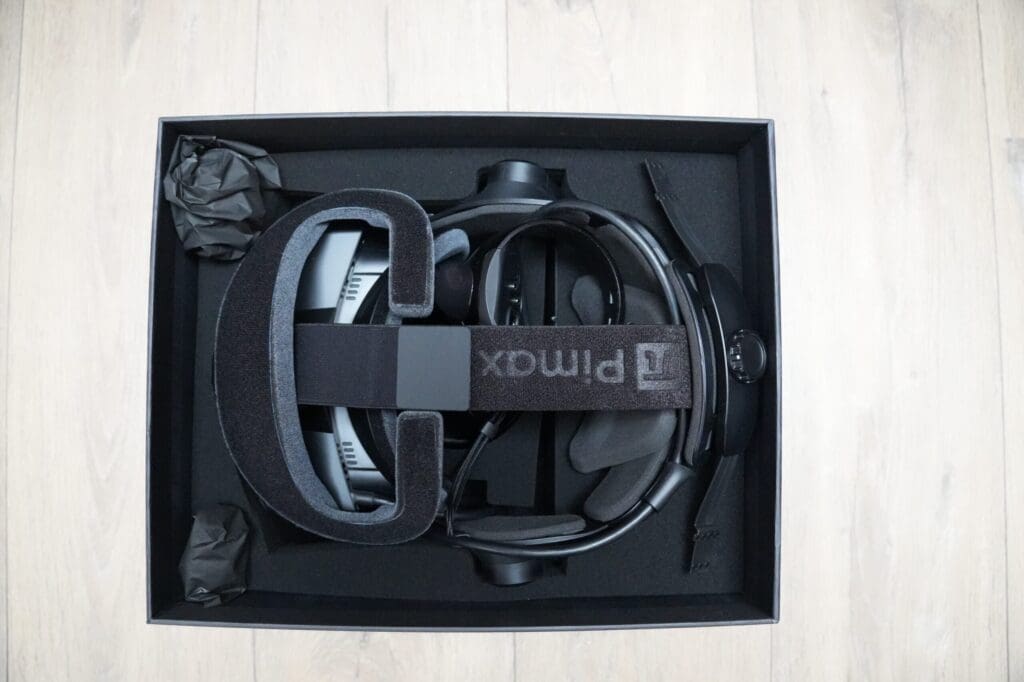
The Pimax Crystal Super arrives in a nice big, sturdy and matte black box with plenty of protection around the headset and accessories. The whole thing looks premium and stylish. The presentation is minimalist but functional - no fuss, but everything neatly packaged. Inside the box we find:
- The Pimax Crystal Super headset
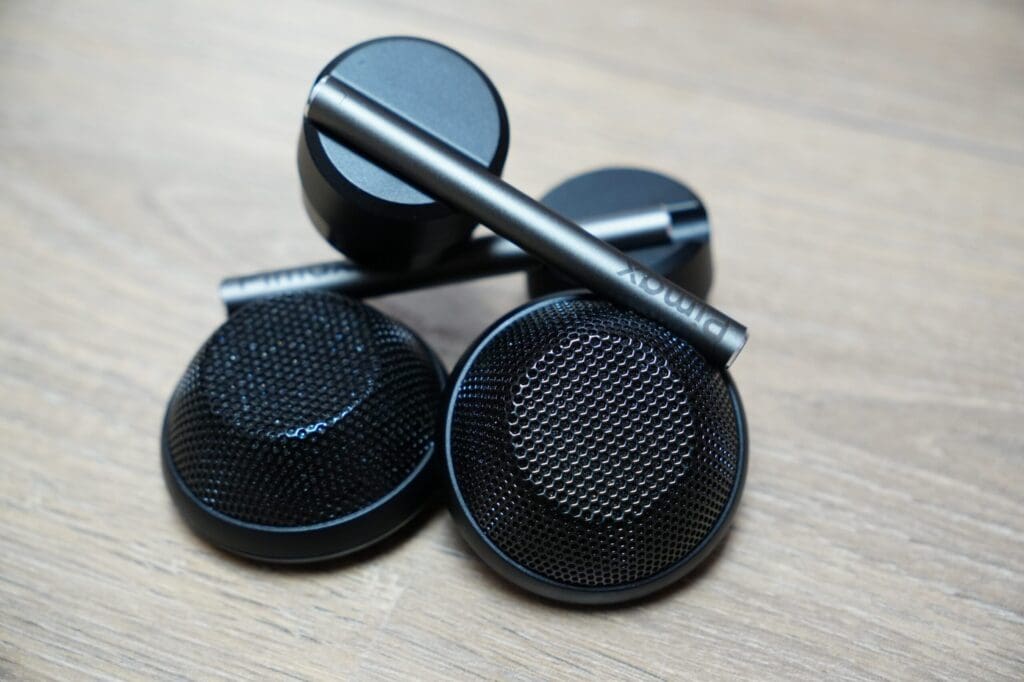
- Additional DMAS earphones
- Power adapter
- DP cable + USB cable
- Facial interface + additional foam
- Manuals & quick start guide
What is immediately noticeable upon unpacking is the weight. This headset feels solid and robust - heavier than the Crystal Light. The finish is sleek and modern, with matte black elements and sturdy connectors. The whole thing oozes quality, even if that means it also comes with a slightly heavier overall package.
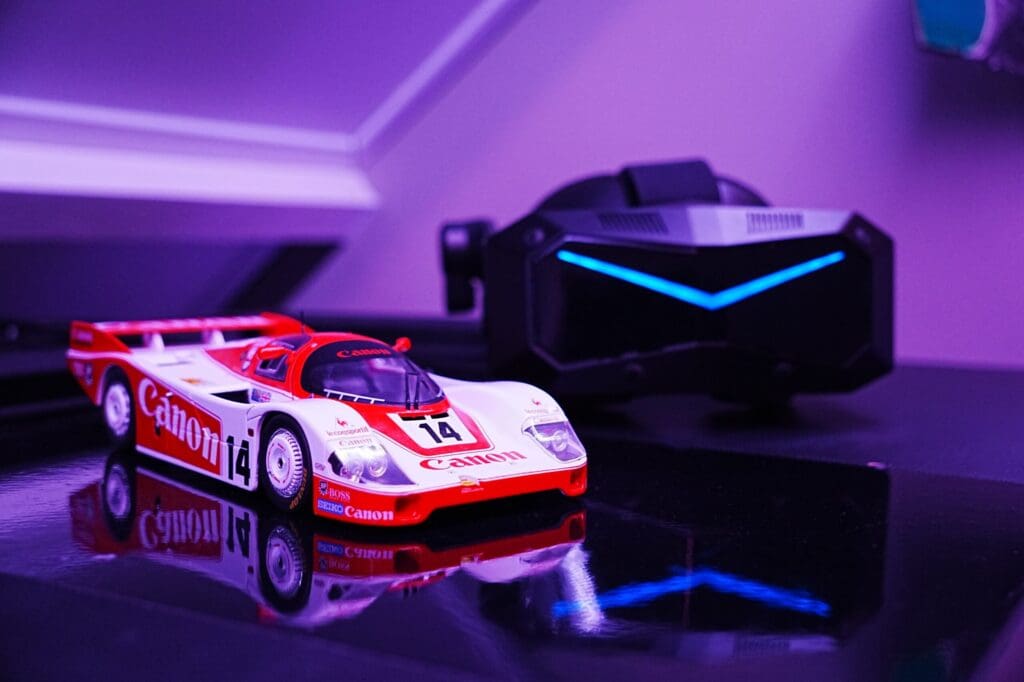
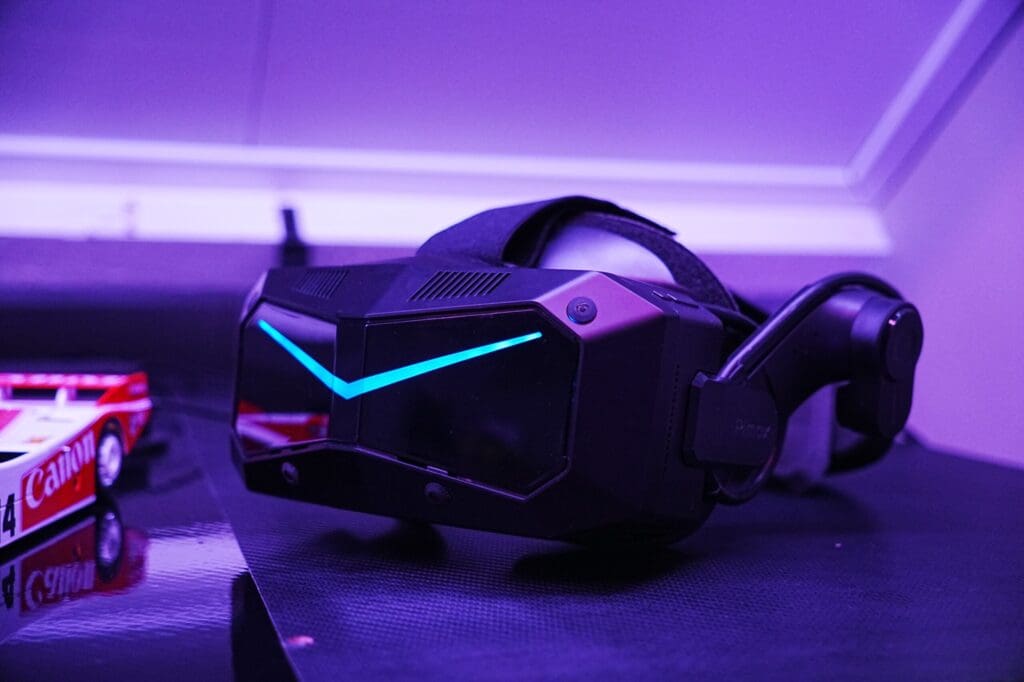
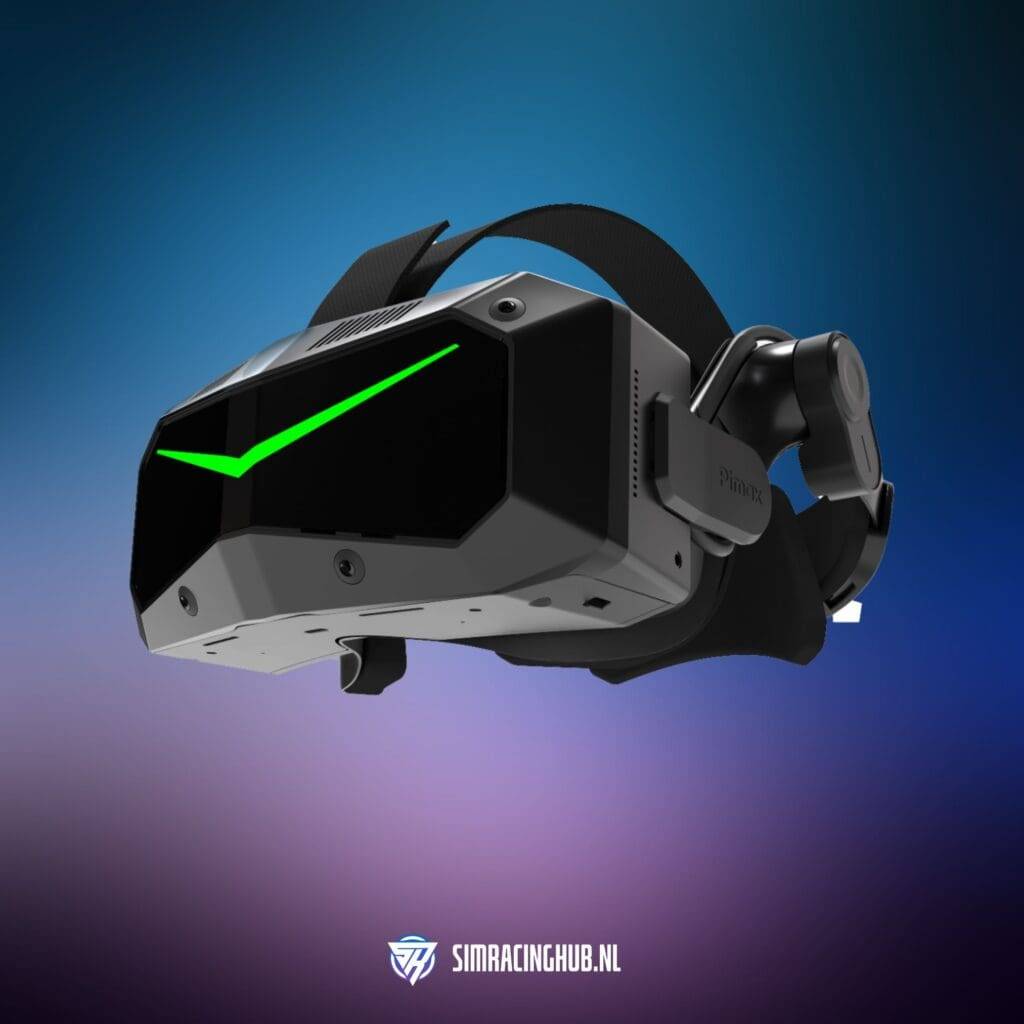
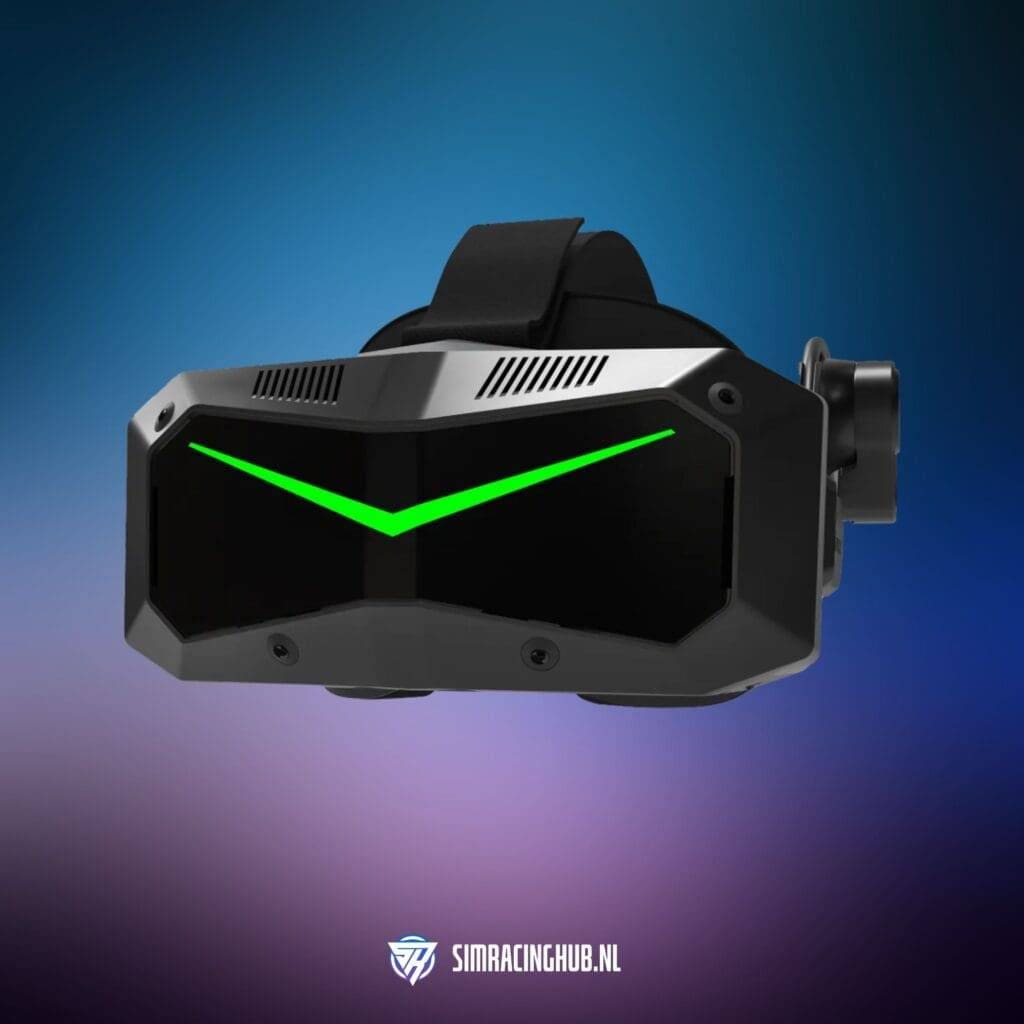
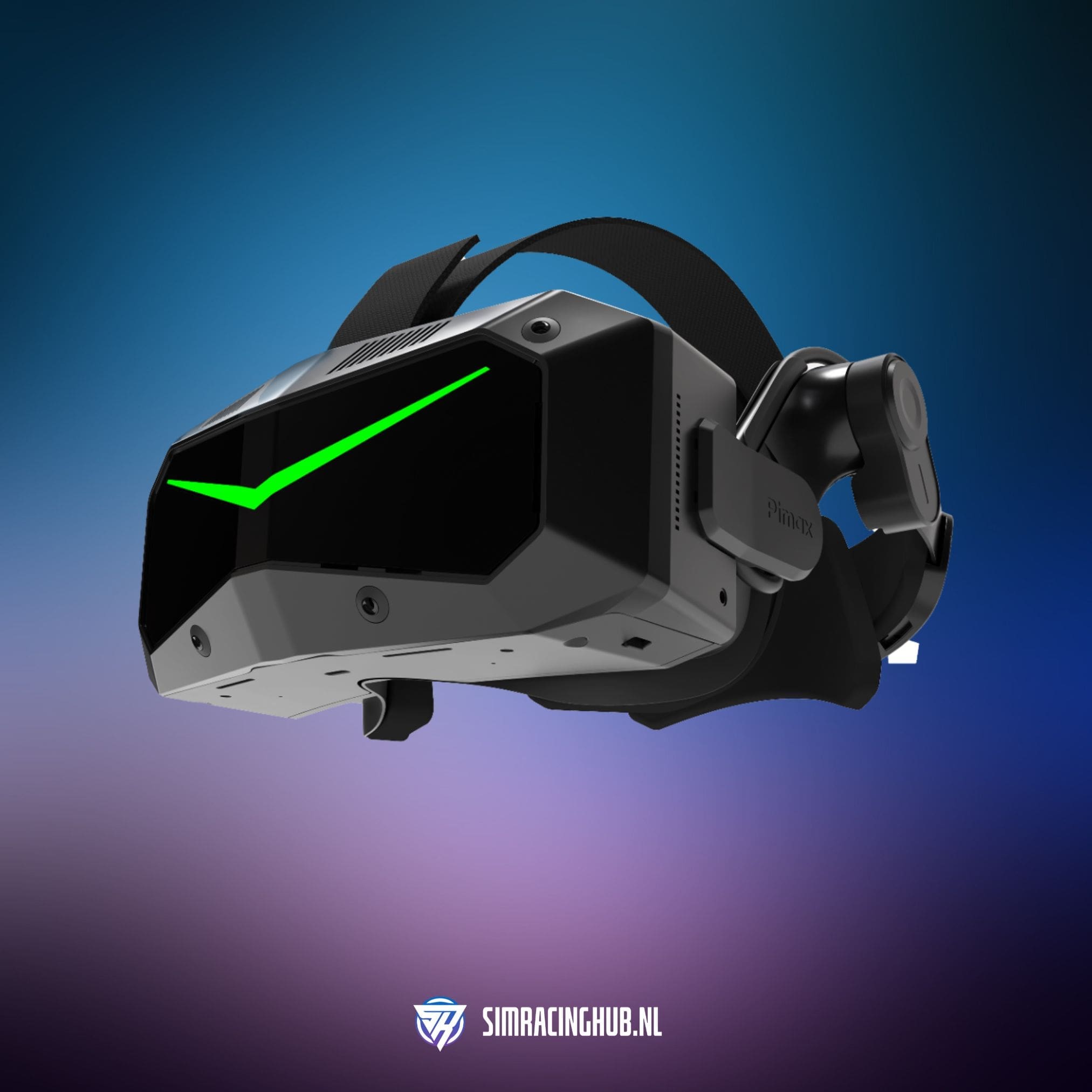
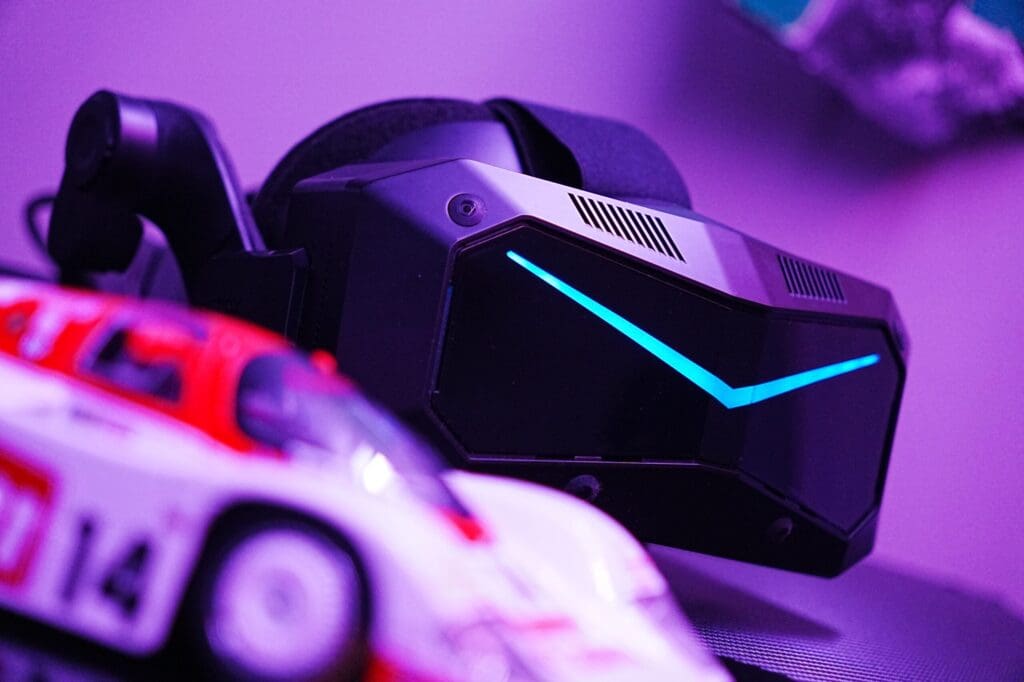
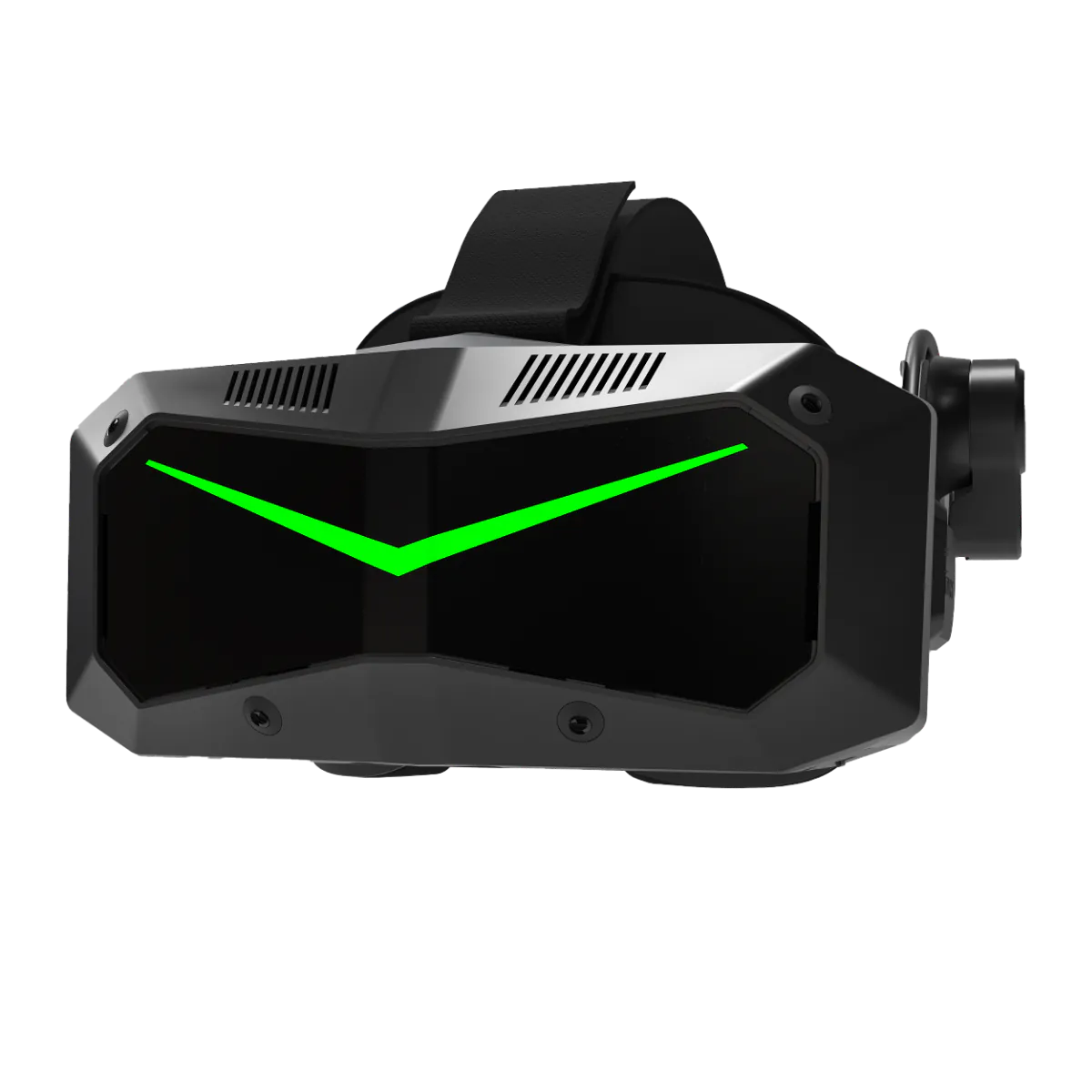
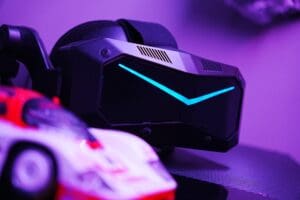
The design looks futuristic, with a premium and stylish look that would not be out of place at many sim rigs. It is not a minimalist headset like, say, the Meta Quest, but rather a no-nonsense tool focused on performance. The front looks beautiful without a doubt, especially with the luminous Pimax logo.
Installation & compatibility
Installing the Crystal Super is largely smooth. You connect the headset via the included DisplayPort and USB cables, install the Pimax Play software and you are basically ready to use. Keep the following in mind, though:
- You need a solid GPU (at least RTX 3080 or similar)
- The headset requires a separate power supply - so you have another extra adapter in your cable management. For sim racers, an absolute nightmare! Haha.
- Additional drivers/modules are required for the full eye-tracking and inside-out tracking experience
In my cockpit (a Sim-Lab P1X with 4090 and i9-13900K), the Crystal Super basically worked pretty well, although I had to manually update firmware and fine-tune settings to get the headset to perform properly. Pimax's open ecosystem gives you a lot of freedom, but that comes at a price: more settings, more features, but also more hassle. Finding the right balance between image quality and performance requires a lot of trial-and-error - both in the Pimax Play software and in your sim's settings. But more on that later.
What makes it extra frustrating is switching between triple monitors and VR. Every time I want to sim race, I have to consciously choose: do I go for triples or VR? In my small attic space with sloping roof, that means crawling behind my simulator, unplugging cables, pulling out DisplayPort from two monitors and plugging in the VR headset. A real hassle. And yes, this is not directly down to Pimax, but it makes the barrier to using VR just too high in my situation. As a result, I opt more often for convenience - and thus for my triple screen setup.
What does the Pimax Crystal Super cost?
Let's make no bones about it: the Pimax Crystal Super is definitely not a cheap headset. This is high-end VR for the serious user and that is reflected in the price. It is good to realise that just the Super won't get you there. If you want to get the most out of this next-gen headset, you will also need a high-end PC. All in all, the costs add up!
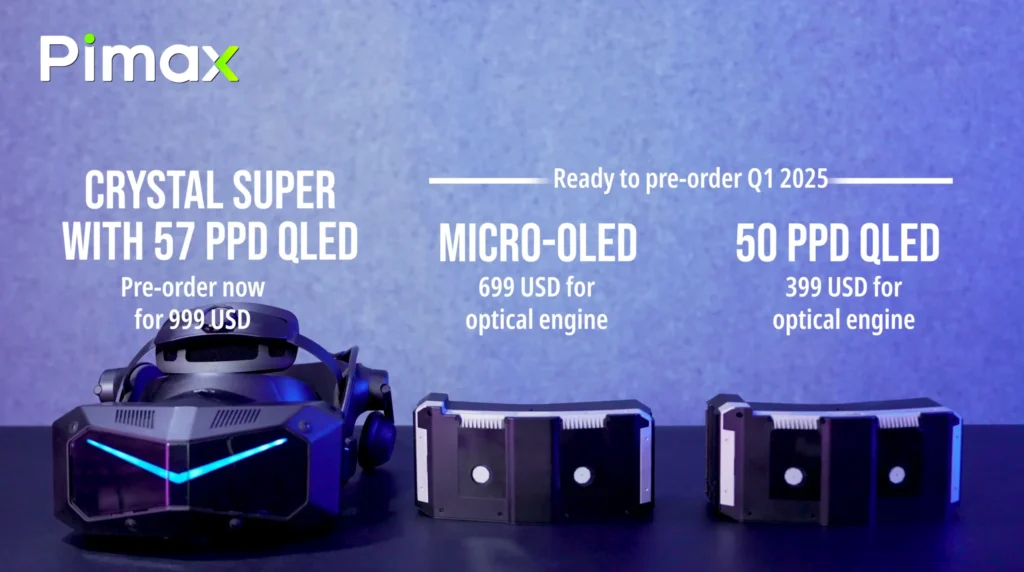
Pimax offers the Crystal Super in four different variants:
- Pimax Crystal Super 8K Micro-OLED - € 2.031
- Pimax Crystal Super QLED 50 PPD - € 1.588
- Pimax Crystal Super QLED 57 PPD - € 1.588
- Pimax Crystal Super QLED Ultrawide - € 1.588
Please note that delivery time varies by model. Some versions are available immediately, while others have a longer wait. Current availability can be found on the Pimax website.
Different payment options
Two payment options are available. You can pay the full amount in one go, or opt for a staggered payment: an initial payment of €726 and a second payment of €862 after a 14-day trial period. A clever ’trick’. This lowers the threshold slightly, but it is obviously still a hefty investment.
Upgrade to Pimax
In addition, Pimax often offers discounts for existing customers. Do you already have an original Pimax Crystal? Then you will get $399 discount. For owners of a Pimax Crystal Light, $200 discount is available. These discounts can be offset against the base price via the Official promotion and upgrade programme of Pimax. In addition, Pimax regular interesting Flash Sales, Where you get lots of perks!
Not for everyone - but brilliant if you know what you're doing
At the same time, you do get something special in return for that amount: one of the sharpest images I have ever seen in VR. In terms of resolution, colour reproduction and sharpness, it surpasses anything I've tested before - including the standard Crystal and Varjo Aero. The immersion this headset offers is unprecedented.
The Crystal Super therefore emphatically targets a niche market: the serious sim racer or gamer with a high-end system, who knows what he is doing and is willing to get the most out of his setup. For that target group, this is not overkill, but an investment that pays off immediately on screen.
Pimax Crystal Super
The Pimax Crystal Super is the flagship within Pimax's new generation of VR headsets. In this chapter, I will take you through the key features, performance and technical specifications of this headset. What makes the Crystal Super unique? How do image quality, comfort and tracking compare to other high-end headsets? And as a sim racer, what can you really expect when using it? Below you will find a detailed analysis as well as a clear list of all specifications of the tested model.
Specifications
- Platform: PCVR
- Resolution: 3840 x 3840 per eye
- Pixels per degree (PPD): 50 PPD
- Display: QLED (optically interchangeable engine)
- Refresh rates: 72Hz / 90Hz
- Field of view (FOV): 127° horizontally, 138° in Labs mode
- Lens material: Glass
- Lens type: Aspherical
- Tracking mode: 6DoF inside-out tracking (expandable with Lighthouse)
- IPD (interpupillary distance): Automatically adjustable (58-72 mm)
- Foveated rendering: Dynamic (version 2.0)
- Eye tracking: Optional via module
- Weight: approx. 845 g (headset only)
- Audio: Internal speakers (optional), 3.5mm jack, 2x microphone
- Compatible with DMAS audio module: Yes
- Controllers: 2 supplied as standard
This combination of specs ensures that the Crystal Super effortlessly rivals - and in some ways exceeds - other headsets in the premium segment such as the Varjo Aero or the Bigscreen Beyond.
Build quality & finish
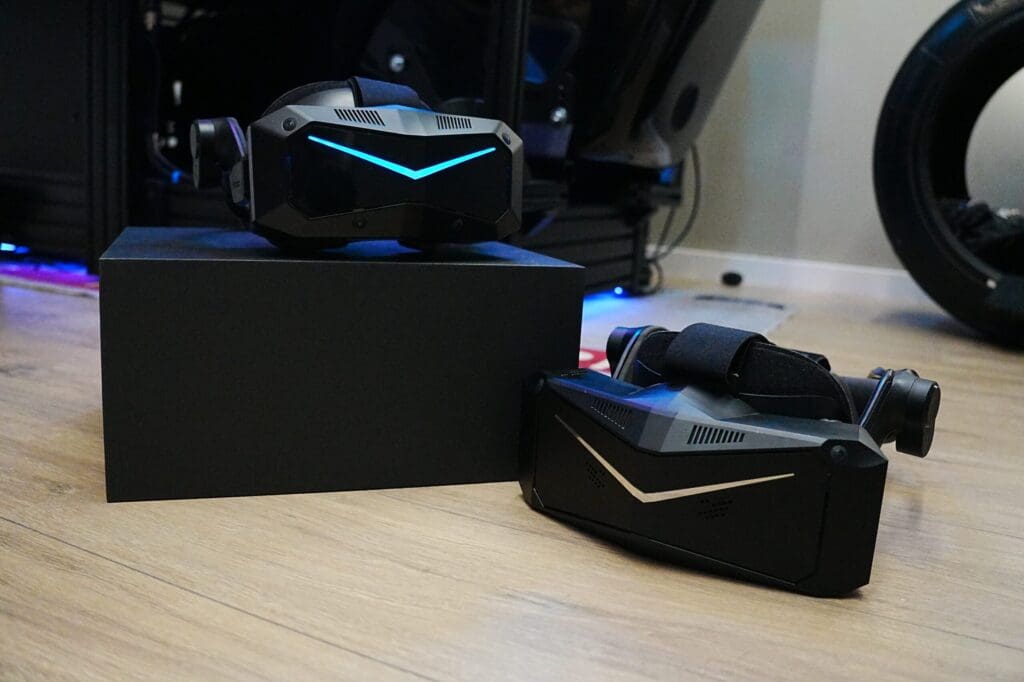
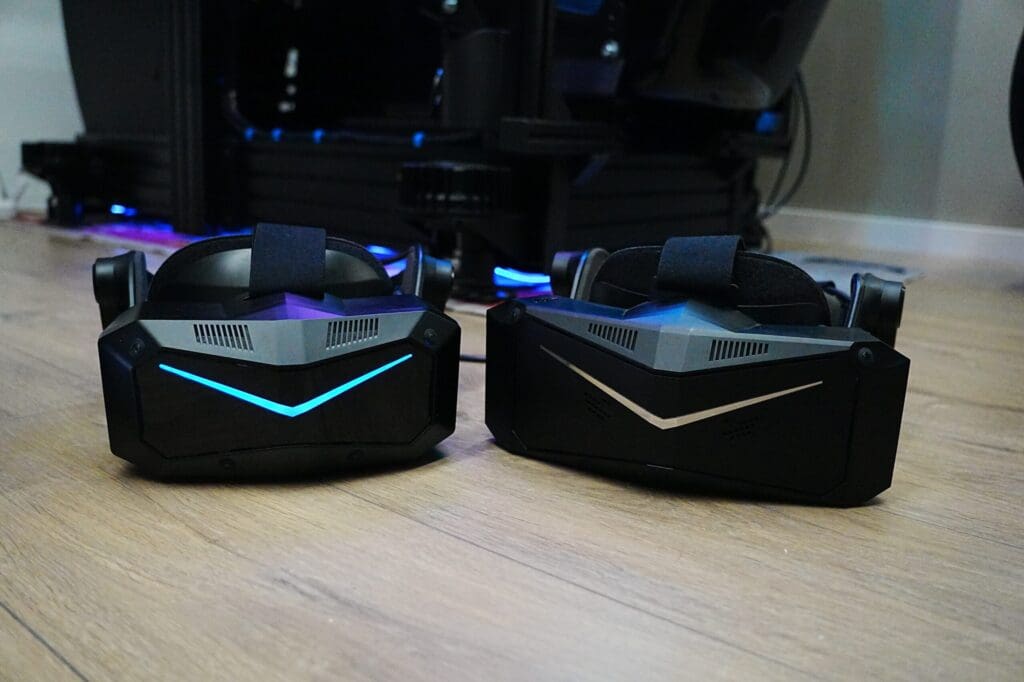
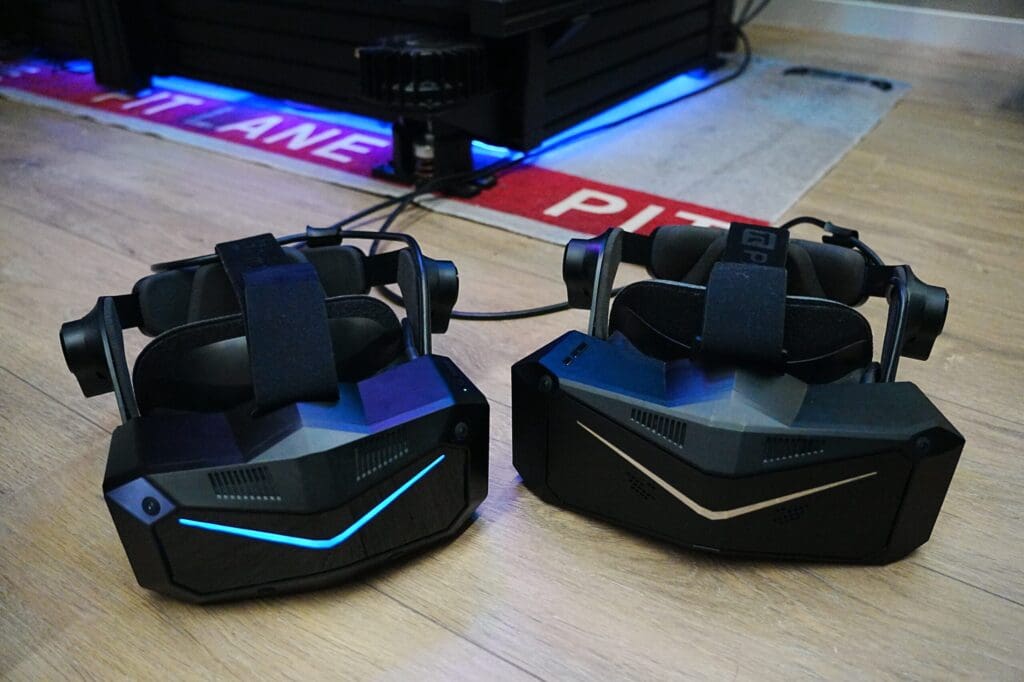
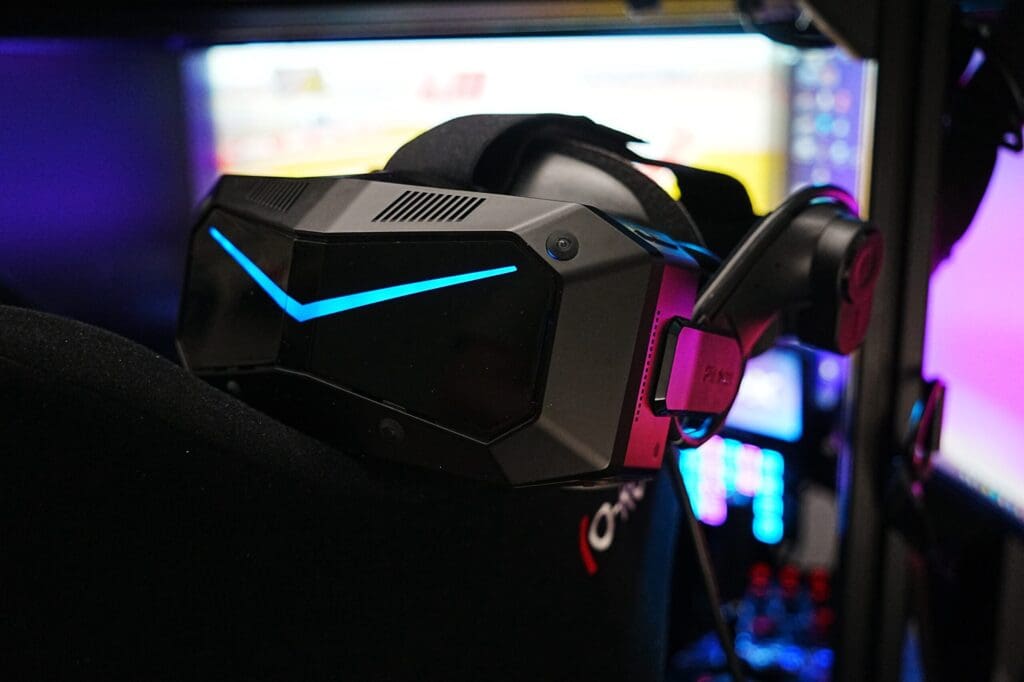
Pimax has clearly taken a solid and durable approach with the Crystal Super - and you notice it as soon as you take the headset out of the box. The housing is made entirely of solid plastic with a slightly textured finish. No exotic materials like metal or carbon, but a finish that feels solid and absolutely does not look cheap. On the contrary, I find it stylish with a quality feel. The front panel with the luminous Pimax logo finishes it off. It looks futuristic and feels like a serious piece of hardware that belongs in a premium sim racing setup.
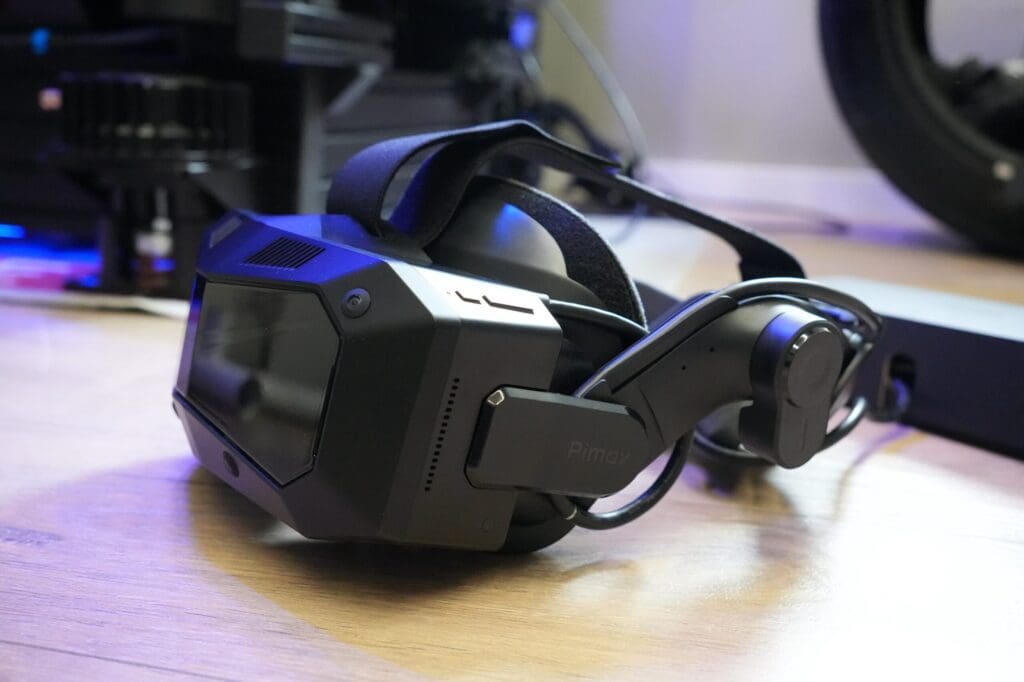
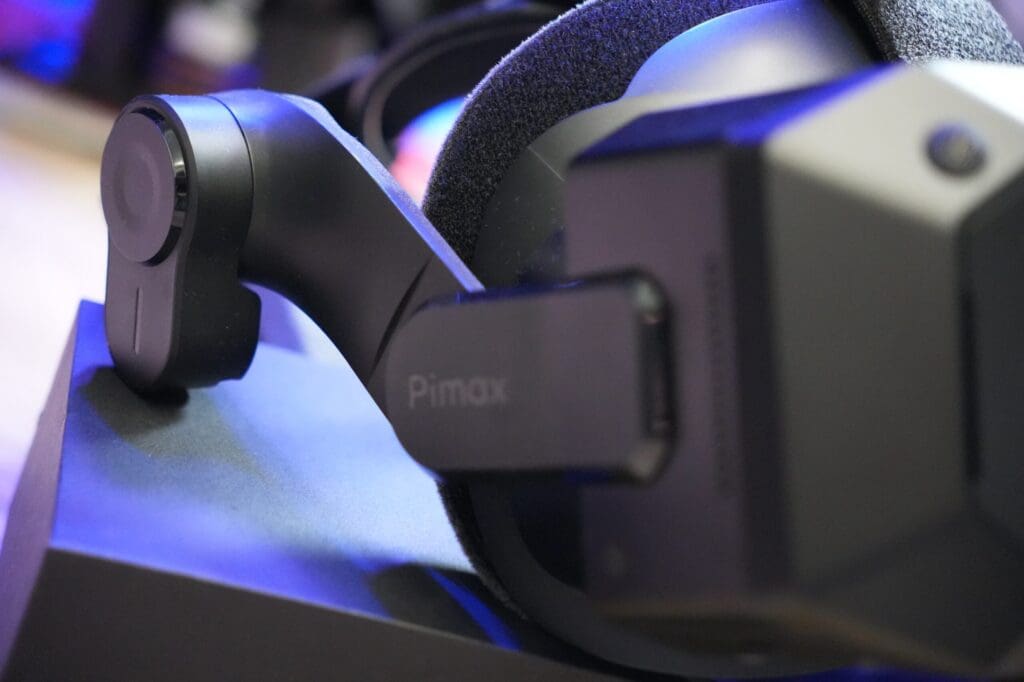
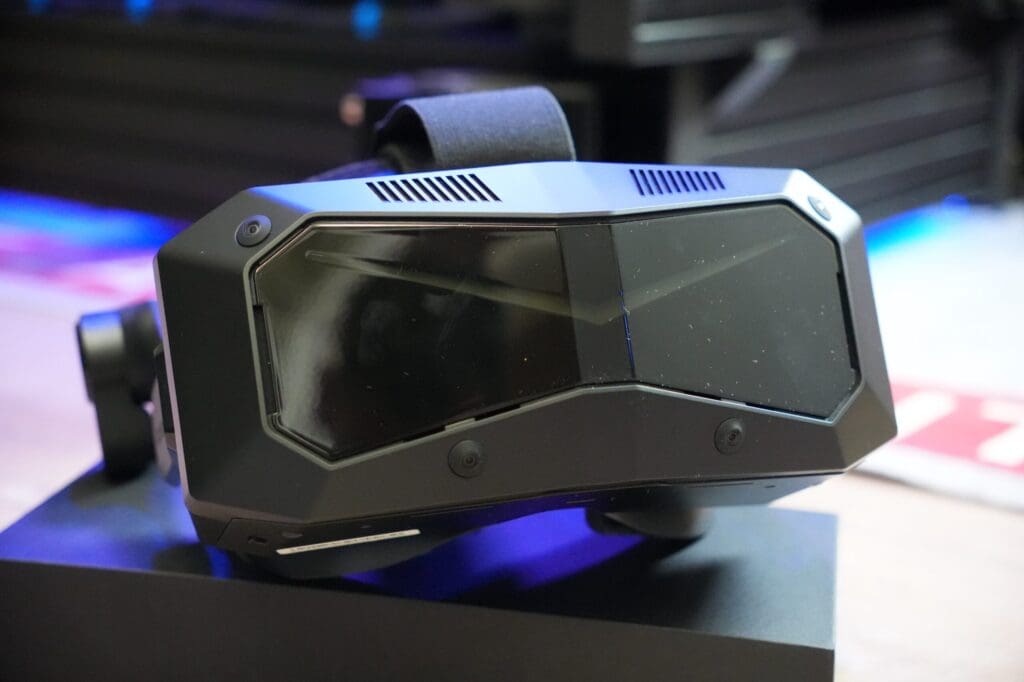
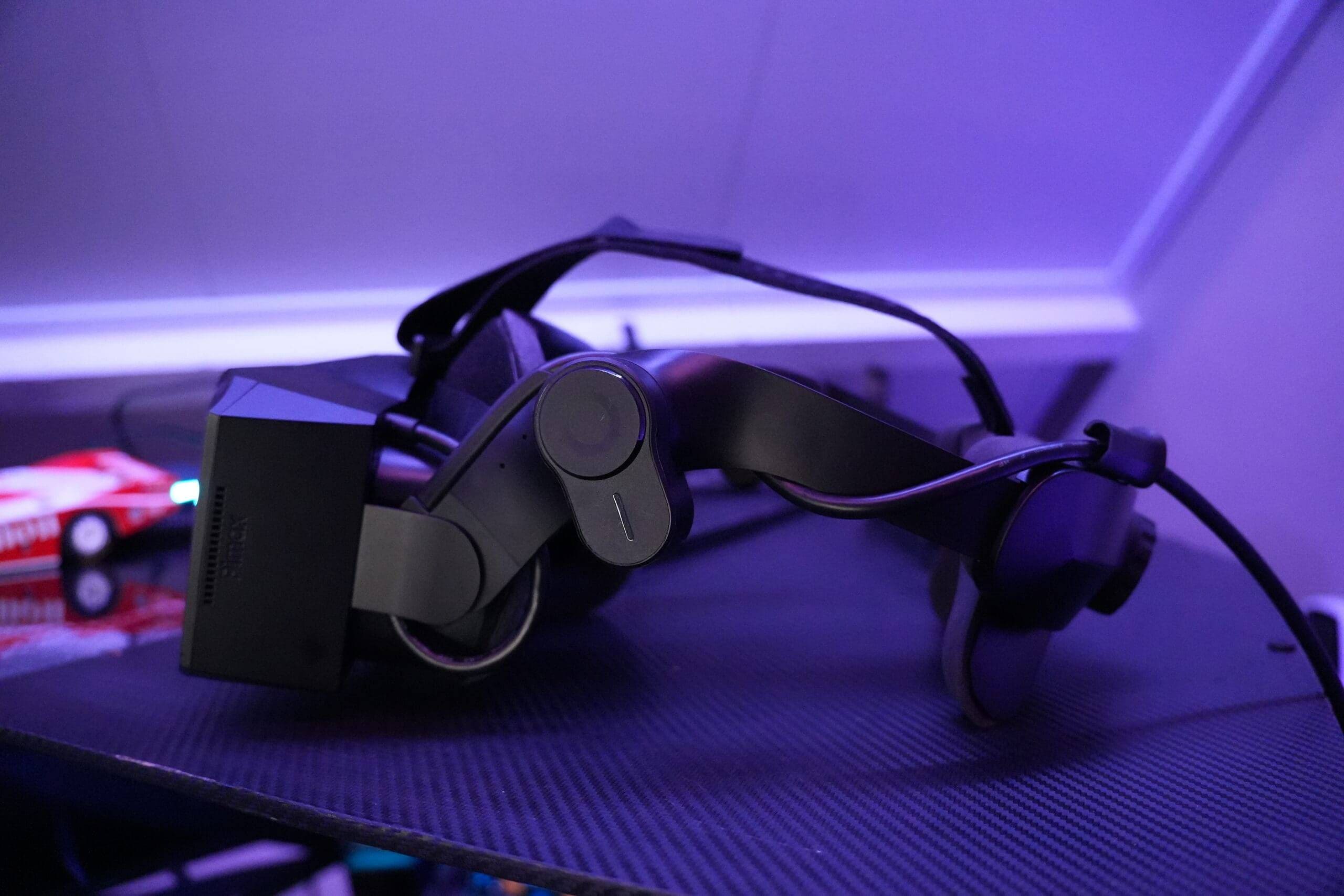
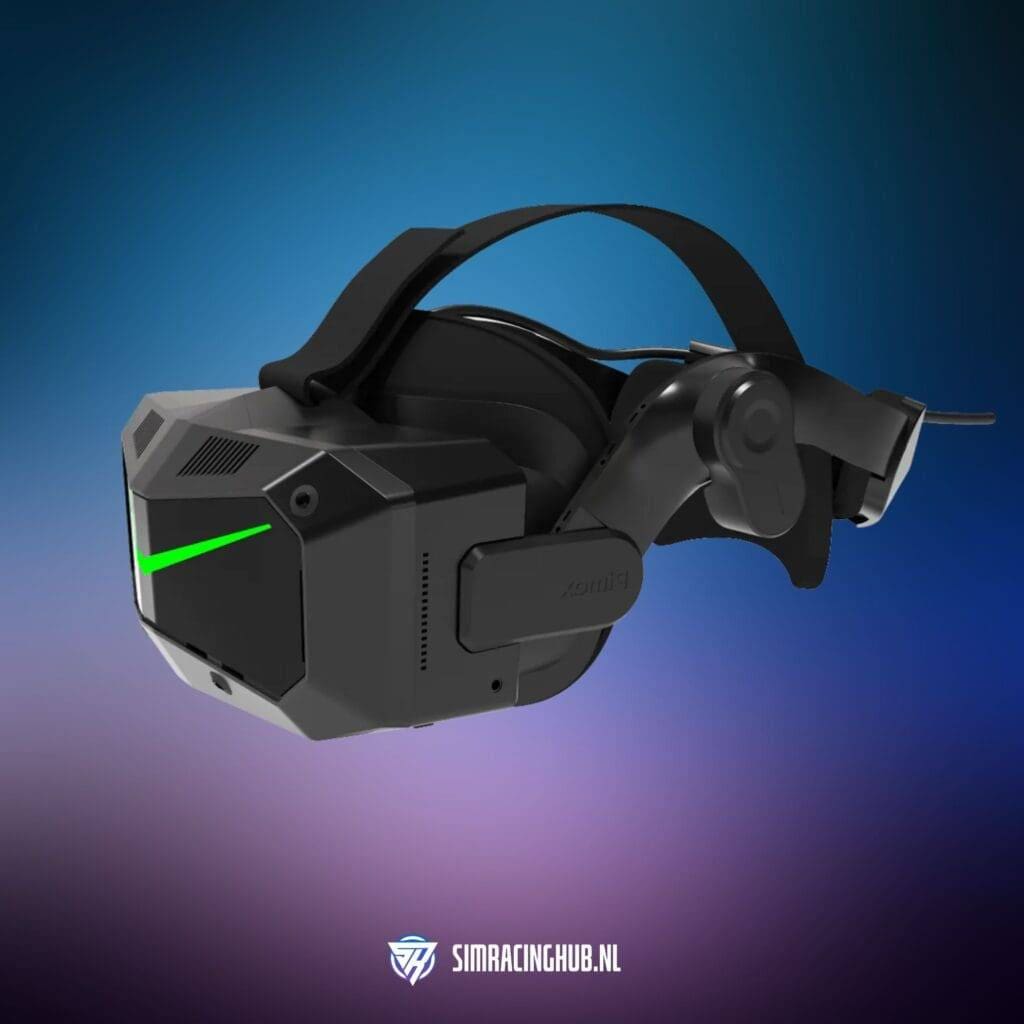
The adjustable strap is robust and offers great flexibility. The rotary knob on the back makes it easy to adjust the fit, even during use. The weight distribution is cleverly done: despite the hefty weight of around 815g, the headset never felt overly heavy during my racing sessions. Because you sit still in a sim rig and don't make any major physical movements, that extra weight weighs less in practice. Literally and figuratively.
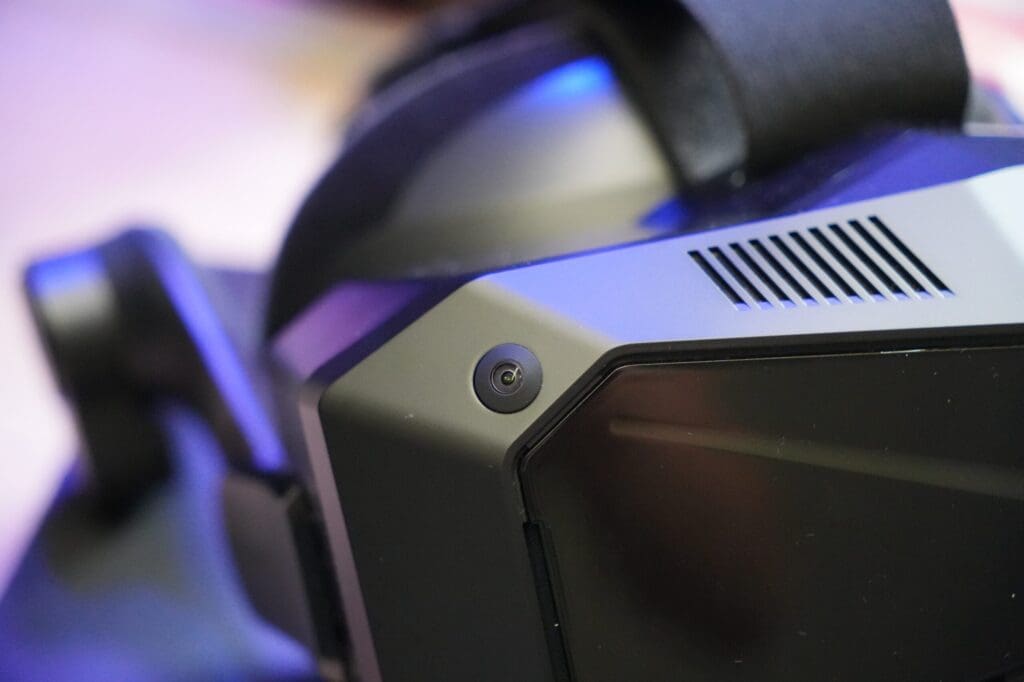
What struck me personally is the attention to detail in the finish. The internal vents are subtly concealed without losing their function. The facial interface attaches magnetically - that clicks securely and just feels right. No wiggling or creaking, as I have had with previous headsets.
And yes, if you put the Crystal Light and Super side by side, you can really see a difference. Pimax seems to have finally learned from earlier criticism: the finish has become a bit more consistent, sleek and professional. The whole product exudes more maturity and reliability. And that is exactly what you expect - or rather, should expect - in this premium segment.
Ergonomics & ease of use
The Crystal Super surprised me positively in terms of comfort, especially considering its relatively high weight. The headset feels sturdy, with good weight distribution thanks to the solid strap that distributes the weight neatly over your head. You'd expect such a hefty headset to quickly become tiring during longer sessions, but it's not too bad. Still, it remains not the ideal choice for sim racing setups with a headrest. In my O-Rouge Cold Fusion C2 I regularly bump the headset against the side of the seat while racing. With the Crystal Light, this was even more annoying - it was even bigger - but even with the Super, the problem has not disappeared. Especially in compact cockpits with wide or hard headrests, it remains an irritation.
The facial interface sits snugly and comfortably. The soft foam fits nicely to your face and distributes pressure without annoying pressure points. However, it does seem to get dirty quickly due to sweat and wear out quickly as a result.
By the way, one thing I did notice: there remains an opening near your nose where some light comes through. In a dark sim room, this might not be immediately disturbing, but during the day or in bright ambient lighting, it is definitely annoying. You are unconsciously drawn to it all the time anyway, which detracts from the immersion. For a headset in this segment, I would have expected this to be better resolved.
But, and this is a major setback for me personally, as soon as the environment gets too hot - like in my cockpit with a closed sim racing roof - the lenses fog up anyway. This completely ruins the experience. Several times I had to pause a session because my body temperature got too high and the visibility just got too bad. Really frustrating. What strikes me is that I was much less bothered by this with the Crystal Light. I don't know exactly why, but it is a recurring problem with the Super.
Then another thing I can't ignore: the cable. Yes, it is long enough. But also thick, stiff and downright clunky. In my relatively cramped sim rig, it often literally gets in the way, especially when making quick movements with my head. This sometimes takes you out of immersion and is just irritating. It's not a new problem - I also suffered from this with the Crystal Light - but because the Super is heavier and your head moves slightly less freely, you notice it even more quickly. Unfortunately, this is probably an unavoidable drawback of wired VR headsets. But once you get used to wireless, this feels like a step backwards.
Functionality & performance
In terms of resolution and brightness, the Crystal Super still blows me away. The dual 3840 x 3840 QLED panels deliver a stunningly sharp image with deep blacks and razor-sharp details. Especially when reading small text on the dashboard or estimating braking points in the distance, you notice how ridiculously good this screen is. The image is crisp and feels rich and vibrant - exactly what you want in VR.
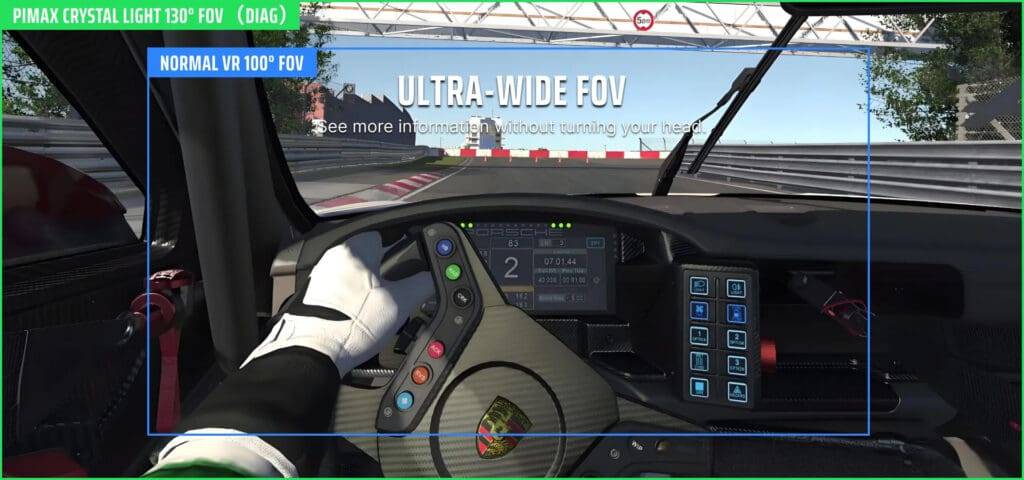
What I find really impressive is the edge-to-edge clarity. With many VR headsets, the image blurs at the edges, so you constantly have to turn your head to see things sharply. With the Crystal Super, this is not the case at all. From centre to edge, everything remains razor-sharp. That makes a huge difference, especially when sim racing in wider FOV settings or during endurance races where situational awareness is essential.
But... it's not all perfect. The refresh rate is a big bummer for me personally. The Crystal Super is limited to 90Hz, and that's just less than the 120Hz I'm used to from the Crystal Light. In sim racing, a high refresh rate is not a luxury, but a necessity. It affects how smooth the image feels, how quickly you process visual feedback and how reliable your inputs feel at high speeds. In VR, 90Hz simply feels just a little less stable - especially when making rapid steering movements or changing sightlines.
The consequence? I find that I occasionally lack confidence in crucial moments. And for a headset in this price segment, that feels wry. It's not a dealbreaker, but it is something that constantly plays in the background while racing. A missed opportunity, frankly - especially since the rest of the visual experience is SO strong.
Unique features & innovations
In many ways, the Crystal Super is a further development of the previously tested Crystal Light - but with upgrades in almost every area. What really sets this headset apart are a few unique features that you rarely find together in one VR headset. Below, I explain each of them.
QLED panels with insane resolution
The QLED panels deliver a resolution of 3840 x 3840 pixels per eye - good for a total of almost 30 million pixels. Combined with 50 to 57 pixels per degree, this makes for a bizarrely sharp image. The feeling of 'looking at a screen' disappears completely. Especially when reading small details in your dashboard or spotting braking points on long circuits, you notice the difference. It adds immensely to the immersion - especially if your FOV is tightly tuned. It is genuinely a very impressive experience!
What also stands out is the brightness: peaking at 280 nits, the colour range is vivid and intense, without unnatural saturation. Colours come to life beautifully, and contrasts - especially when combined with local dimming - provide extra depth in dark scenes. Especially when reading small details in your dashboard or spotting braking points on long circuits, you notice the difference. It adds immensely to the immersion. It is genuinely an impressive visual experience that you really have to experience for a while to believe.
Aspherical glass lenses with large sweet spot
The Crystal Super uses aspherical glass lenses with a remarkably large sweet spot. In practice, this means that the image remains sharp from edge to edge. You have much less distortion or blurred edges - something that still happens with many other headsets. This gives a calmer and more consistent image, especially during races with wide FOV.
Automatic IPD setting
A nice improvement over the Light is the automatic IPD (interpupillary distance) setting. Where before you still had to turn a wheel, the Super sets this between 58 and 72 mm by software. This works surprisingly smoothly and is a relief to know that this is automated. What I do find annoying is that this is set every time you put the headset on or take it off. Apparently the headset doesn't remember this distance, or I haven't been able to find it in the software yet.
Modular optical engines
What I personally think is a brilliant idea are the interchangeable optical engines. You can easily upgrade to, say, an 8K OLED engine or an ultrawide version - without tools. Switching is done in seconds and significantly extends the headset's lifespan. This is a rare flexible approach within VR and a smart move!
Dynamic foveated rendering via eye tracking
The internal eye tracking (120Hz) supports dynamic foveated rendering. The eye tracking itself runs at 120Hz, which helps with accurate positioning of your field of vision. Simply put, only the area your eyes focus on is rendered in full resolution. The rest of the image runs at lower quality to save GPU power. A smart move in theory, but in practice it depends heavily on software integration. So the potential is definitely there!
Local dimming with 1000 zones per eye
The Pimax Crystal Super features local dimming with as many as 1,000 individual zones per eye - compared to 576 with the Light. This ensures that dark scenes are rendered even more realistically. Especially at night races or when driving through shadowy sections of a track, you notice how deep the black is and how brightly light elements stand out against it. The increased precision in brightness control really adds to the experience - it feels like your eyes are adjusting to the light, just like in real life. During a nighttime stint at Le Mans or Spa, the difference is truly spectacular.
Variable refresh rate
You can choose between 72Hz and 90Hz, depending on your preference or the power of your PC. Although 90Hz is really the minimum for simracing, the choice does offer flexibility. For me personally, it remains a shame that the 120Hz of the Crystal Light missing here.
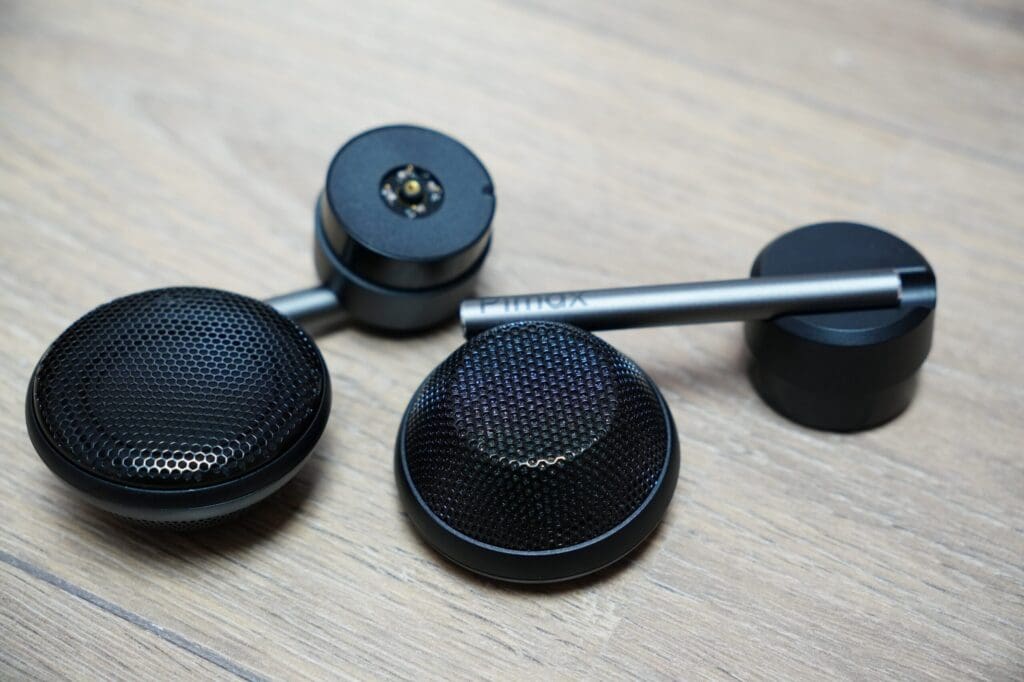
Audio: standard speakers or upgrade with DMAS
As standard, you get simple built-in speakers. These do their job well, but are not impressive. For sim racing, however, they are more than adequate. Fortunately, you can also easily upgrade to the optional DMAS modules. These not only sound fuller and cleaner, but also provide a much better positional audio experience - essential in races where sound helps you orientate.
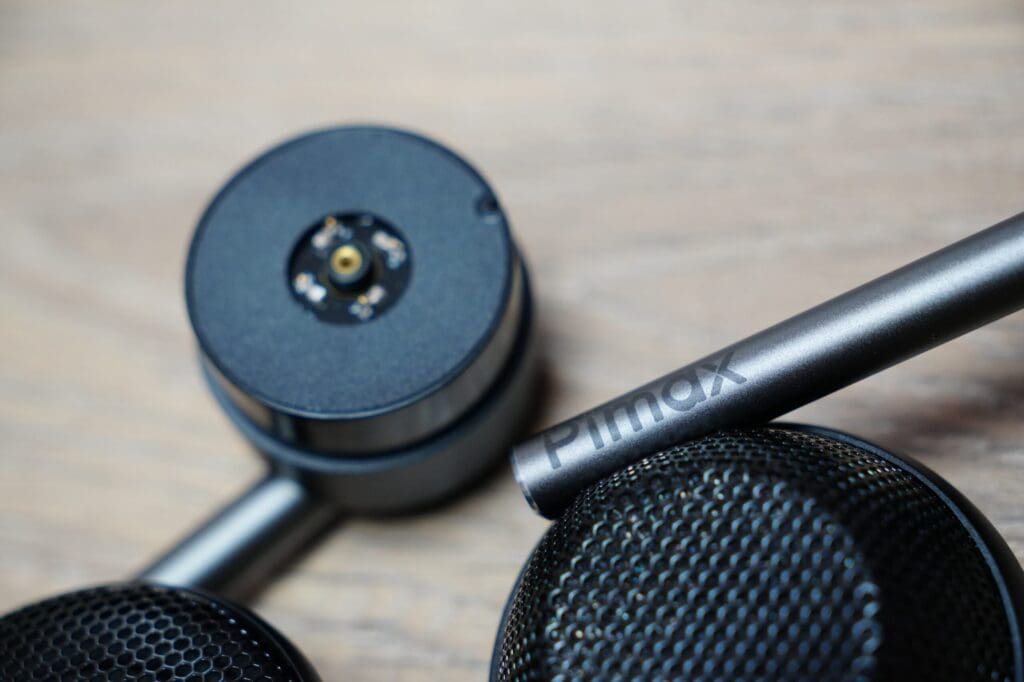
The DMAS earphones are a fine modular addition that really does bring a pleasant improvement.
Installing the modular DMAS speakers, by the way, is a piece of cake and are easy to add to your Pimax Crystal Super. It's a matter of unscrewing one small screw and you'll have them swapped in no time.
Of de upgrade het extra geld van zo’n € 85 waard is? In een VR headset van deze prijscategorie neig ik om nee te zeggen en zijn – in ieder geval voor mij – de standaard ingebouwde headset meer dan voldoende! Ze zien er in ieder geval een stuk beter uit. Voor wat betreft het ontwerp en design van de DMAS earphones; Pimax zal hier geen ontwerp prijs mee winnen. Ze zien er helaas niet heel mooi uit en het geheel voelt goedkoop en kwetsbaar aan. In alle eerlijkheid vind ik ze ook niet echt bij het stealth-ontwerp van de Pimax Crystal Super passen. Jammer!
Pimax Play software
The Pimax Crystal Super uses the Pimax Play software - which is a story in itself. On the one hand, this software offers a lot of possibilities: you can tweak practically everything, from IPD settings to render scale and colour profiles. But on the other hand, the whole process is far from user-friendly. Pimax Play's interface still feels a bit messy and cluttered, although improvements are being made to this step by step.
Als ervaren gebruiker weet ik inmiddels mijn weg wel te vinden, maar ik kan me voorstellen dat beginners snel verdwalen in de wirwar aan instellingen en sliders. Als je een beginner bent in VR – zoals ik – dan weet ik ook niet zo goed wat alle settings nu precies betekenen en wat het effect ervan is. Het voelt vaak als trial & error, en dat kan behoorlijk tijdrovend zijn. Zeker als je gewoon even snel een race wilt rijden.
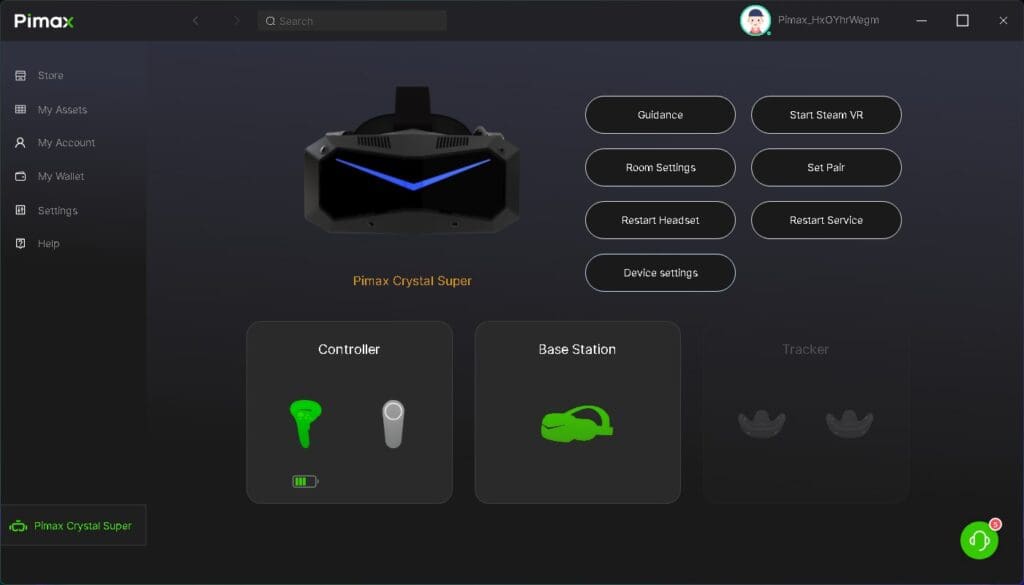
What makes it extra tricky is that the headset is quite sensitive to the right settings. One mistake in render quality or reprojection settings and you're left with stuttering images or blurry visuals. Combine that with the high system requirements, and tuning the perfect balance between performance and quality becomes quite a challenge. So besides that, you have settings in the Pimax Play software, in-game graphics settings and then you can adjust video settings via a short key on the controller.
Pimax does offer presets and car modes, but they are far from optimised for sim racing. For iRacing and Automobilista 2, for instance, I had to tweak manually myself to get a stable result and I am still searching for that. In all honesty, the ‘car’ options also leave a lot to be desired and do not offer what I am looking for. Why can't this be many times simpler and easier? It is at times enormously frustrating! The conclusion is often that I spend longer fine-tuning and tweaking than actually driving laps on the track. And that shouldn't be the case.
As far as I am concerned, Pimax could still make big strides here in stability and user experience. Also to better help ‘novice’ VR users in what all the settings and jargon mean. On the positive side, the headset is compatible with external tools such as OpenXR Toolkit. SteamVR integration also works reasonably well, although there are occasional minor bugs there too.
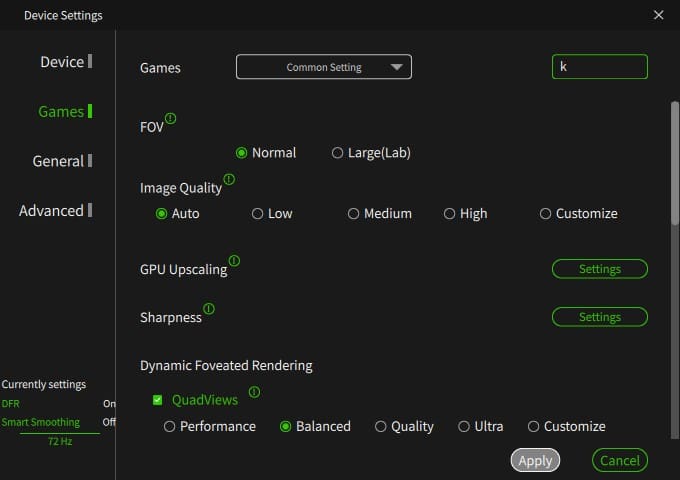
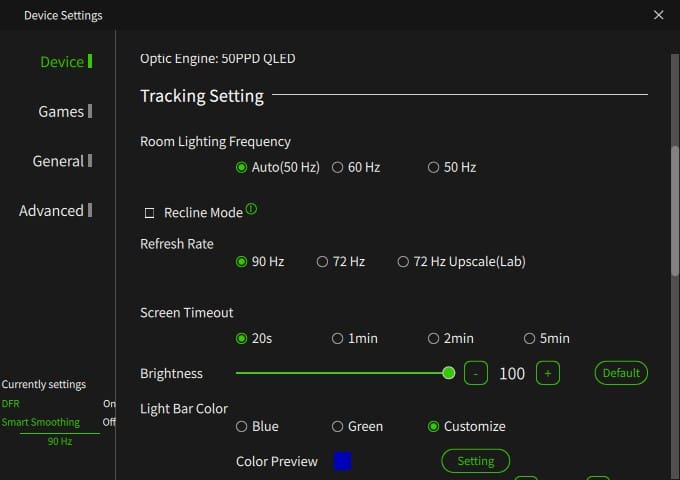
In short: the software is powerful, but far from intuitive. You get a lot of freedom in return, but it takes time, energy and sometimes - a lot - of frustration to get the headset working optimally. And that's a shame! On the plus side, Pimax regularly adds new firmware updates and functionalities. It is nice to see how the Pimax Play software has developed - in a positive sense - over the past few months. Although there is still a long way to go, especially to make it easier for novice VR users and make it more of a plug-and-play experience.
In-game performance: impressive... if you make concessions
Sim racing in VR is in a class of its own - and with the Pimax Crystal Super, I was really hoping for the ultimate level of immersion. In this chapter, I take you through my personal experiences with the performance of this headset in two of my favourite titles: Automobilista 2 and Le Mans Ultimate. Spoiler: it wasn't all rosy, despite the impressive specs on paper.
My Hardware: By the way, what is good to mention is which hardware I tested this VR Headset with: For this review, I tested the Pimax Crystal Super on my high-end gaming setup, consisting of:
- Intel i9 14900KF
- MSI GeForce RTX 4090 Gaming Trio 24GB
- 64 GB RAM
- 1TB SSD
Despite these powerful specifications, optimal performance in VR still proved to be highly dependent on software, settings and system optimisation.
Automobilista 2
Traditionally Automobilista 2 known for its strong VR performance. So my expectations were high - especially since in the past this sim ran almost plug-and-play with excellent frame rates, even on higher settings. But with the Crystal Super, I quickly ran into considerable limitations.
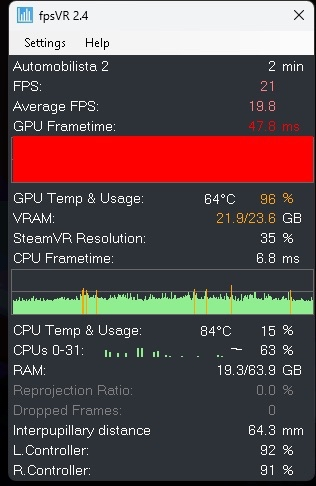
The frame rate often dropped below 30 fps, even with my Nvidia RTX 4090. And that is simply unacceptable. The GPU load was constantly near the ceiling, including VRAM. To make it even somewhat playable, I had to scale back the resolution in Pimax Play to 0.7 or 0.8. And that hurts. Because at that point, you lose a lot in sharpness, detail and the overall visual picture. And then the question automatically arises: why invest in a premium VR headset if you then have to reduce everything downscaling To get it working?
I was forced to set the in-game graphics settings to ‘low’ to ‘medium’. Still, the drops and hiccups persisted. Especially aliasing - those ugly jagged edges - stood out negatively. Normally, AMS2 actually excels in smooth graphics and VR stability, but with the Crystal Super it was far from ideal. Sure: with hours of fine-tuning, there are bound to be gains to be made, but that's really not what you want with a headset in this price segment.
Le Mans Ultimate
Also in Le Mans Ultimate - not a light game anyway - I noticed similar problems. Although the colours and clarity of the image are impressive, the feeling of having to constantly put on the headset still gnaws at me downscaling to arrive at an acceptable experience. And that is at odds with what a premium headset like this should stand for.
But fair is fair: it is a truly indescribably cool experience to blast around the track in a hypercar or LMP2 car. The cockpit, the feeling of speed, the sound - everything comes together in a way that you simply don't experience with a normal monitor. Your are just there. It is one of those moments when you momentarily forget that you are in your own sim rig. In that respect, the Crystal Super really takes the level to the next level. But then you have to put in the effort - in both time, tweaking and brute GPU power.
Would you like to use this VR headset for sim racing? So then the experience depends entirely on your hardware as well as your willingness to invest time in optimising settings. Those who don't feel like tweaking for hours quickly run into limits here.
My personal experience with the Pimax Crystal Super
After weeks of intensive testing in various sims - from iRacing to Le Mans Ultimate to Automobilista 2 - I have got a good idea of what the Pimax Crystal Super is and is not. This headset is without doubt the most advanced model I have used so far, but that doesn't automatically mean it is the best choice for every sim racer.
What is immediately noticeable is how absurdly sharp the image is. Road signs in the distance, tiny LEDs on your dashboard or even the texture of the asphalt: everything comes to life: it creates a level of immersion that is hard to match, even with a triple monitor setup.
Still, it is not all rosy. Getting everything working properly remains a challenge. The software requires a lot of fine-tuning, the performance is demanding, and if you want to make a quick adjustment to your setup - such as switching from triple screen to VR - it is awkward and cumbersome. In my particular setup in the attic, with limited space, this causes a lot of hassle.
“The picture quality is unprecedented - razor-sharp, clear and deep - almost no headset can match this.”
Also, the weight and size of the headset do not always make it comfortable. Especially in my O-Rouge C2 cockpit with wide headrest, I regularly bump into something with the side of the headset. And although the ventilation in itself works fine, the lenses still fog up during long sessions due to the lack of fresh air. This sometimes makes me literally have to take a break to cool down.
What sticks most for me is the contrast between the technical superiority of this headset and its ease of use. When everything works, the experience is great - maybe even unrivalled. But you have to put effort into it. A lot of effort. Too much even. And that's not for everyone. It makes me less likely to pick it up to ‘just have a nice race‘, because - as with the Crystal Light - the road towards it is too bumpy. Sometimes I start to doubt myself about this, but my PC is powerful enough in terms of specs.
Compared to the Crystal Light, the Super feels like a powerhouse with more potential, but also more obstacles. The Light is more plug-and-play and runs more smoothly, the Super is more for the tweaker and perfectionist. And honestly? Sometimes I miss that simplicity.
Advantages and disadvantages
As with any product, there are strengths and weaknesses. Below I list the main pros and cons of the Pimax Crystal Super, based on my personal experience.
Advantages
- Razor-sharp image (3840×3840)
- Excellent brightness and contrast
- Precise automatic IPD
- Wide sweet spot
- Solid build quality and comfort
Cons
- High price
- Refresh rate limited to 90 Hz
- Software requires a lot of tuning
- High system requirements
- Lenses fog up under heat
My conclusion of the Pimax Crystal Super
After weeks of intensive testing in my own sim rig, I can only say one thing: the Pimax Crystal Super is a headset that impresses - especially on paper. The resolution is bizarrely good, the lenses are sharp to the edges and the modularity feels thoughtful. When everything is fine-tuned, you get a VR experience that is so convincing that you sometimes forget you are not actually driving on the track. In that respect, the Crystal Super absolutely delivers. Also, the Super is an improvement on the Crystal Light in every way.
But fair is fair: it is a headset that has to be earned. It is not a device that you just take out of the box and have it working perfectly within ten minutes. The software takes a lot of time, settings have to be tweaked carefully and it requires quite a bit of GPU power to get the most out of it. Even with a high-end PC like the one I have. For a product in this premium segment, I find that quite disappointing. Especially when you consider that the refresh rate is limited to 90Hz - a step down from the Crystal Light that offers 120Hz. And which, due to lesser specs, feels a bit more like plug-and-play.
In my cockpit, with bass shakers, the immersion is fantastic. But that experience comes only after a lot of patience and tuning. For many users, that might be a bridge too far. Especially considering that the Crystal Light offers about 70% of visual experience.
What disappoints me is that the benefits in practice are often smaller than the specifications suggest. The Crystal Super looks like the ultimate headset, but in use it feels more like a high-end prototype than a fully rounded consumer product. It is powerful, impressive - but certainly not without compromises.
“Once everything is set right... wow! Then VR sim racing really comes alive. The Crystal Super is hugely impressive on many levels. But after considerable tweaking and patience.”
Still, I don't want to dismiss the headset completely. For those looking for maximum resolution, willing to tweak and already have a fat high-end PC on hand, this is a brilliant choice. But for the average sim racer with a medium spec PC, I would rather look at more user-friendly (and compact) alternatives. And in that case, I am much more inclined to the cheaper Pimax Crystal Light.
Exclusive Discount On Your Pimax Crystal Super
Is the Pimax Crystal Super worth it for sim racing? That depends on your setup and your ambitions. Do you have a powerful PC, a serious sim rig and want to experience the maximum in resolution, sharpness and immersion? Then this is without a doubt one of the most impressive VR headsets you can buy. Provided properly tuned, the Crystal Super takes your sim racing experience to an unprecedented level. Closer to a ‘real‘ racing experience you probably can't come by. It is genuinely super impressive and stunningly beautiful.
But, the Pimax Crystal Super is anything but an entry-level headset, but it is also not meant for the casual user. For the true sim racing enthusiast - who is willing to fine-tune and get the most out of his hardware - it is a unique headset with huge potential.
Personally, the Crystal Super has amazed me several times, and while it is not a perfect headset, it offers a level of immersion I have rarely experienced before. The investment is hefty, but if you get it right, you get something exceptional in return. A realistic and unprecedented experience, where you can truly escape from the world and reality around you. And that is - to be honest - sometimes quite nice to completely lose yourself in the world of VR.
Buy Pimax Crystal Super
Are you ready for the next level in sim racing? Then check out the available Crystal Super models below, including current offers and possible discounts through Pimax itself: Use code ‘simracinghub' before 3% discount!
Small disclaimer, big impact
This review contains affiliate links. Did this article help you in your choice? Then consider making your purchase through our affiliate link and use our discount code. This way, you will receive the exact same price (with 3% discount) and support SimRacingHub.nl at the same time. This way we earn a small percentage - and can continue to invest in honest, in-depth reviews and great content. Everything you read here is created with passion, precision and a personal touch. Thank you for your support! 🙏
Pimax Crystal Super Review: Next-Gen VR, But Not Without Compromise | SimRacingHub.nl
Is the Pimax Crystal Super the ultimate VR headset for sim racing? In this review, we share our honest experience, plus the main pluses and minuses.
Product Brand: Pimax
Product Currency: EUR
Product Price: 1588
Product In-Stock: InStock
3.9
Pros
- - Razor-sharp image (3840×3840)
- - Excellent brightness and contrast
- - Precise automatic IPD
- - Wide sweet spot
- - Solid build quality and comfort
Cons
- - High price
- - Refresh rate limited to 90 Hz
- - Software requires a lot of tuning
- - High system requirements
- - Lenses fog up under heat
Have any thoughts?
Share your reaction or leave a quick response - we'd love to hear what you think!
-
 0
0
-
0
-
0
-
0
-
0
-
0


 Nederlands
  Deutsch
  English (UK)
  Français