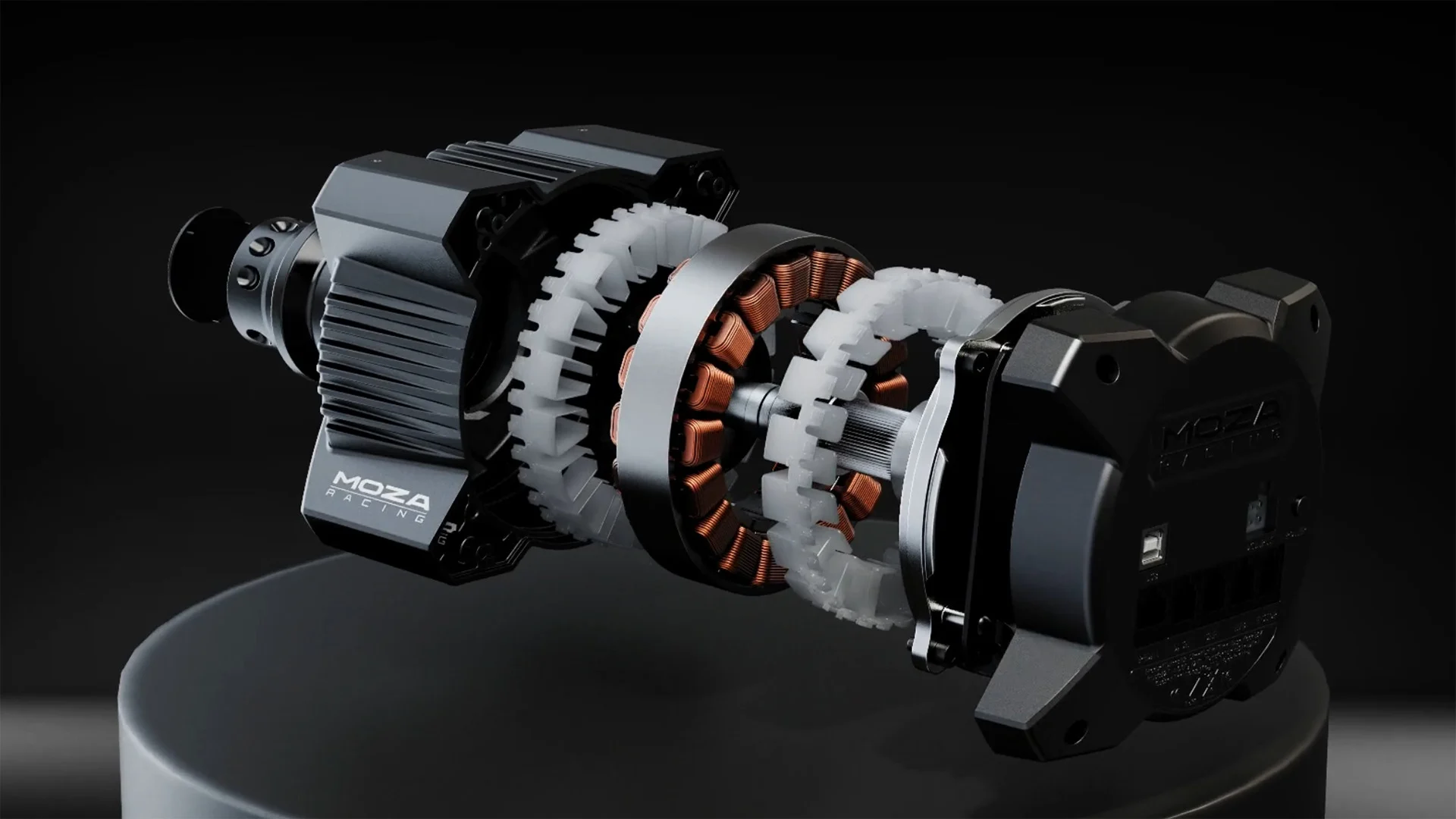
If you are serious about sim racing, you have no doubt heard of direct drive. But what makes this type of wheelbase so special? And why are more and more avid sim racers opting for a direct drive setup instead of a belt- or gear-driven system?
In this article, we dive deep into the world of direct drive technology. We explain what it is, how it works, its advantages over other systems and what to look out for when buying. Are you a novice sim racer? Then read on quickly!
What is a direct drive wheelbase?
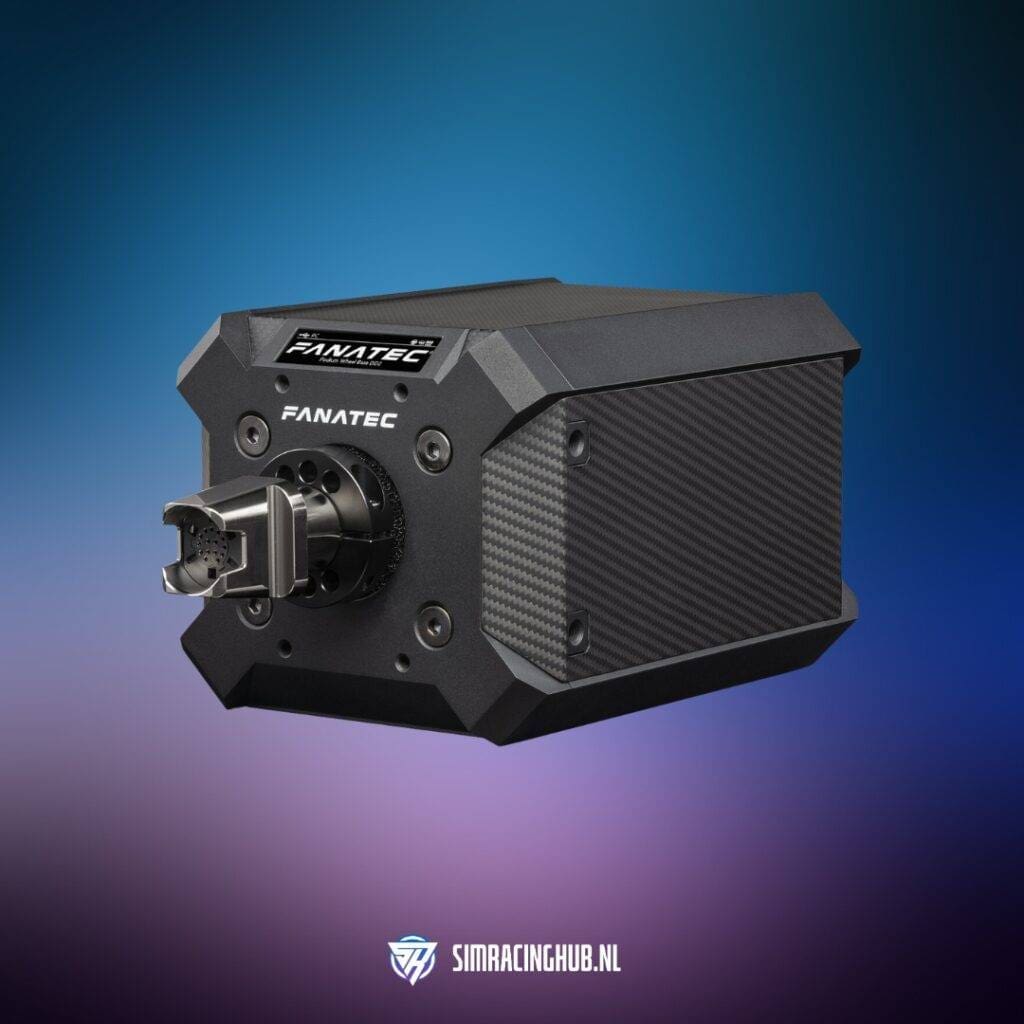
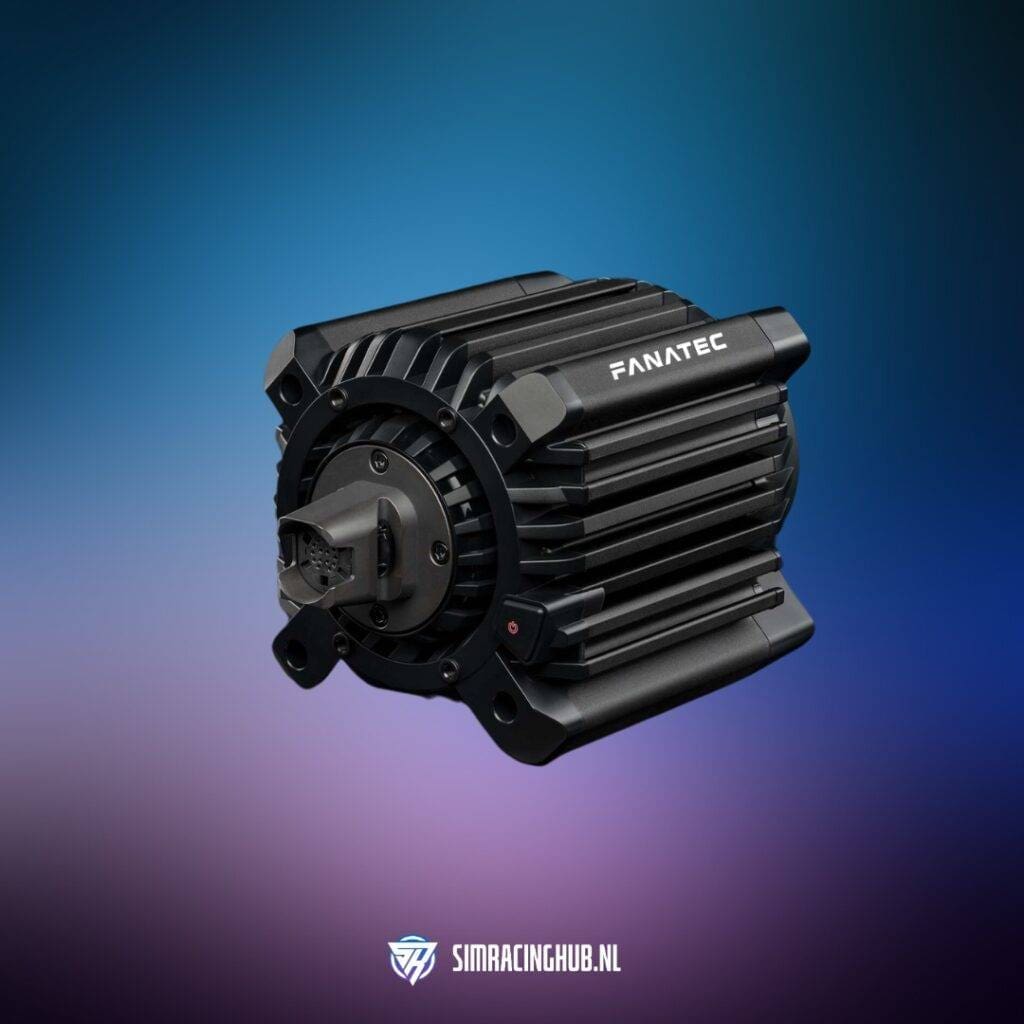
A direct drive wheelbase uses a motor connected directly to the steering shaft. That means: no belts, no gears, no deceleration. Any movement from the motor is transferred directly to the steering wheel with no intermediate components that can reduce power or precision.
Originally from professional racing simulators, this technology has become accessible for home use. Brands such as Simucube, Asetek, Simagic, Fanatec and Moza Racing have brought direct drive to a wider audience in recent years. And more and more - newer - manufacturers, including Conspit are also bringing their own direct drive wheelbases to the market. Sim racing is hot! And so ever cheaper and better direct drive wheelbases are also increasing in popularity, leaving the traditional and immensely popular Logitech G29 slowly but surely the playing field.
How does direct drive technology work?
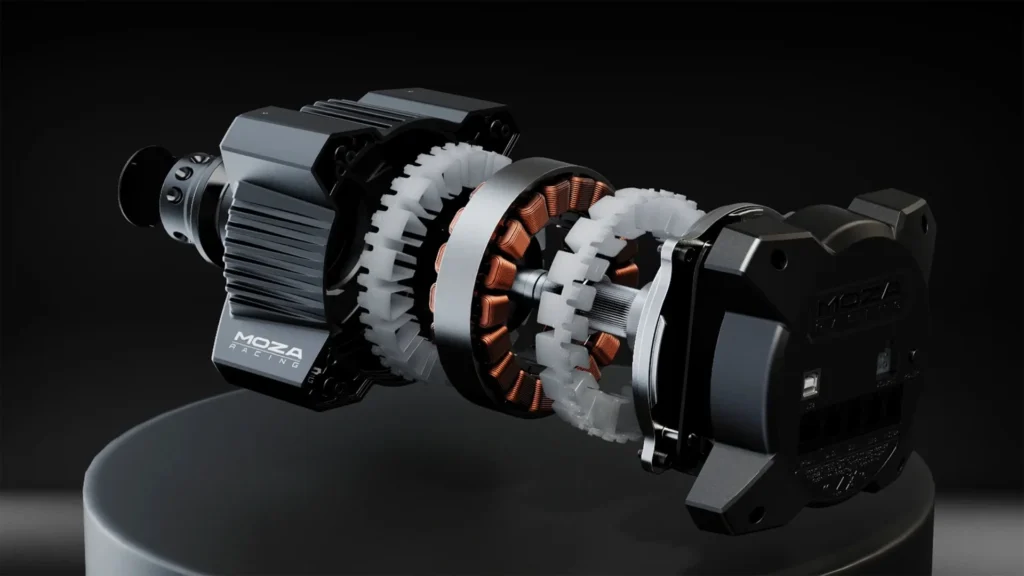
The power of a direct drive system lies in the motor and its control electronics. The motor is often a powerful brushless servo motor designed for high torque output and extremely accurate positioning. This motor is controlled by an encoder that continuously monitors the position of the steering axis and corrects it at lightning speed. This ensures that even the smallest movements and forces are translated real-time into feedback on the steering wheel.
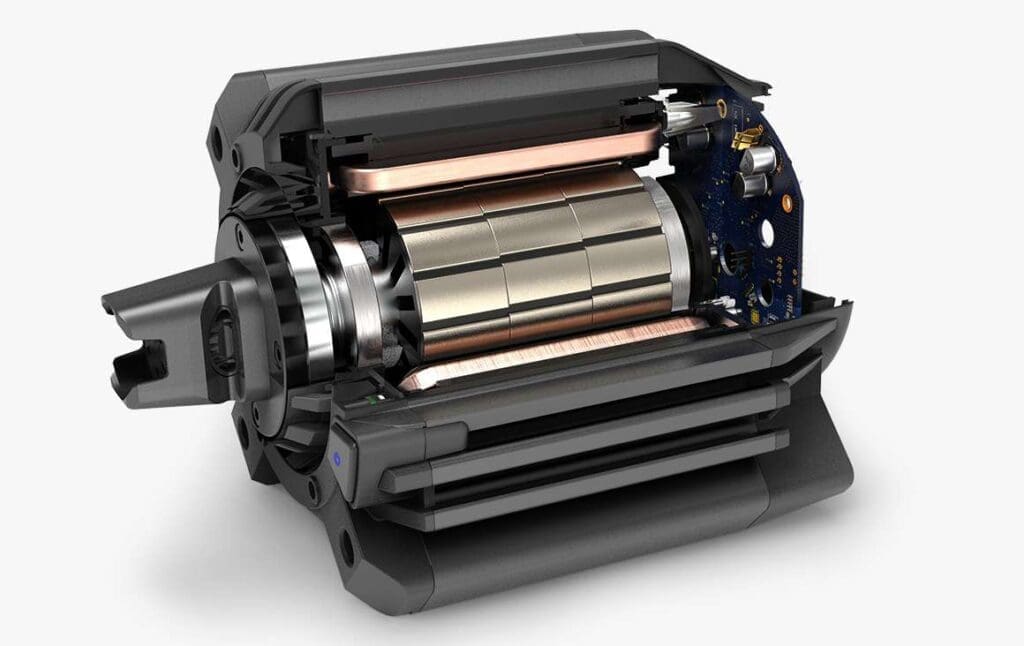
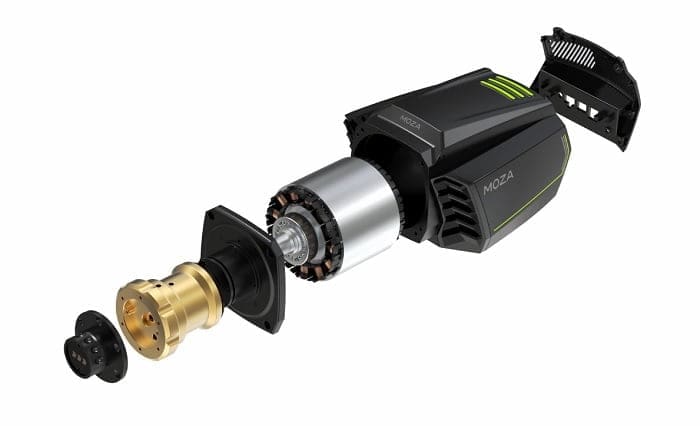
Core components of direct drive:
- Brushless servo motor: Ensures powerful and smooth rotation without hiccups.
- Encoder: Measure the position of the steering axis with high precision (often more than 4 million counts per revolution).
- Motor controller: Drives the system and controls the power applied, including filters for damping or additional tuning.
- Firmware & Software: Allows you to set profiles and force feedback customise to your taste and for specific simulators.
Unlike belt drive systems, such as the Logitech G29/G923, where the motor transmits forces via a belt, direct drive has no elasticity or backlash. This provides faster and more precise feedback, less lag and more control at high forces.
What are the advantages and disadvantages of direct drive?
Why do so many sim racers end up choosing a direct drive wheelbase? Below, we list the main advantages. From extreme precision to durability - this technology changes the way you experience every corner, bump and slip moment.
Advantages direct drive
1. Unrivalled precision
With direct drive, you feel exactly what the car is doing. From losing grip in a fast corner to small vibrations on the straight - everything comes through flawlessly. This precision makes it easier to drive on the limit as well as react faster to changes in balance.
2. Higher power output (Nm)
Direct drive motors deliver much more power (measured in Newton metres) than belt or gear systems. Some systems go up to 25 Nm. This translates into a more intense, realistic experience - especially when simulating heavy race cars such as GT3s or LMPs.
3. Durability and reliability
Because there are fewer moving parts, there is less chance of weartage. No worn belts, no gears developing backlash. A direct drive system often lasts for years without maintenance.
4. Realism and immersion
For many sim racers, it's all about the feeling of realism. A direct drive wheelbase is the closest thing to driving a real racing car. The feedback is raw, pure and without filtering. You really feel every detail on the track, from bump to kerbstone!
Disadvantages direct drive
While the benefits are numerous, there are of course a few things to consider:
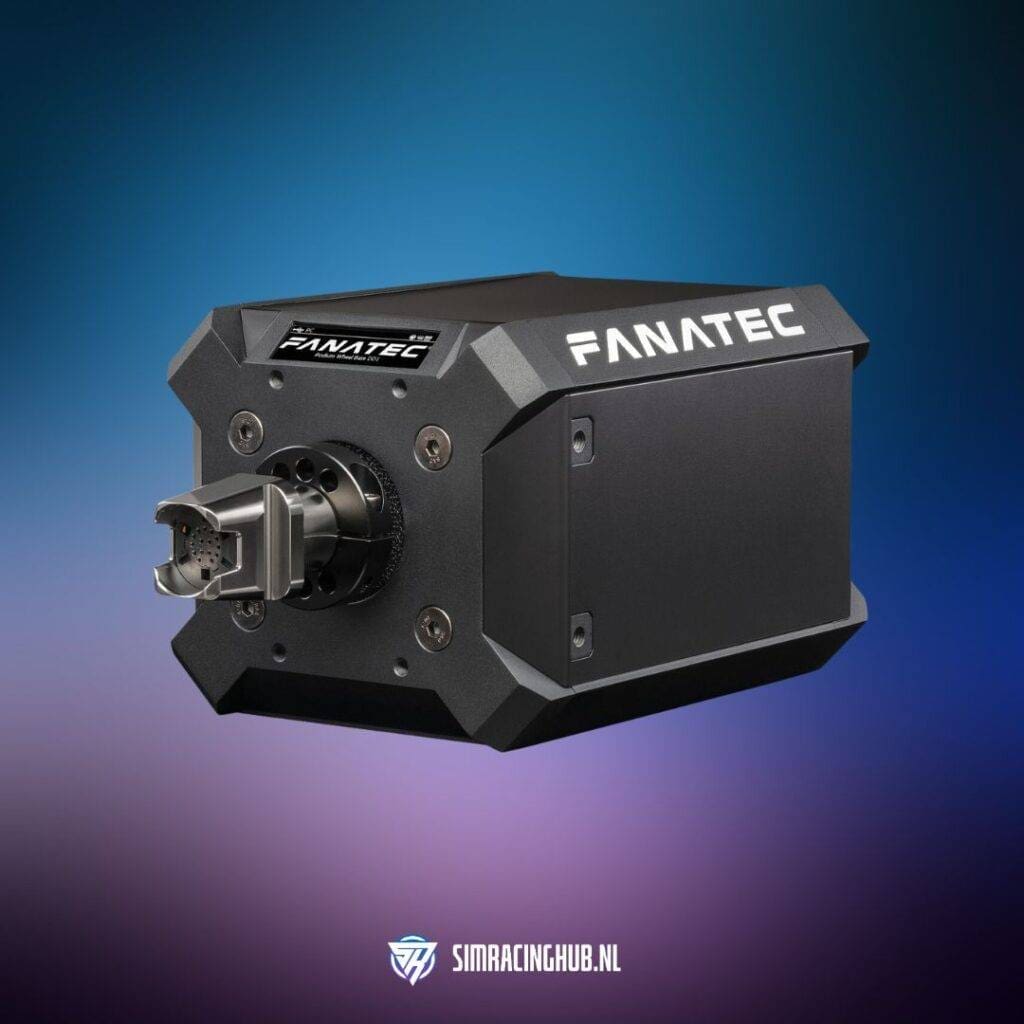
- Costs: Direct drive is more expensive than belt or gear systems. An entry-level model starts at around €400 to €600, but high-end systems, such as the Fanatec DD1/DD2 or Simucube 2 wheelbases, can exceed €1000 euros.
- Montage: Because of the higher torque, your rig must be sturdy enough. A lightweight cockpit cannot handle the forces. Therefore, choose a high-quality solid cockpit, such as the Sim-Lab P1X. Also take a look at our extended P1X review Why this cockpit is ’the best in class’!
- Learning curve: The instant feedback can be overwhelming for beginners. You will have to adjust your riding style and muscle strength.
Direct drive vs belt drive
It is good to know that direct drive has become many times cheaper in recent years, making this technology the standard with just about every manufacturer. Whereas it used to be reserved only for professionals or sim racers with a large budget, it is now accessible to a much wider audience.
| Feature | Direct Drive Wheelbase | Belt Drive Wheelbase |
|---|---|---|
| 1. Force feedback | Extremely powerful and detailed | Reasonably powerful, less direct |
| 2. Response rate | Immediately, without delay | Small delay possible |
| 3. Sustainability | Low maintenance | Belt may wear out |
| 4. Price | More expensive | Cheaper |
| 5. Installation | More complex | Simpler |
What direct drive systems are there?
The choice in direct drive wheelbases is huge these days. Whether you are just starting out or just looking for the best: there are models available for every level and budget. Below, we highlight the most popular wheelbases from the best-known brands, including torque (Nm) and price range.
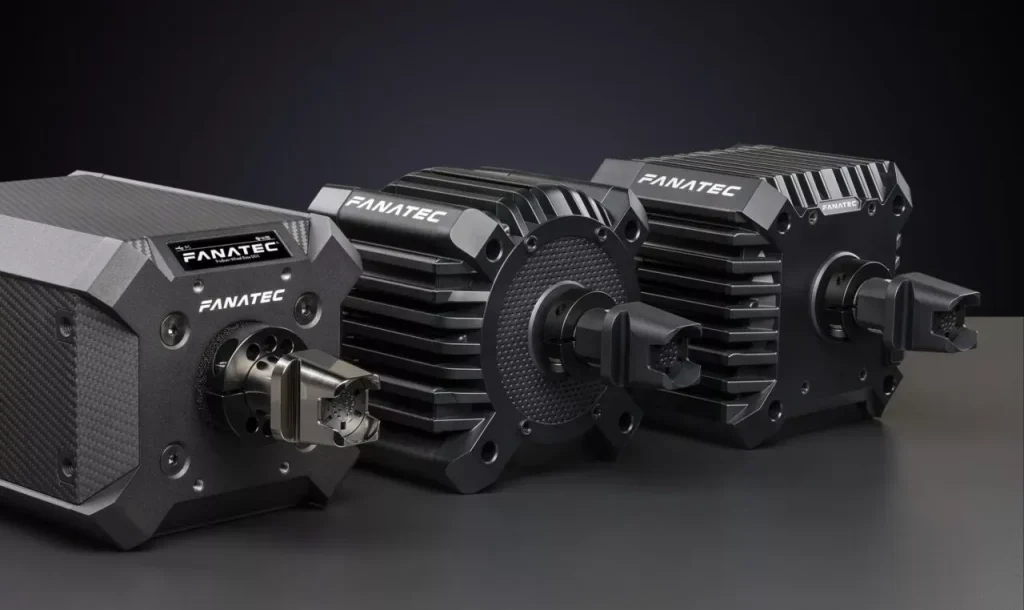
Fanatec
Fanatec offers a wide range of direct drive wheelbases, from entry-level to the high-end segment:
- Fanatec CSL DD (5 Nm) - entry-level model from approx. €349
- Fanatec CSL DD with Boost Kit (8 Nm) - Entry-level model with slightly more torque. From €449
- Fanatec GT DD Pro (8 Nm) - designed for PlayStation users, from €599
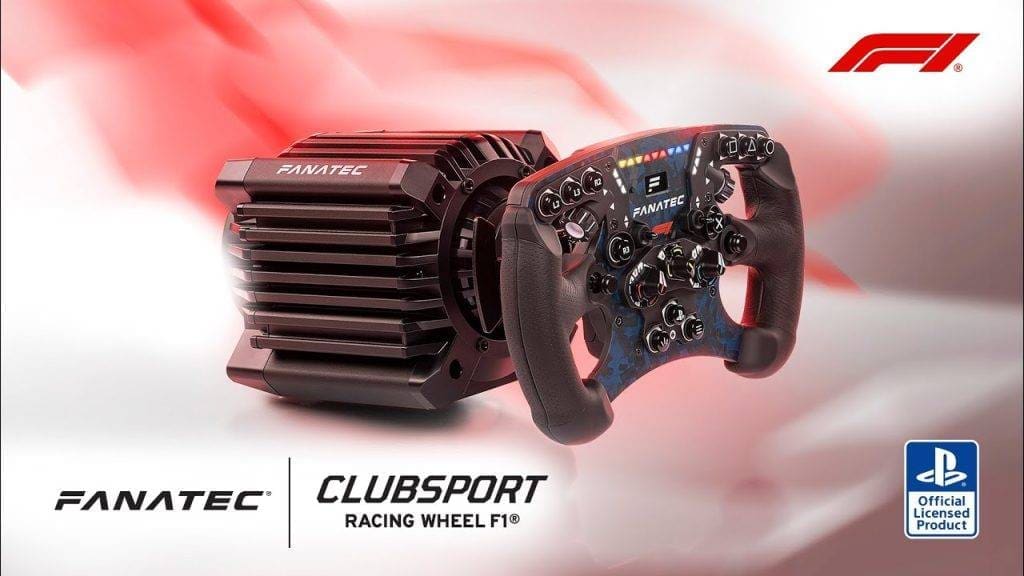
- Fanatec ClubSport DD (12 Nm) - mid-range model with solid performance from approx. €799
- Fanatec ClubSport DD+ (15 Nm) - new generation, high-performance base from approx. €999
- Fanatec Podium DD1 (20 Nm) - Advanced powerhouse for avid racers, around €999
- Fanatec Podium DD2 (25 Nm) - flagship model with extreme performance and extensive features, from approx. €1499
Fanatec targets a wide audience and offers a completely closed ecosystem with steering wheels, pedals and accessories that match seamlessly.
Asetek SimSports
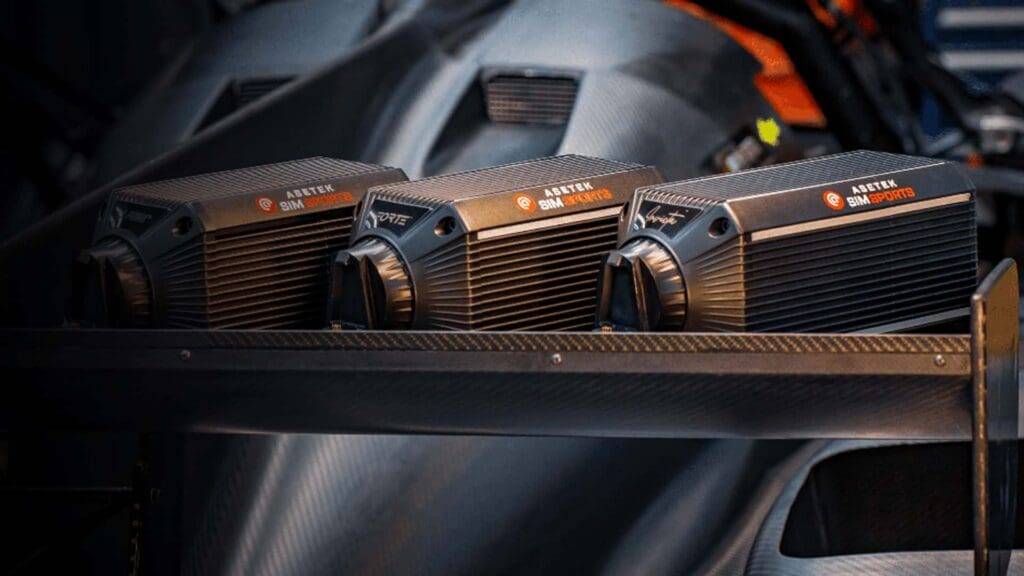
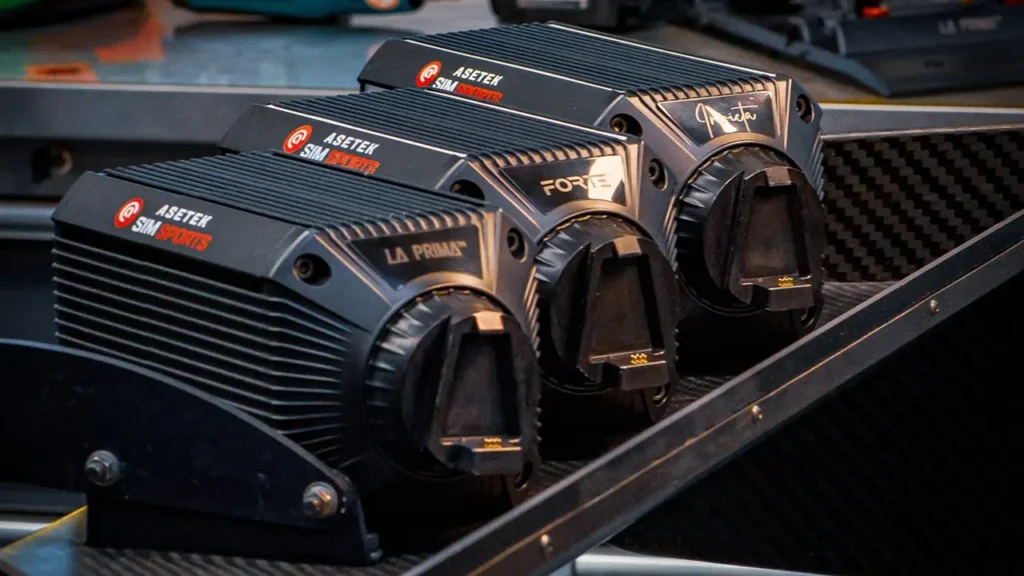
Asetek is a relatively new player in the sim racing world, but has rapidly positioned itself as a serious competitor with innovative designs, premium build quality and intuitive software. Its products are modular and fit into an open ecosystem.
- Asetek La Prima Direct Drive Wheelbase (12 Nm) - entry-level model with excellent build quality, from approx. €479
- Asetek Forte Direct Drive Wheelbase (18 Nm) - mid-range model with focus on control and precision, from approx. €849
- Asetek Invicta Direct Drive Wheelbase (27 Nm) - high-end platform for the most demanding sim racers, from approx. €1,329
Moza Racing
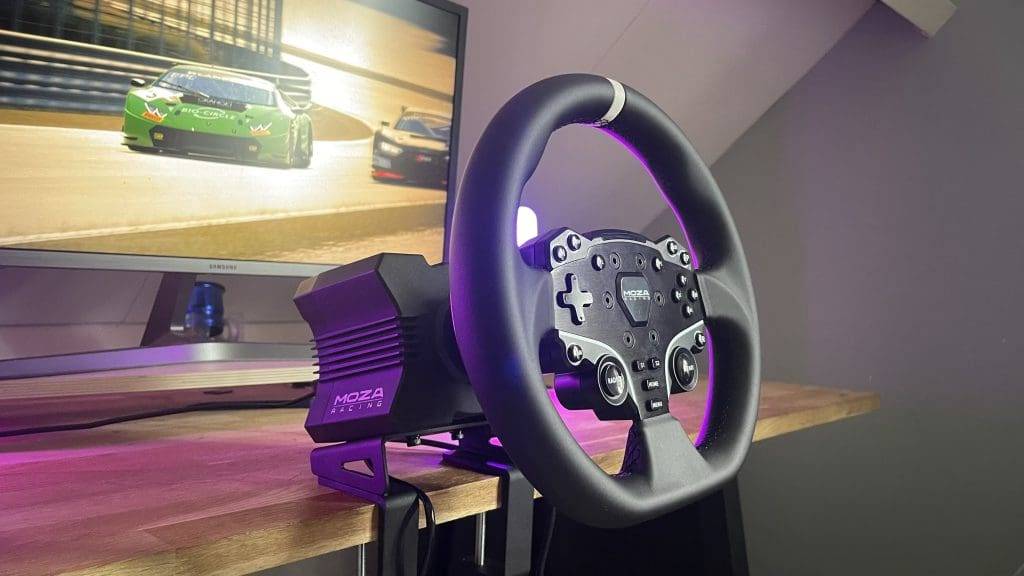
Moza positions itself as a fresh, innovative player with modern software and an extensive eco-system.
- Moza R3 (3.9 Nm) - entry-level model for console users (Xbox-compatible), from approx. €299
- Moza R5 (5.5 Nm) - compact entry-level model around €439
- Moza R9 (9 Nm) - mid-range choice from approx. €549
- Moza R12 (12 Nm) - powerful wheelbase from €689
- Moza R16 (16 Nm) - professional-oriented heavy-duty model, around €969
- Moza R21 (21 Nm) - high-end model for demanding sim racers around €999
Moza positions itself as a fresh, innovative player with modern software! It is a good and affordable choice in the mid-range segment.
Simucube
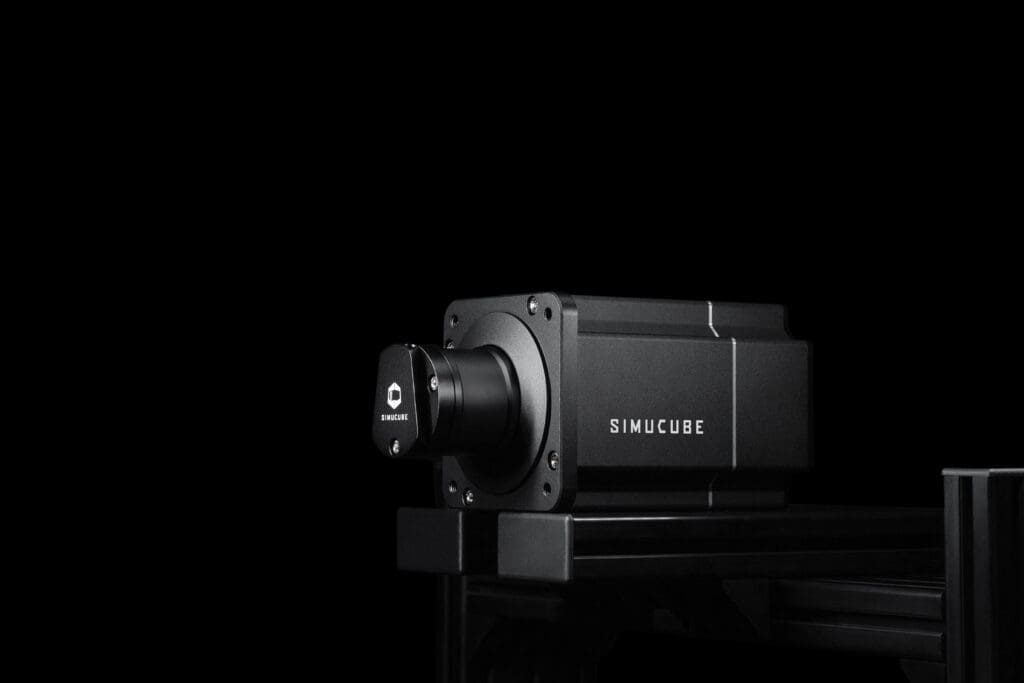
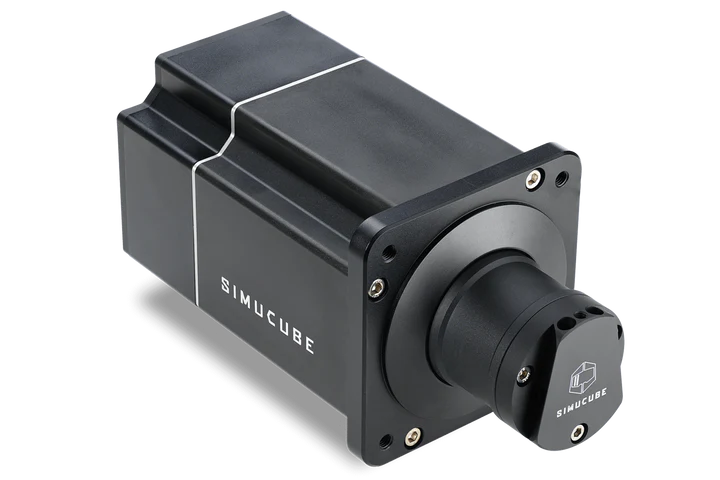
Simucube has been considered the absolute benchmark for years and “best in class” when it comes to direct drive technology. The Finnish brand is loved by professional simulator builders, esports drivers and demanding sim racers for its uncompromising quality, extreme precision and robust build quality. Simucube's philosophy is based on ultimate control, zero latency feedback and complete freedom in ecosystem choice.
- Simucube 2 Sport (17 Nm) - powerful entry-level model for avid sim racers, from approx. €1,250
- Simucube 2 Pro (25 Nm) - most popular model, popular in competitions and simulation centres, from approx. €1,450
- Simucube 2 Ultimate (32 Nm) - developed for the highest demands, with advanced filters and ultra-precise encoder, from approx. €3,050
These wheelbases use an open eco system and offer highly advanced tuning options via the advanced TrueDrive software. Simucube focuses entirely on performance, without concessions. I myself have been driving the Simucube 2 Sport and Pro for years and I am extremely satisfied with them.
Simagic
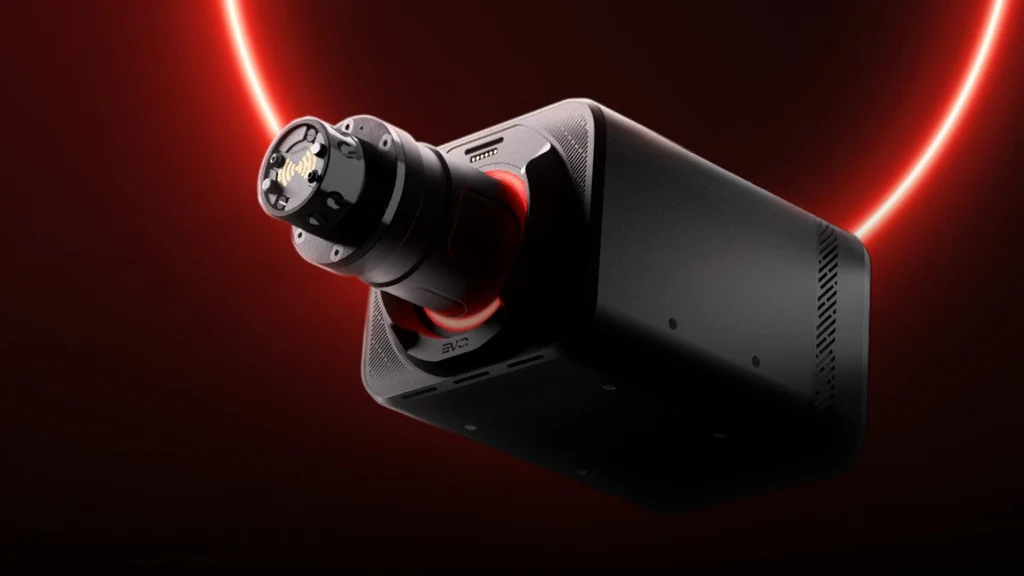
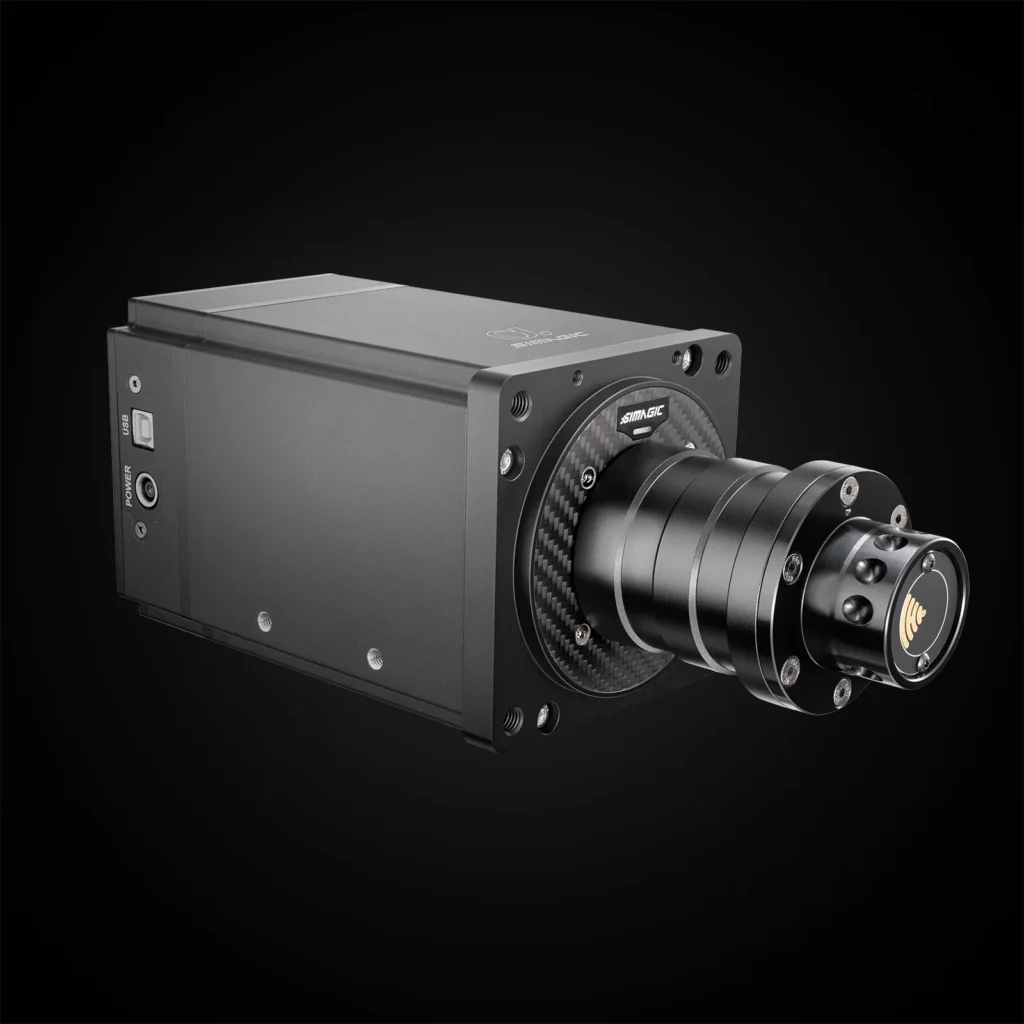
Simagic combines premium build quality with competitive price-performance ratios:
- Simagic Alpha Mini (10 Nm) - around €599
- Simagic Alpha (15 Nm) - from approx. €799
- Simagic Alpha EVO (10 Nm / 15 Nm / 16 Nm) - latest generation with improved filtering, encoder technology and multiple power options depending on your preference and budget. Prices range between approx. €699 and €999
- Simagic Alpha Ultimate (23 Nm) - high-end variant for around €1,199 Simagic is loved for its smooth force feedback and modular ecosystem.
What should you pay attention to?
When choosing a direct drive wheelbase, there are several technical and practical factors to consider. For instance, each manufacturer has its own character and eco-system. Fanatec offers a highly integrated experience within their own line of steering wheels and pedals, while Simucube focuses on ultimate precision and an open ecosystem. Moza and Simagic are rapidly evolving as powerful, accessible alternatives for both beginners and advanced sim racers.
One of the most important considerations is the maximum torque (Nm) delivered by the wheelbase. If you drive heavy race cars such as GT3s or Formula cars, then a power base of at least 15 to 20 Nm is recommended. For lighter vehicles or if you are just starting out, a base of 8 to 15 Nm may be sufficient.
Besides power, compatibility also plays a big role. Brands like Fanatec operate a closed ecosystem where you only use their own accessories. In contrast, systems from Simucube, for example, are actually modular and compatible with third-party steering wheels, offering flexibility in future expansions.
The software you use to set the wheelbase is also crucial. Good tuning software allows you to easily save profiles, adjust force feedback to your liking and apply filters per car or simulation.
Finally, the build quality of your sim rig should not be underestimated. Direct drive systems generate a lot of power and require a solid foundation. Aluminium profile rigs such as those from Sim-Lab are ideally suited to cope with the high torque and vibration-free racing.
Conclusion: is direct drive worth the investment?
Absolutely! Direct drive is the most realistic, precise and immersive way to virtually race. The investment is considerable, but the added value in experience, control and performance is well worth it. This is, like a sim racing cockpit, a part of your setup that is better not to skimp on. If you are serious about sim racing, then a direct drive wheelbase is the best and right choice anyway. Don't go for a belt or gear system. It's a technology that not only enhances your racing experience, but also takes your on-track performance to the next level.
Want to know more about which direct drive wheelbase suits you best? Then take a look at our wheelbase reviews Or ask a question on our Discord or Instagram!
Have any thoughts?
Share your reaction or leave a quick response - we'd love to hear what you think!
-
 0
0
-
0
-
0
-
0
-
0
-
0


 Nederlands
  Deutsch
  English (UK)
  Français