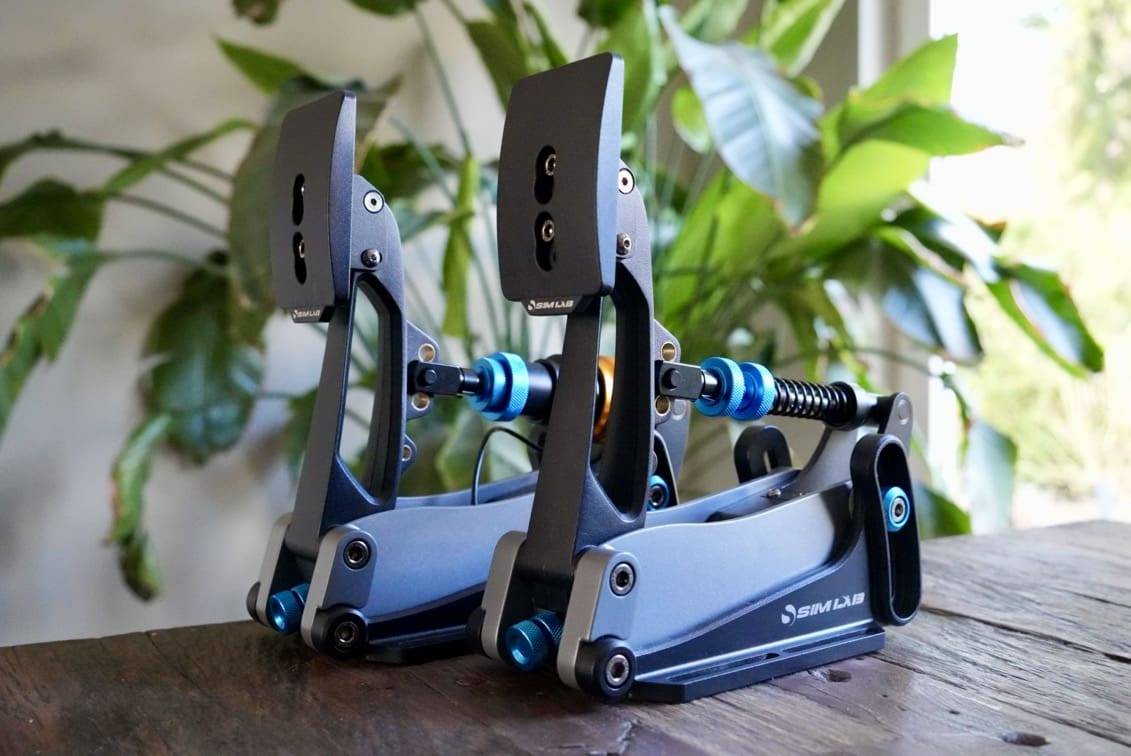
Sim-Lab is pushing hard to create a complete sim racing eco-system. In addition to their iconic aluminium cockpits, the Dutch brand now also brings shifters, handbrakes and even steering wheels on the market. With the introduction of their first pedal set - the Sim-Lab XP1 Pedals - they take a clear step towards an all-encompassing hardware line for sim racers.
The XP1 Pedals are a standout in the mid-range segment of loadcell pedals. Featuring a 200 kg loadcell on the brake pedal, a modular design and an impressively robust build quality, Sim-Lab thus positions itself squarely against established names such as Heusinkveld, Asetek and VNM. But just how good are these pedals really - and can they compete?
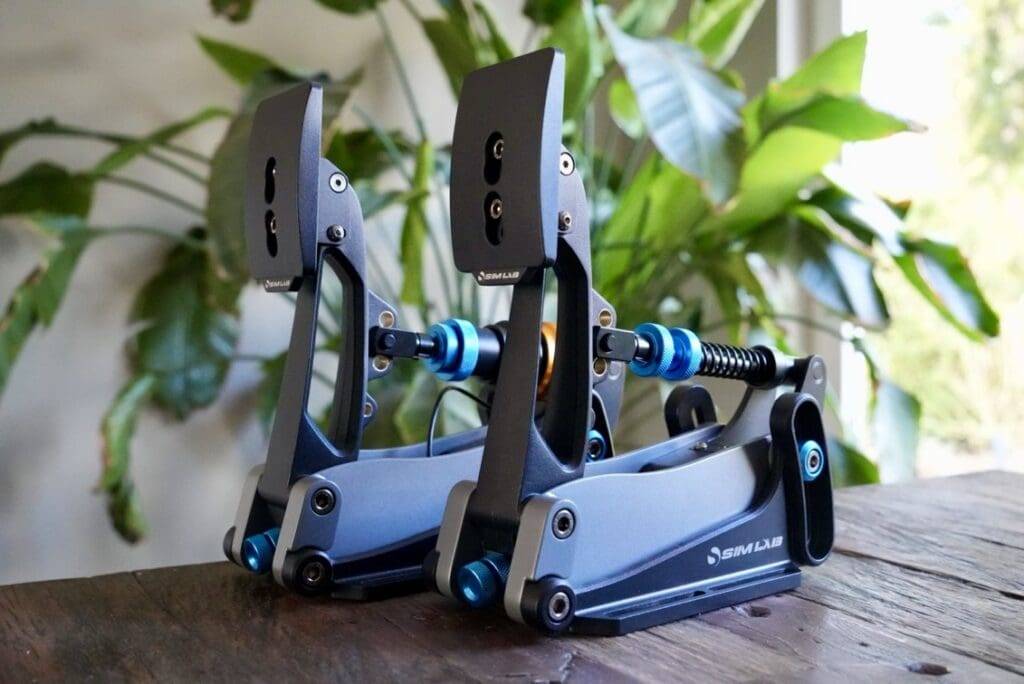
I have already had the opportunity to try out the Sim-Lab XP1 pedals several times briefly, and my first experience - however brief - was already positive. For this review, I tested the XP1 Pedals extensively on my Sim-Lab P1X cockpit, in combination with various sim titles such as iRacing, Assetto Corsa Competizione and Automobilista 2.
Although this is a review unit I received from Sim-Lab, you can expect an honest and critical assessment from me - as always. I test these pedals intensively, without any preference or restraint. If something is wrong or disappointing, I name it - and if these pedals really impress, you'll find out why. So: are the XP1 Pedals the new standard for serious sim racers, or will they remain just a promising attempt? Let's find out!
What do the Sim-Lab XP1 pedals cost?
The Sim Lab XP1 pedals zijn scherp geprijsd als je kijkt naar wat je ervoor terugkrijgt. Voor de twee-pedaalvariant (gas en rem) ligt de reguliere prijs op € 499, maar regelmatig zie je ze in de aanbieding voor € 399. Kies je voor de drie-pedaalversie met koppeling erbij, dan betaal je normaal € 599 – met acties vaak rond de € 549. Dat is dus zeer scherp en gunstig geprijsd! Let wel: de optionele pedal baseplate & slider kost nog eens € 159 extra als je daar gebruik van wilt maken.
In this price segment, you are entering the playing field of brands like Heusinkveld, Moza or Asetek. So these pedals compete directly with some of the biggest names in the market, and they do so surprisingly well. In terms of adjustability and build quality, they are certainly not inferior to these competitors - indeed, in some areas they even offer more.
Other brands such as Fanatec and Moza tend to focus a little more on ease of use and plug-and-play integration for the more novice sim racer, while the XP1 mainly excels in customisability and engineering. For those who like to tinker themselves and get the most out of their hardware, this makes this set a particularly interesting option.
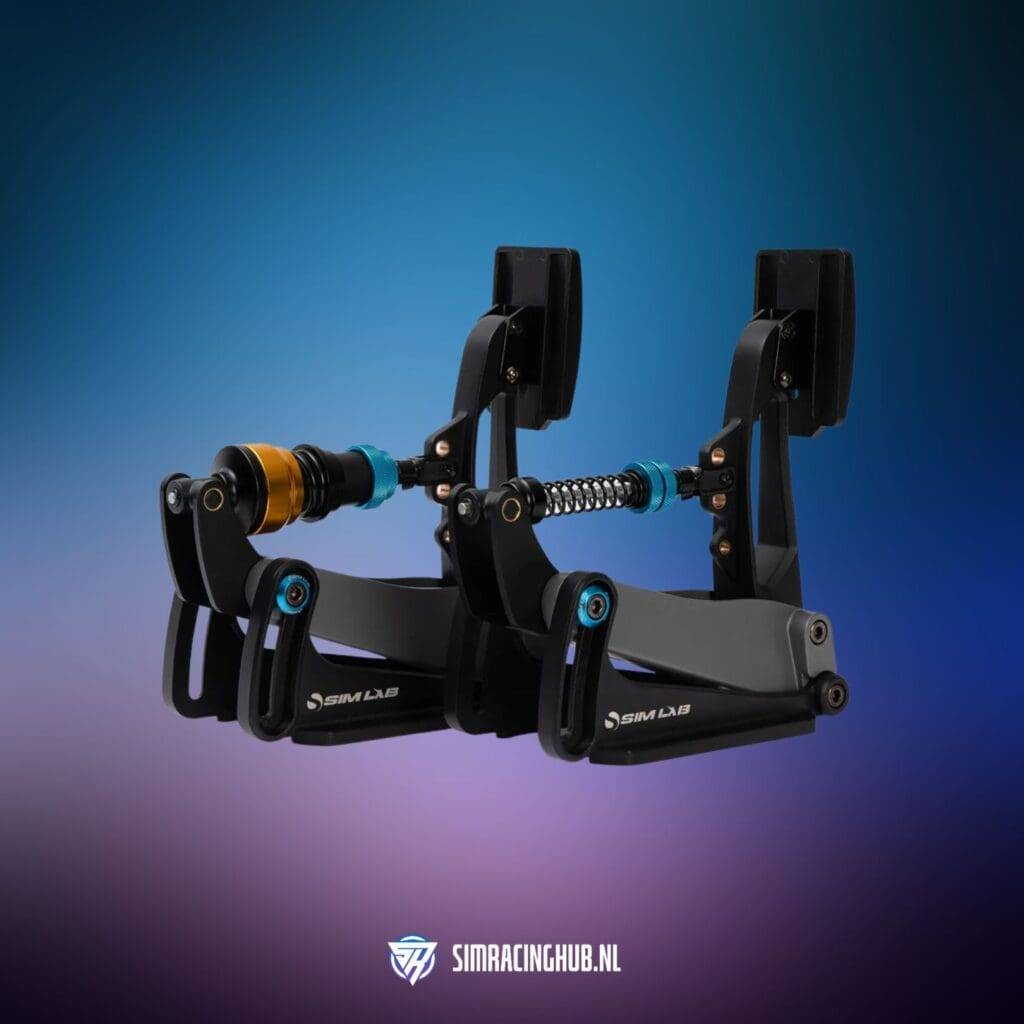
Unboxing & first impressions
The packaging of the XP1 Pedals is as you would expect from Sim-Lab: sturdy, efficient and functional. No unnecessary frills, just well-protected foam around each component. Everything sits tightly in place, allowing you to take the set out of the box without worry.
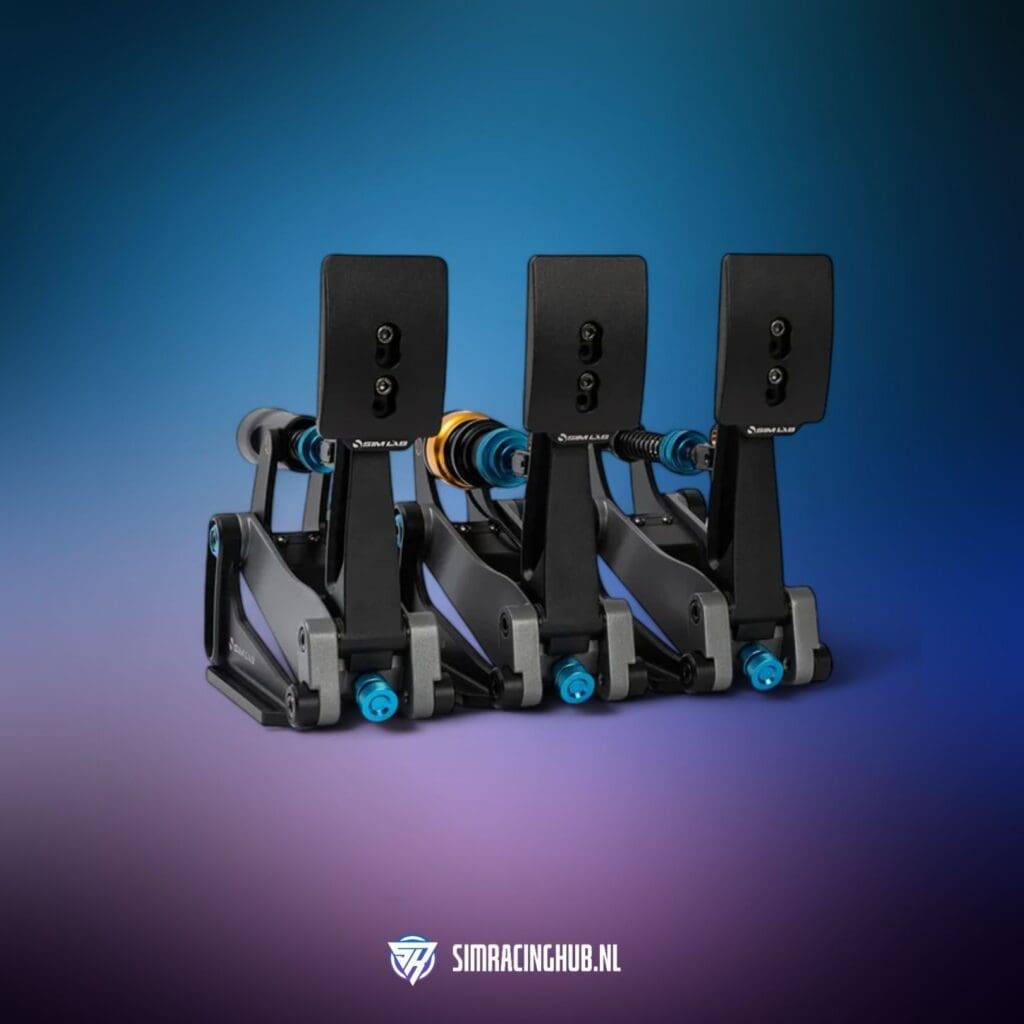
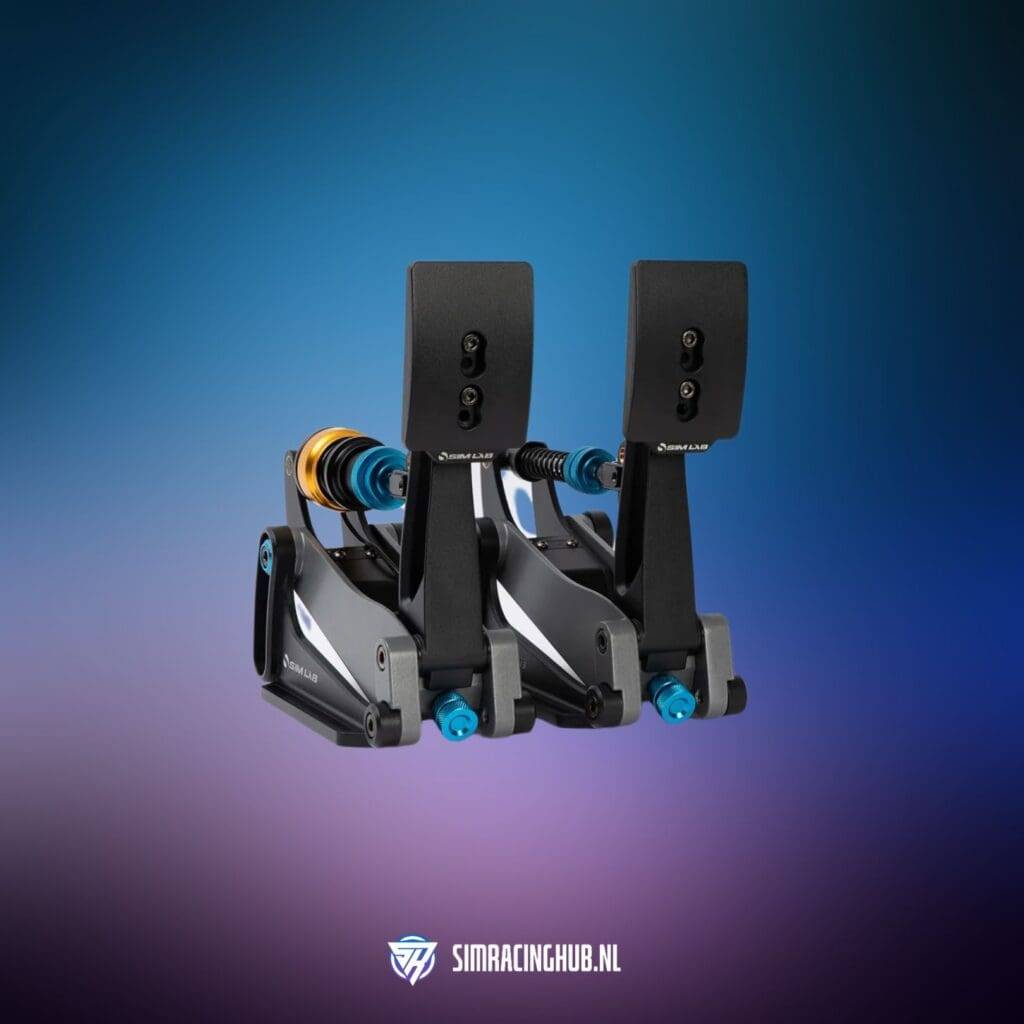
Inside the black box you will find the - depending on your configuration - two or three pedals (gas, brake and/or clutch), the controller box, a set of long ánd short cables, mounting bolts and Allen keys. It also comes with a manual that explains the installation step by step. Sim-Lab keeps it uncluttered, without excess - just the way I like it.
In summary, you receive this:
- Brake pedal with 200 kg load cell
- Accelerator pedal with hall sensor technology
- Optional: coupling (depending on selected configuration)
- Elastomer and springs for brake adjustment
- Set of short and long cables for flexible montage
- Montagools and fasteners
- Manual with clear installation instructions
- Controller box
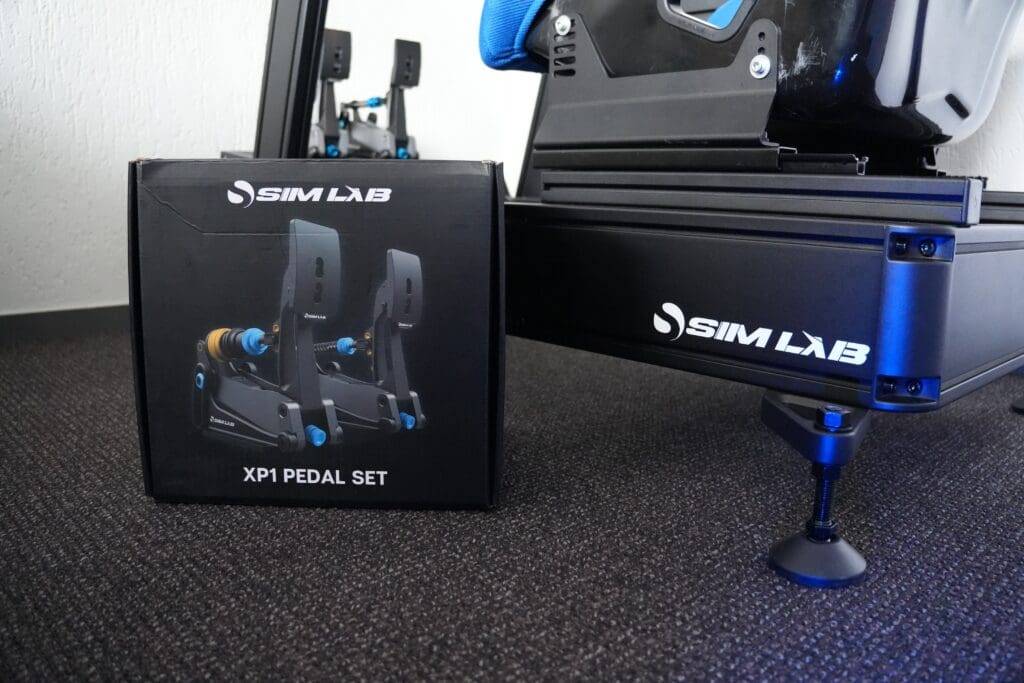
The first impression
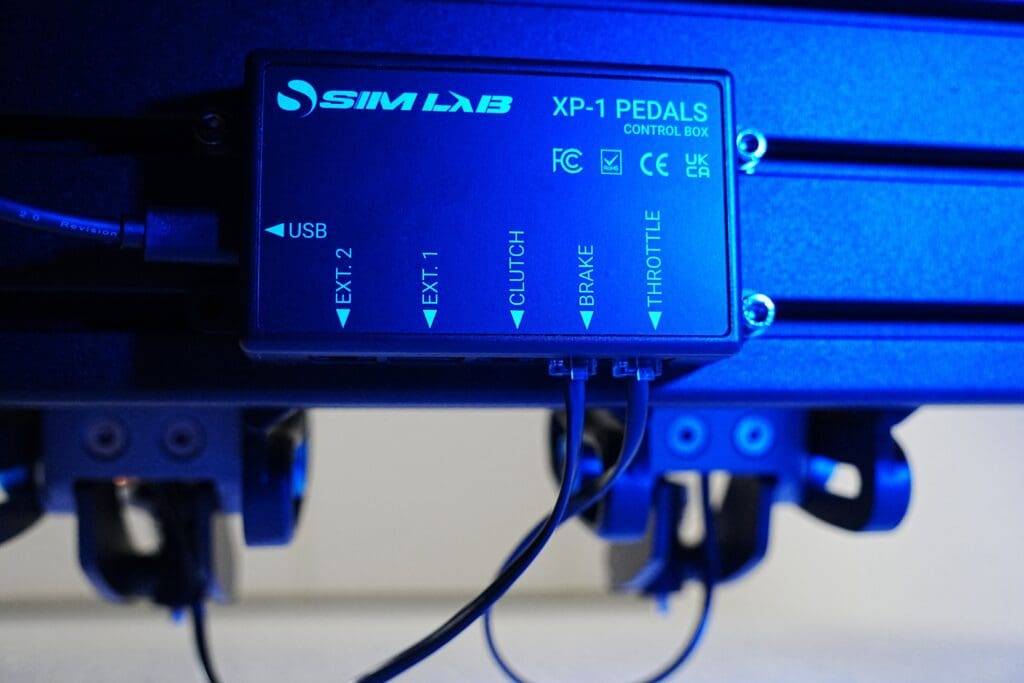
The first impression when unpacking the XP1 Pedals is downright impressive - and at the same time somewhat confusing. The pedals themselves look and feel as you would hope for in a premium pedal set: solid, cleanly finished and clearly designed with functionality as well as durability in mind. Every part is CNC-machined aluminium, with stainless steel elements where necessary, and nothing feels cheap... until you take the controller box out of the box.
As far as I am concerned, that controller box is the miss of this set. Whereas the pedals themselves exude an almost industrial level of quality, the plastic housing of the controller box feels like an oddity. It is light, looks fragile and, in terms of look and feel, does not match the rest of the system at all. Considering the price segment this set is in, I would have expected at least an aluminium or solid metal casing here, as is the case with the VNM Lite Pedals the case. What a miss! Really an incredibly poor choice. Does it detract from the whole thing further? No, it certainly doesn't. In the end, this controller box is mounted under the pedal tray and you don't see it.
Then again, what is well thought out is the cable management. Sim-Lab supplies both short and long cables in the box - a small detail, but incredibly useful depending on how you have built your rig. It shows that they have really thought about different setups.
The rest of the unboxing went smoothly. Everything was neatly packed, no unnecessary waste of material and the instructions were clear. Ready to assemble - and that proved surprisingly easy on my P1X Pro.
Montage and installation
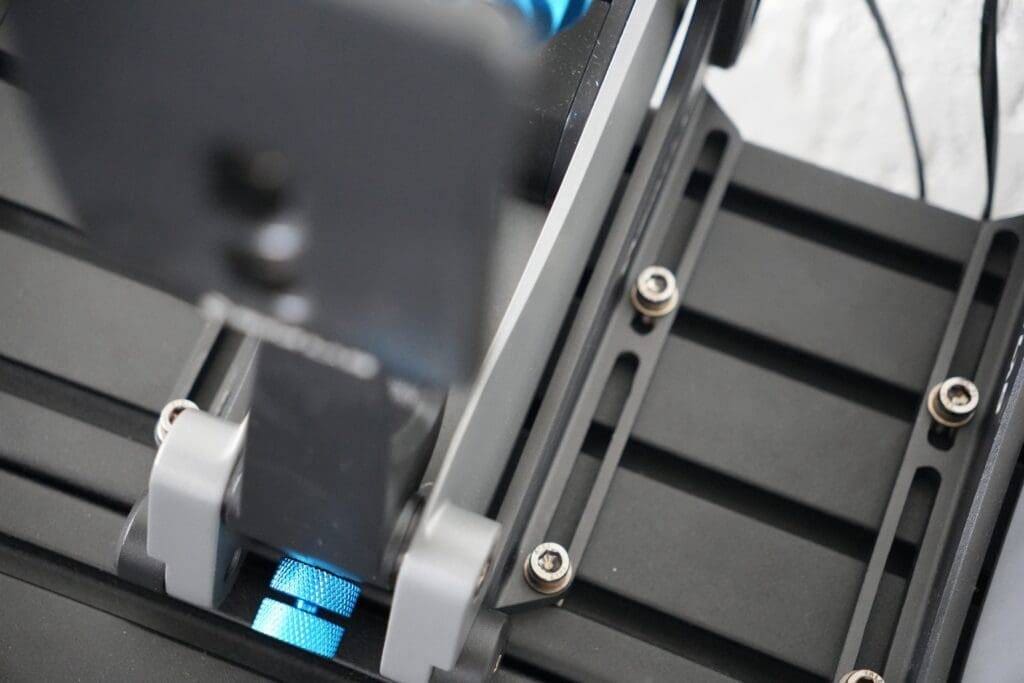
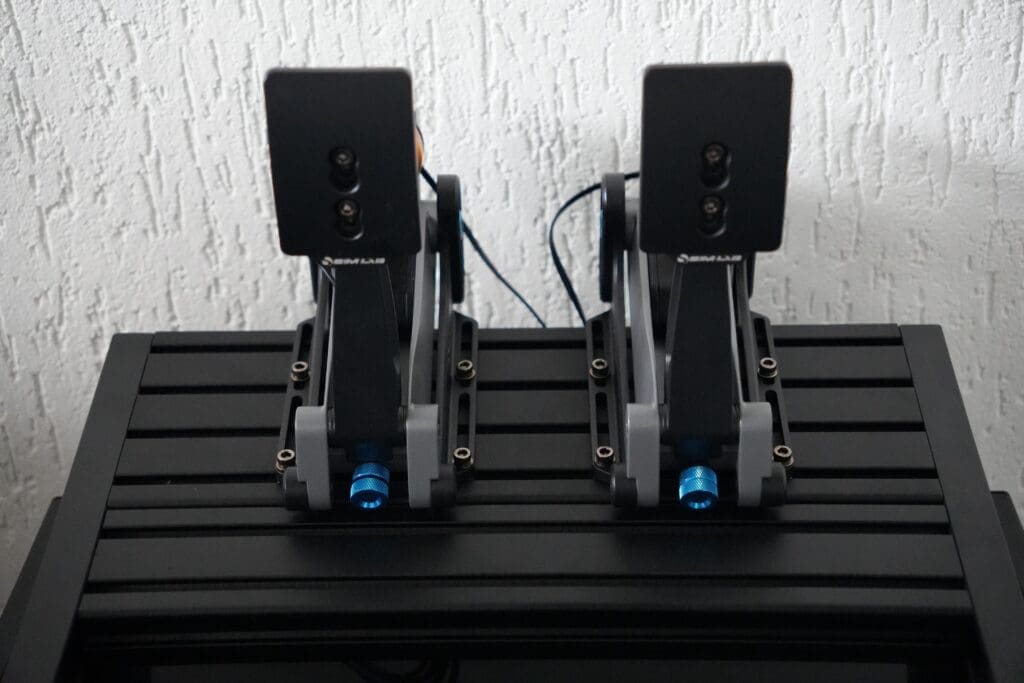
Installing the XP1 Pedals is surprisingly easy, which is exactly what you want when you have just received a new pedal set. In my case, I mounted the pedals directly on the pedal plate of my Sim-Lab P1X cockpit and a second set on my P1X Ultimate. Thanks to the universal bolt pattern and fasteners provided, this was literally a matter of aligning, tightening four bolts per pedal and done. Super simple and easy!
Attaching the controller box also went smoothly - although it is still a shame that it is plastic. You mount the box to the underside of your pedal tray or anywhere else on your rig with the bolts provided, depending on your preference of course.
Fortunately, Sim-Lab has thought carefully about cable management. You get both short and long cables included, making it easy to achieve a neat and efficient setup. Clever! Within ten minutes, I had the complete set assembled and connected. No fiddling, no surprises. Exactly as it should be with this kind of premium hardware. The actual fine-tuning and optimisation ends up taking a bit more time - you experience this naturally by racing and feeling in which areas you need to make adjustments. Fortunately, the ‘base’ setup is already extremely pleasant, allowing you to start off comfortable and competitive right away.
Sim Lab XP1 pedals
Before we really dive in, it is good to dwell on what makes these pedals so special. Because let's face it: the selection in the mid- to high-end pedal segment is huge. So what makes the Sim-Lab XP1 Pedals a set you should consider?
Build quality & unique features
Sim-Lab has not just released its own variant with these pedals - they have put out a product that is brimming with innovations and smart choices. From the exceptional build quality to the clever software integration, these are the features that make the XP1 a standout.
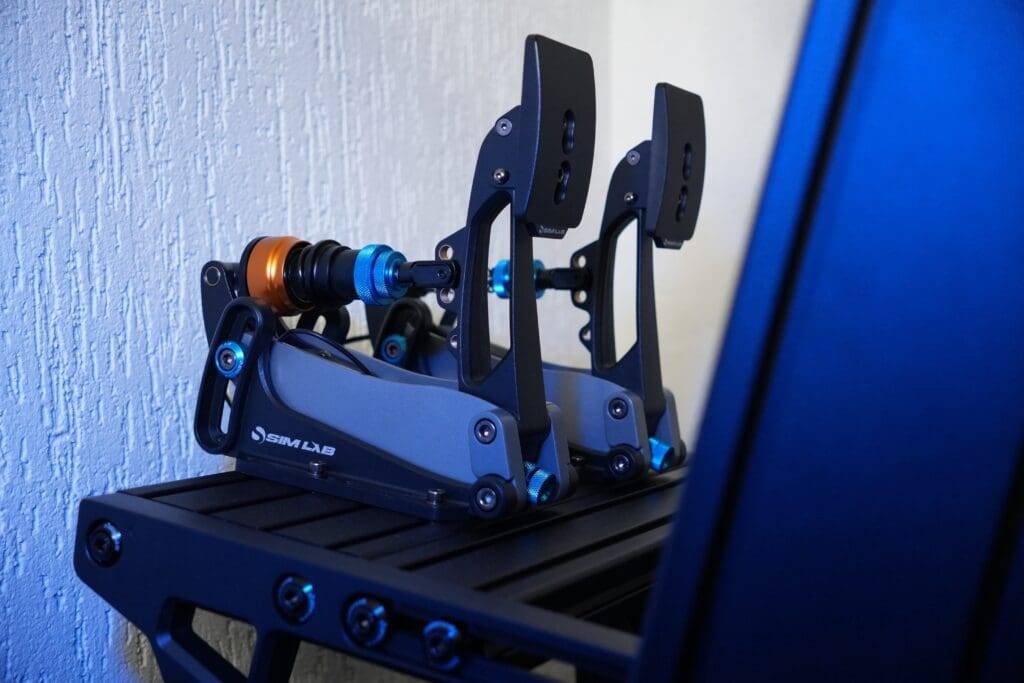
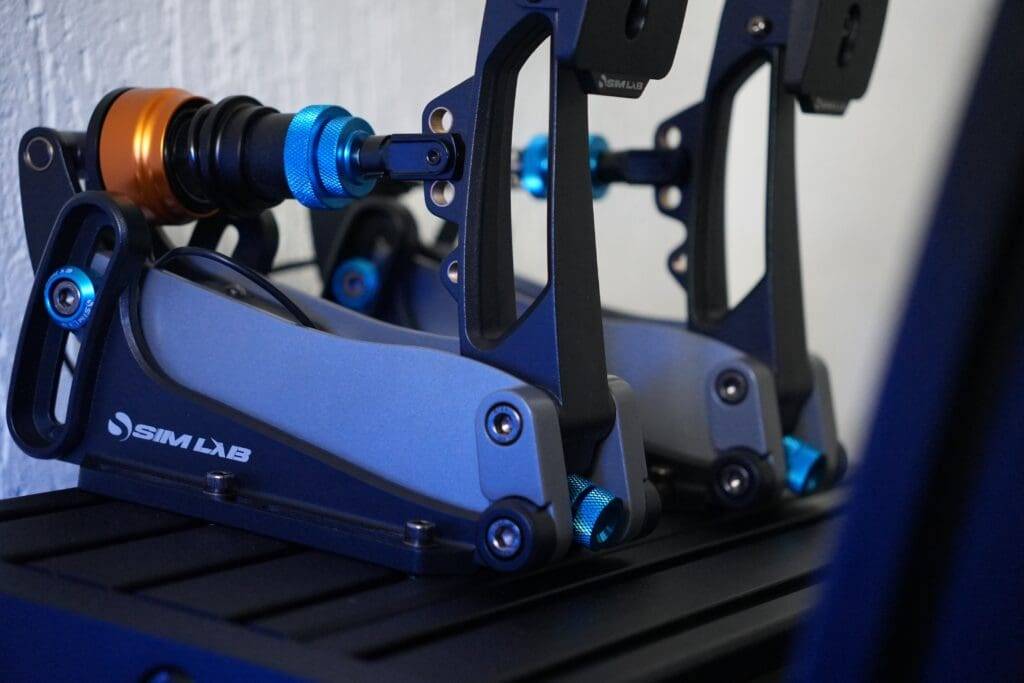
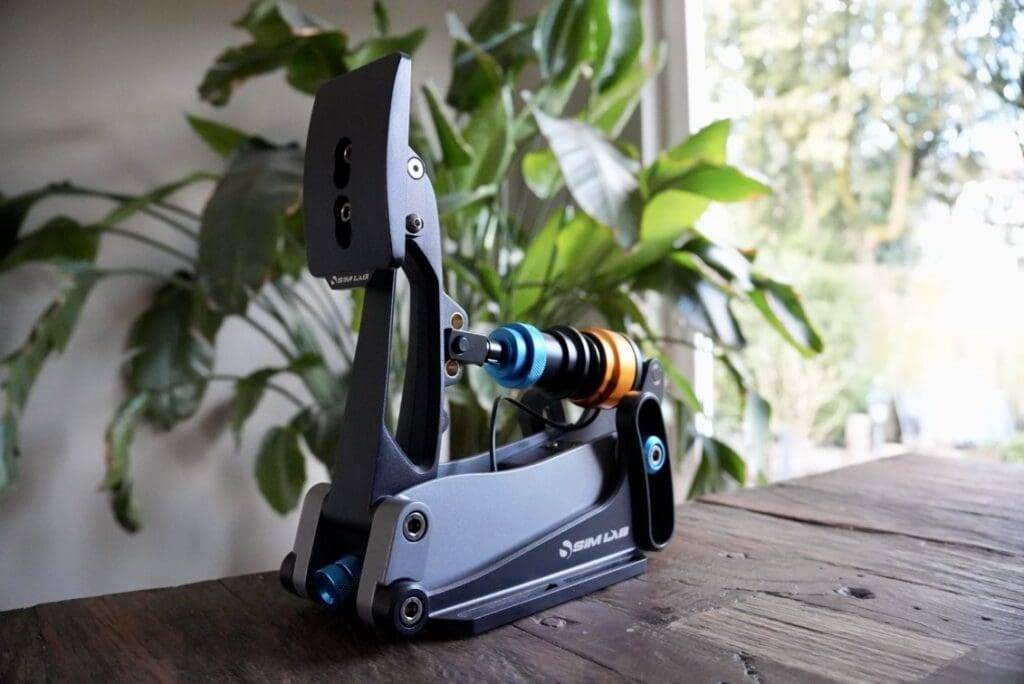
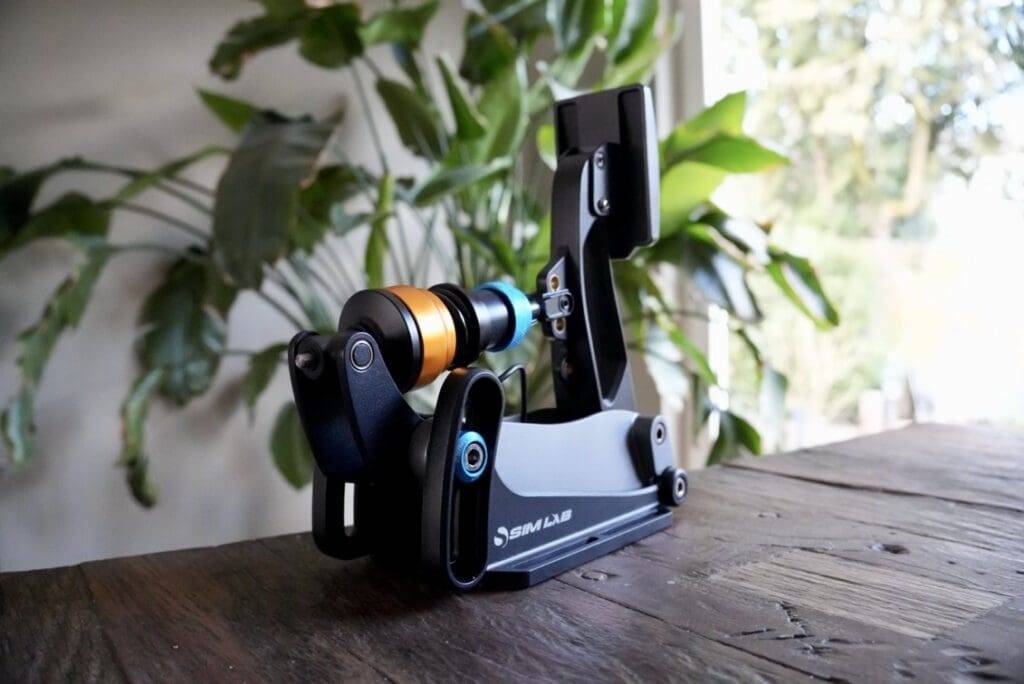
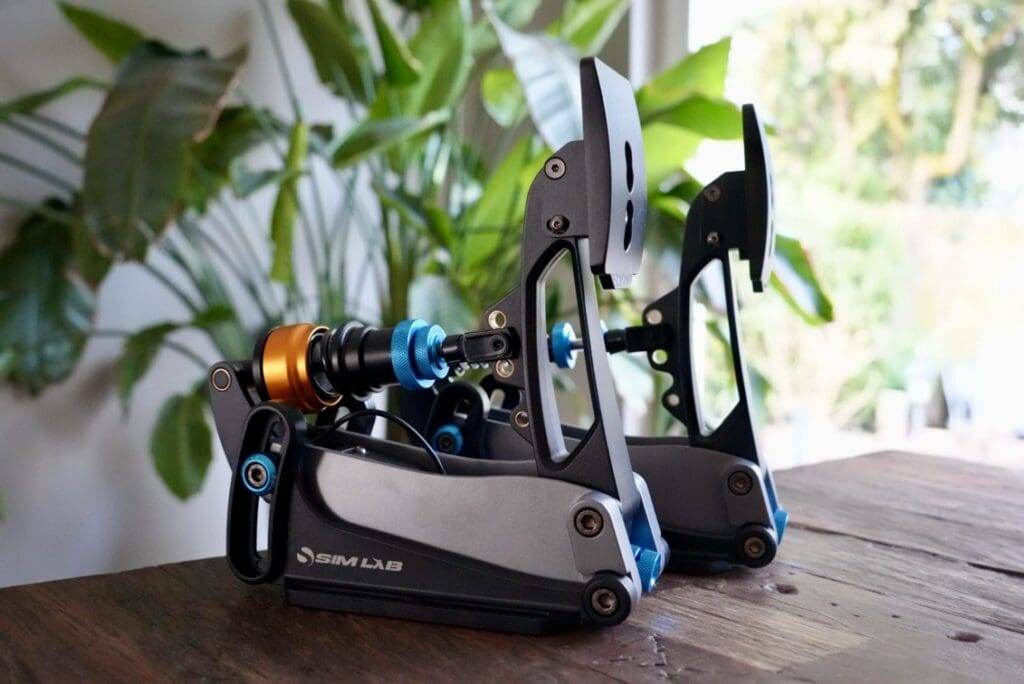
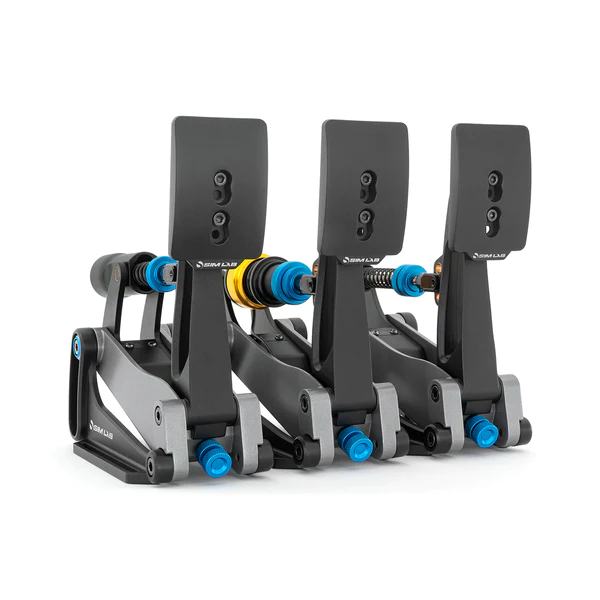
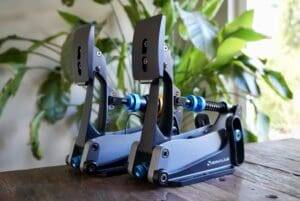
What immediately sets these XP1 Pedals apart from the competition - particularly the Heusinkveld Sprints Whether the Asetek Forte pedals - is the combination of full-metal construction with extreme adjustability. Sim-Lab has clearly listened to the wishes of sim racers. Every detail has been designed with durability, precision and adjustability in mind. The ease and simplicity with which you can adjust these pedals is extraordinary.
All-metal construction
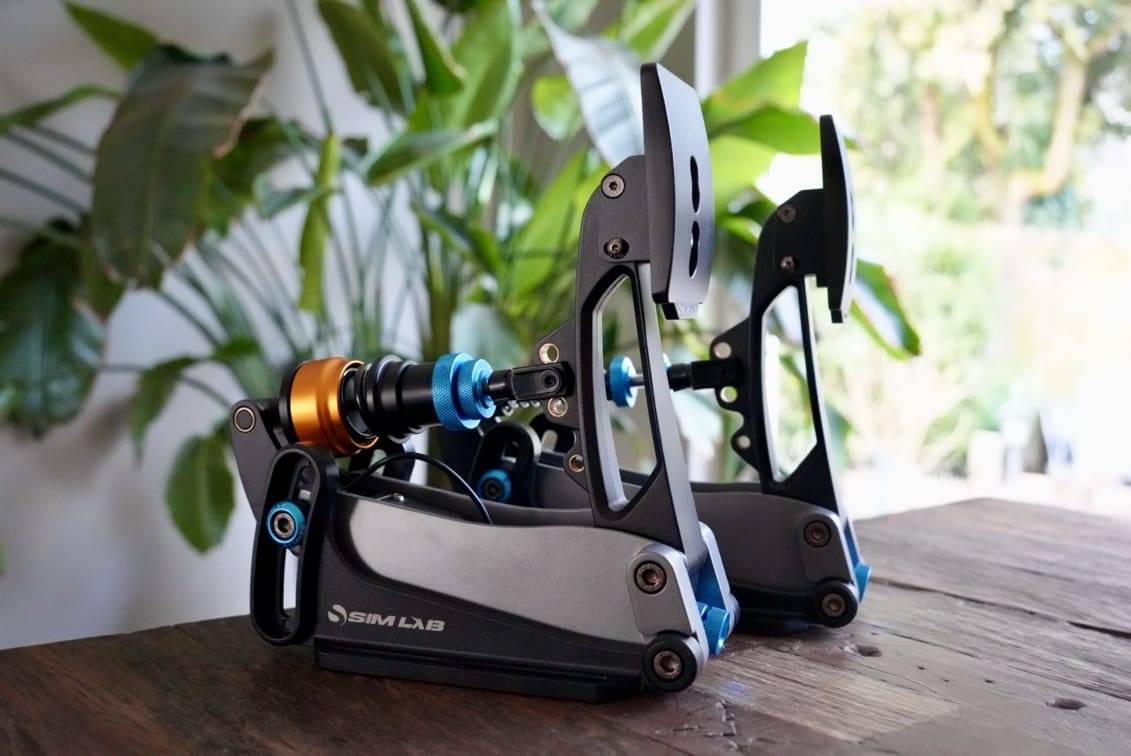
The frame, arms and pedal mechanism are made entirely of CNC-milled aluminium and stainless steel. No plastic parts (except, unfortunately, so the controller box 😉 ), no compromises in material selection. This gives the pedals a solid, professional feel and guarantees years of intensive use without weartage.
Design and colour scheme
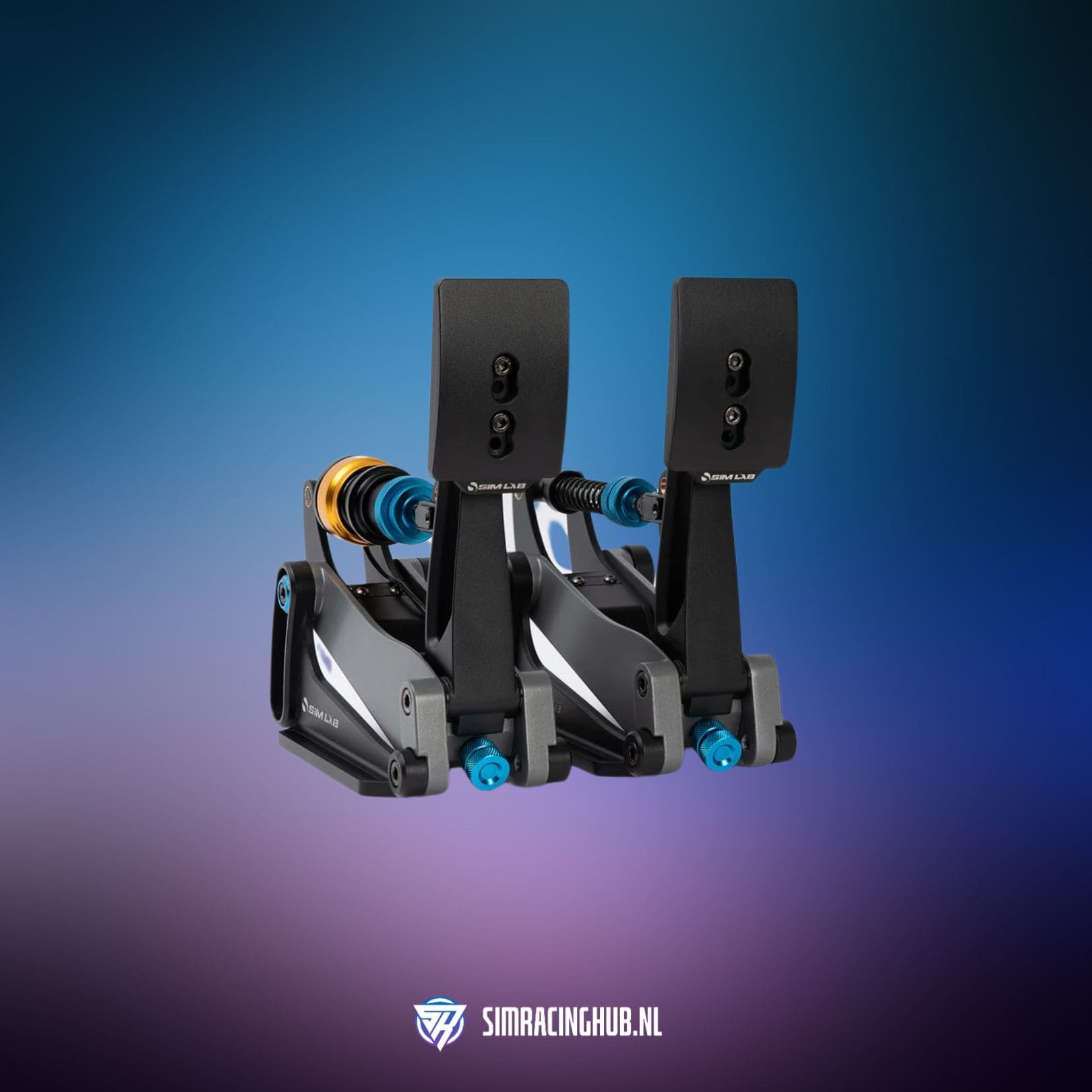
In terms of aesthetics, Sim-Lab offers you a choice of two variants: a striking blue-anodised finish or a more subdued black version. The blue version is visually distinctive and fits perfectly with other Sim-Lab products, such as the Sim-Lab XB1 hand brake, in which blue is often used as an accent colour. The black variant, on the other hand, is ideal for those who want to keep their setup sleek and uniform. In my opinion, a good choice by Sim-Lab to offer two colour options, this way there is something for everyone!
Both versions have the same high-quality finish and are taken care of in detail. The design is functionally minimalist: no superfluous lines or shapes, but a focus on accessibility, adjustability and robustness. Every element exudes that these pedals are designed for sim racers who go for performance without fuss.
While the design is subjective, I personally think these look good - even though my personal preference is more for an authentic, more realistic look-and-feel. At least in my new test rig, these look super good and add luster to the simplistic design of my cockpit.
In-line loadcell braking system
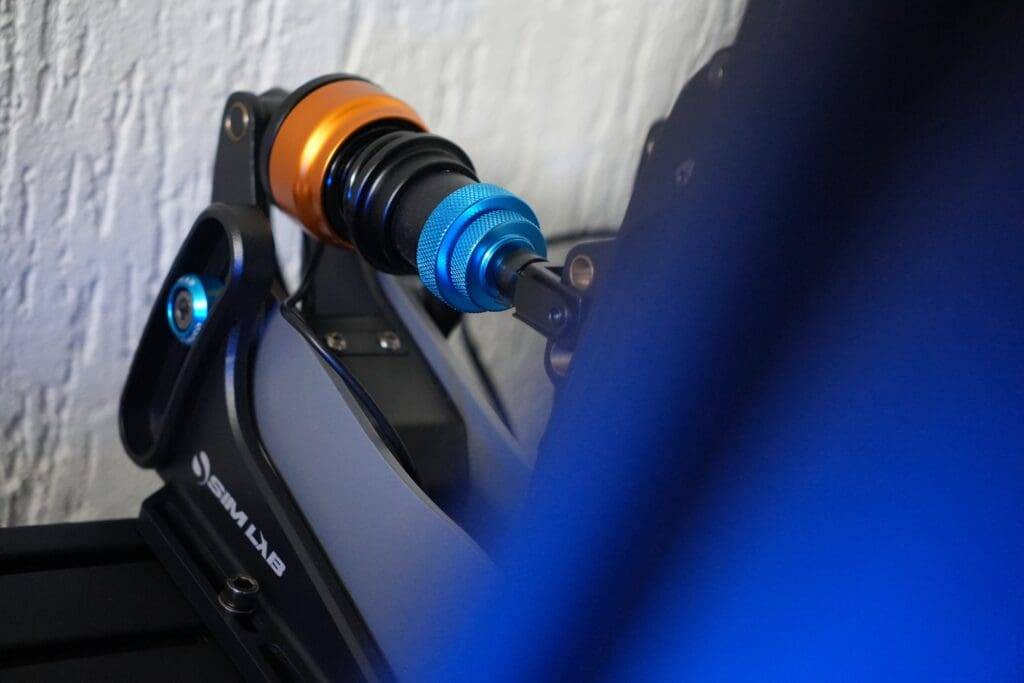
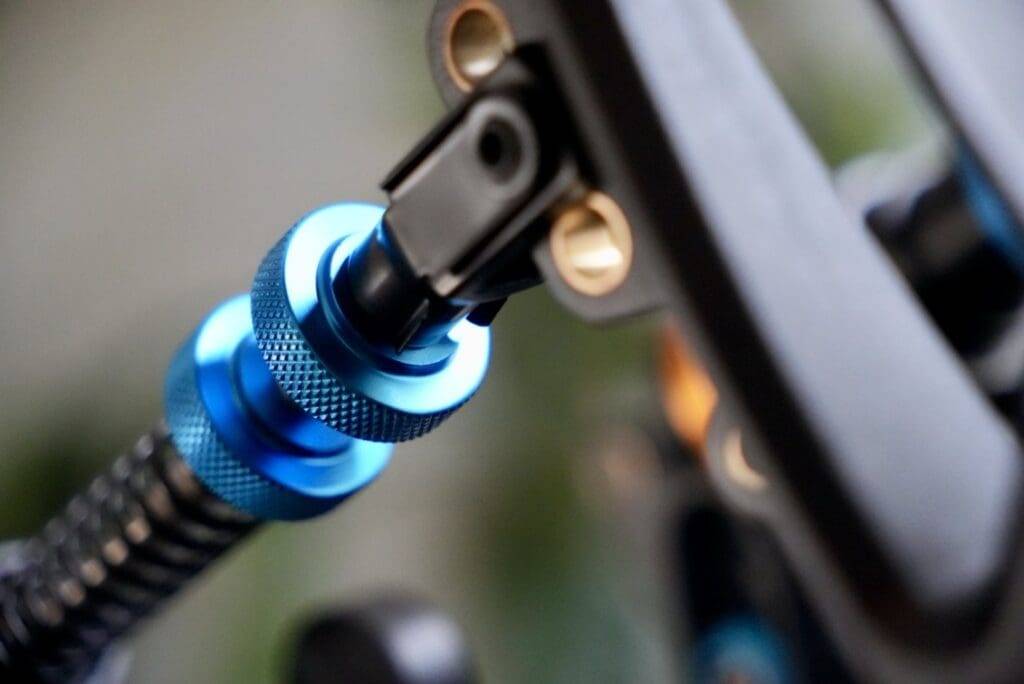
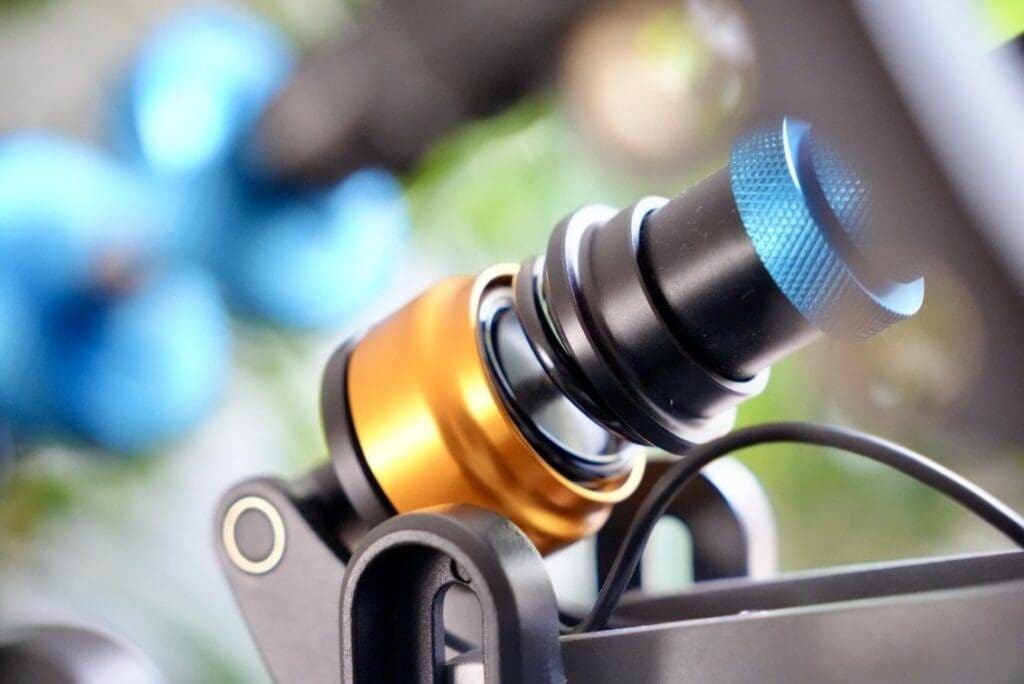
The XP1 uses a 200 kg loadcell that translates to 100 kg of pedal force - more than enough for even the most demanding riders. In doing so, the loadcell is ‘in-line‘ placed, meaning it is located exactly in the line of force of the pedal.
This intuitive design ensures direct and accurate measurement of pedal force, without the intervention of levers or indirect transmission. The result is a particularly linear and predictable braking feel. This is particularly evident in trail braking or modulating your brake pressure during corner entry. There are no dead zones or abrupt transitions - you feel exactly what you are doing, and that translates to more control and confidence on the track.
The innovative placement of the loadcell is striking and, as far as I am concerned, one of the big pluses of this pedal set. It makes it easier to stay consistent in your inputs, which is crucial if you want to race competitively. It provides a more consistent braking experience, resulting in better consistency. And that's exactly what you want!
Dual-stage brake feel
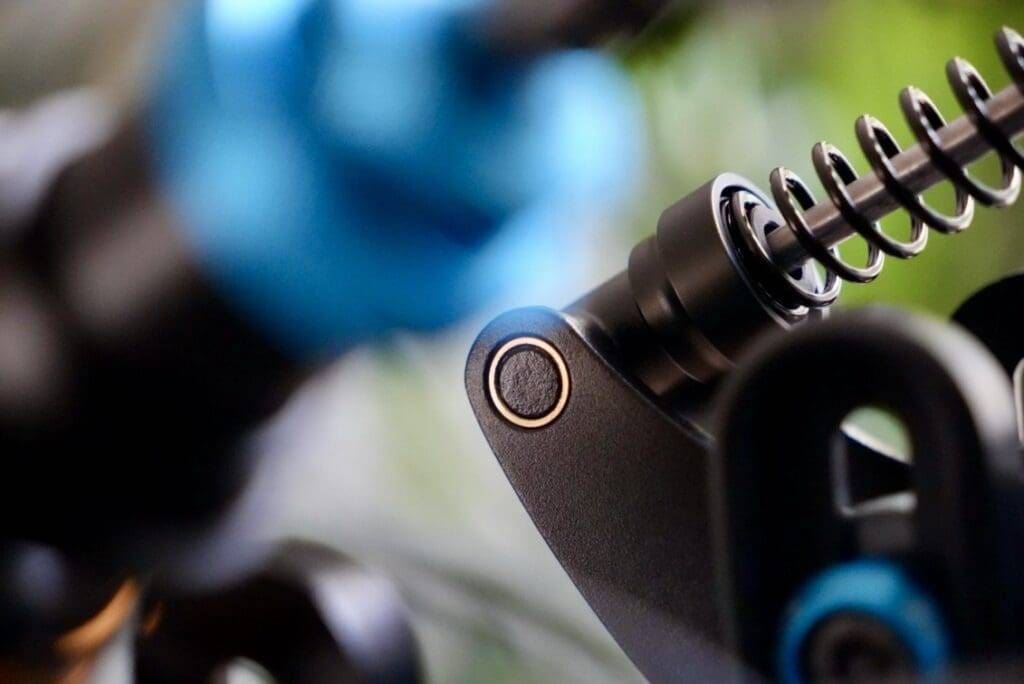
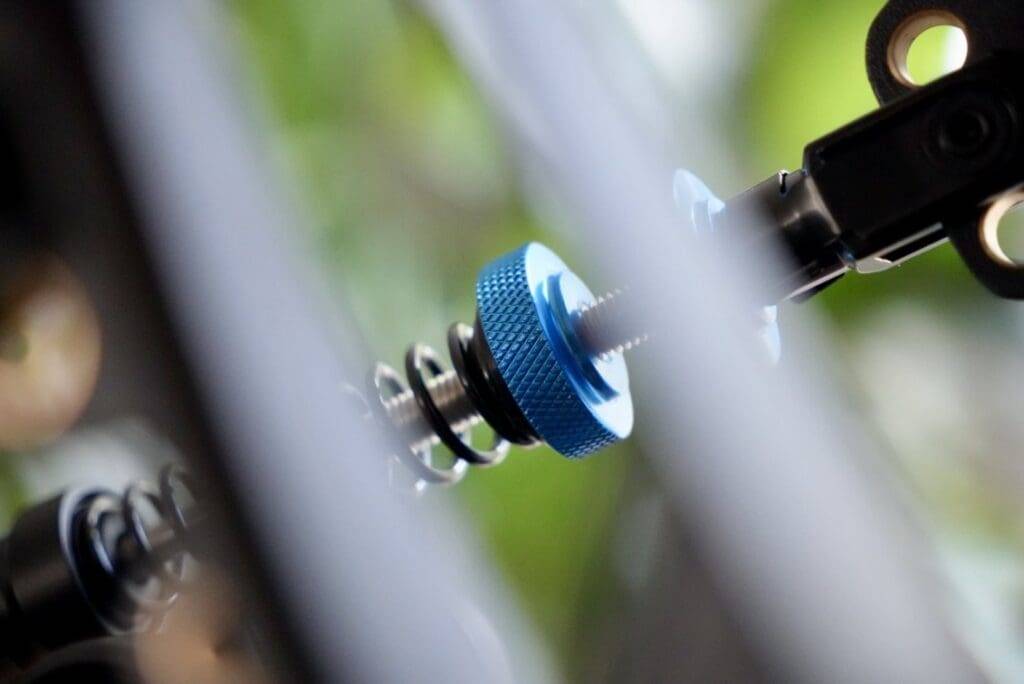
The brake pedal experience is divided into two distinct phases: a gentle, controlled initial compression, followed by a firm and progressive ending. When driving, you immediately notice how subtle the first part of the stroke is - perfect for neatly building up brake pressure. The second part offers just the firm resistance you need for deep braking with confidence. This dual-stage feel allows you to really ‘work’ the pedal. And this is something that makes these pedals so hugely accessible.
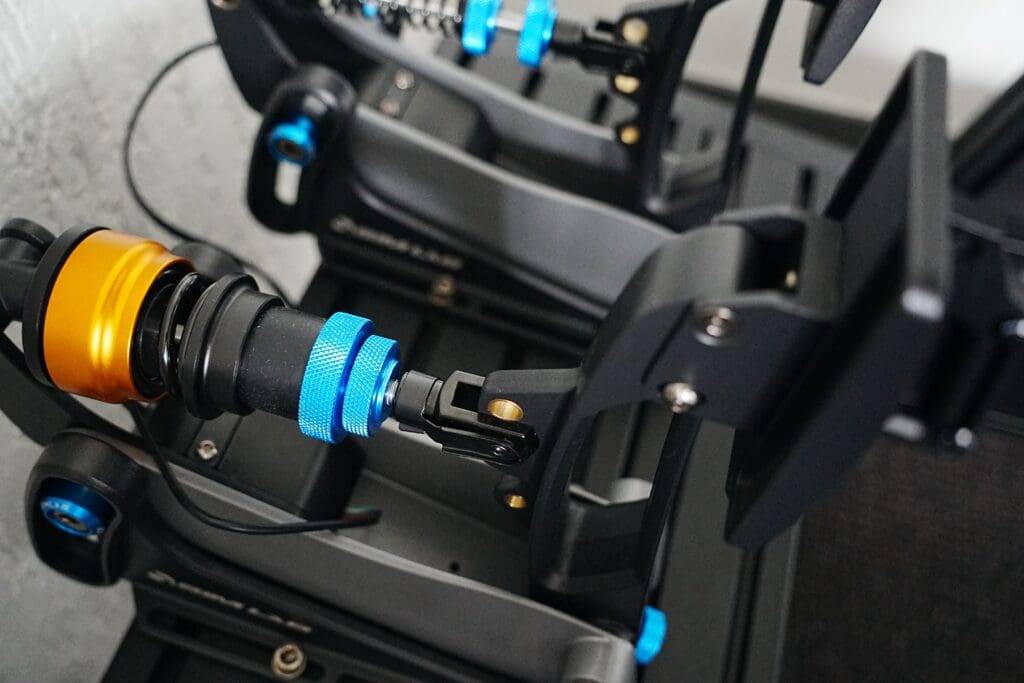
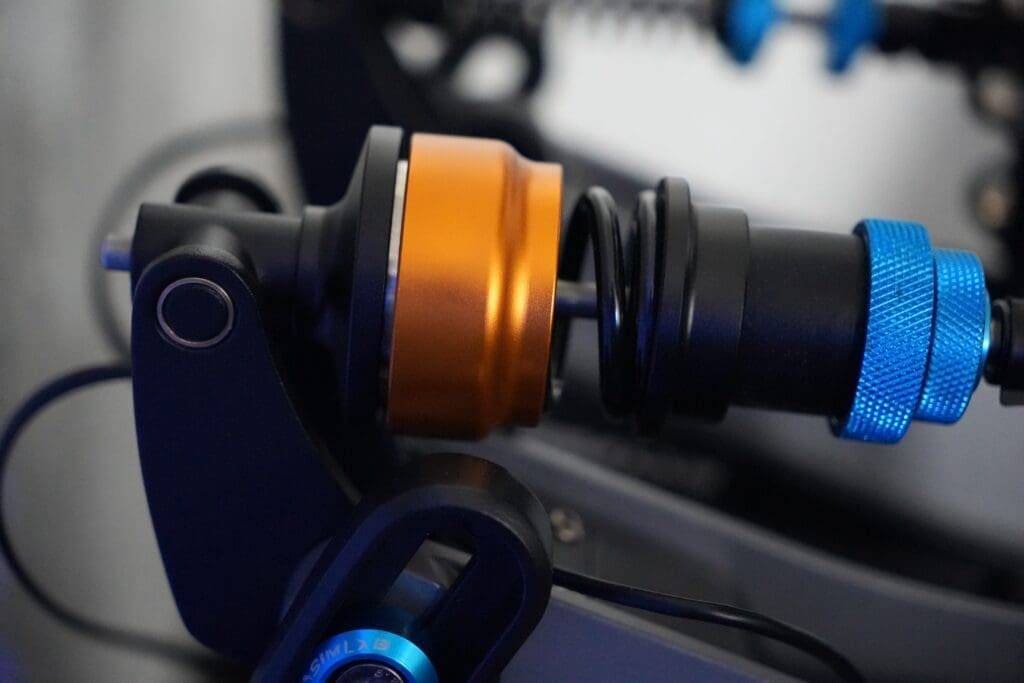
What I also like is that I could precisely adjust the degree of resistance and compression to my own preference. With the included elastomers and springs, you can vary from a soft braking feel to an extremely direct, almost aggressive braking response reminiscent of a Formula car. This makes the XP1 not only versatile, but also highly customisable to your driving style and the type of car you drive.
De Sim Lab XP1 pedalen zijn zo ontworpen, dat je hier super makkelijk aanpassingen aan kan doorvoeren. Dit maakt het ook ‘leuk’ en laagdrempelig om verschillende settings te proberen en te ontdekken wat bij jouw persoonlijke rijstijl past.
Hall-sensor technology on gas and clutch
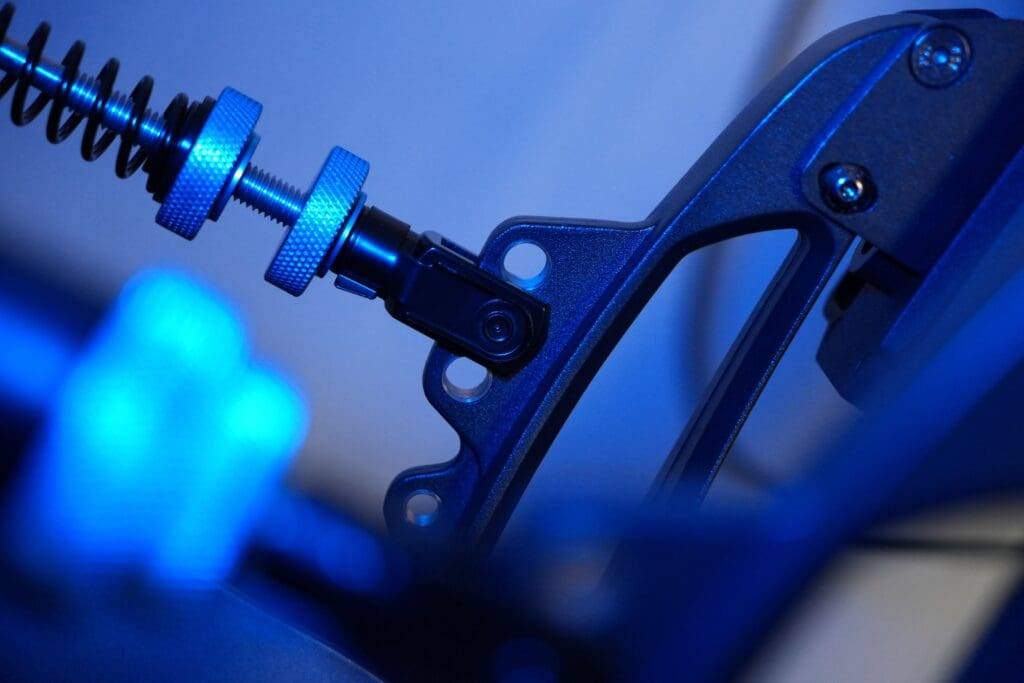
Both the accelerator pedal and optional clutch use hall-effect sensors, meaning there is no physical slijtage as with traditional potentiometers. The throttle response is smooth and precise, and again you can adjust the spring pressure to your own preference.
What other reviewers have noticed - and which I completely agree with - is how smooth and linear the throttle response feels. The hall sensor technology not only ensures reliability and durability, but also contributes to accurate input. In my own experience, I notice this especially when dosing throttle from slow corners or managing traction in GT3 cars: the pedal feels direct and remains consistent, even in long sessions. This confidence and feel in both the brake and accelerator pedals is fantastic and feels great to get the most out of your car and yourself every lap.
Adjustments
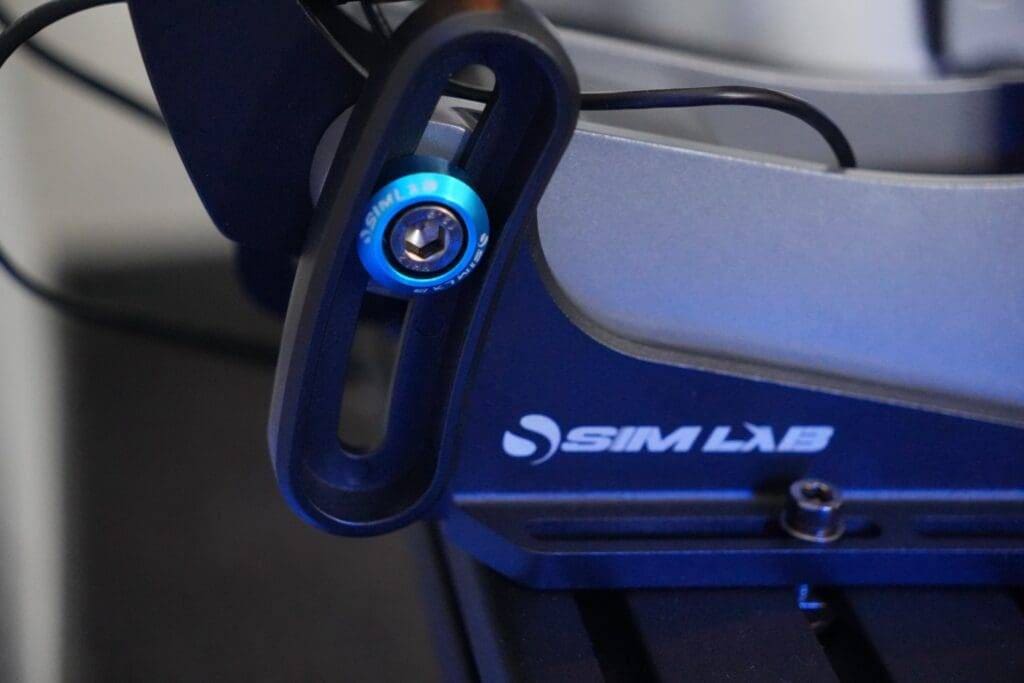
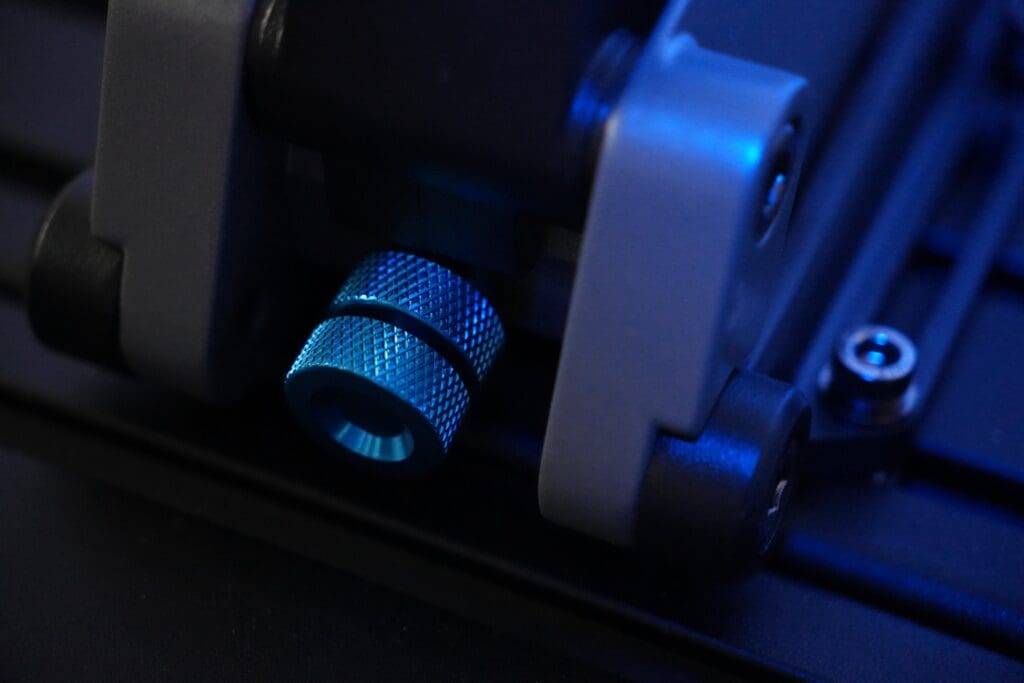
What really sets the Sim Lab XP1 Pedals apart from the competition is the sheer amount of adjustment options - and especially how intuitively it all works. Everything feels logical, solid and mechanically refined. Whether you want to change the pedal feel, optimise ergonomics or find the perfect setup for a specific racing class, the XP1 allows you to tweak everything exactly to your liking.
You can set:
- Pedal travel (the total stroke of the pedal)
- The inclination angle of each pedal
- Resistance via various springs and elastomers
- Preload of spring for initial pedal response
- The distance between the pedals and their lateral position
- Pedal surface height and tilt
- Pedal plate position on virtually any rig
What I personally really appreciate is how effortless these adjustments are. Everything is accessible and clear, with no complicated mechanisms or hidden screws. You don't need a manual to logically understand how to adjust something - it almost invites you to experiment. So during my tests, I tried different combinations, and the nice thing is that you feel an immediate difference. This helps you better understand what works for your riding style.
I think the Sim-Lab XP1 is one of the most customisable pedals in its class, but at the same time it never feels overly complex. And that is a rare combination where the pedals' modern and timeless design is also so easily customisable. This is truly a breath of fresh air. Chapeau!
Software: RaceDirector
A key part of the XP1 experience is the RaceDirector software - the platform that allows you to set all the input curves, deadzones and sensitivities of the pedals to your liking. In the RaceDirector software, you set all the settings of your Sim-Lab and GRID products, such as the GRID MPX V2 and GRID Brows.
The software is clear and functional, with no fuss. What immediately stands out is that you can work individually for each pedal and the changes are applied in real time. So you have instant feedback on what you change, which makes tuning very efficient.
However, you do need to update the firmware of the pedals from time to time, and Sim-Lab has a separate Firmware Updater tool made available. You have to download this tool separately and it runs outside the RaceDirector software. Personally, I find this an unnecessarily cumbersome solution. It often produces - on my PC - many Windows 11 error messages. Frustrating! Why not just integrate this firmware update directly into RaceDirector? That would make the process much more user-friendly.
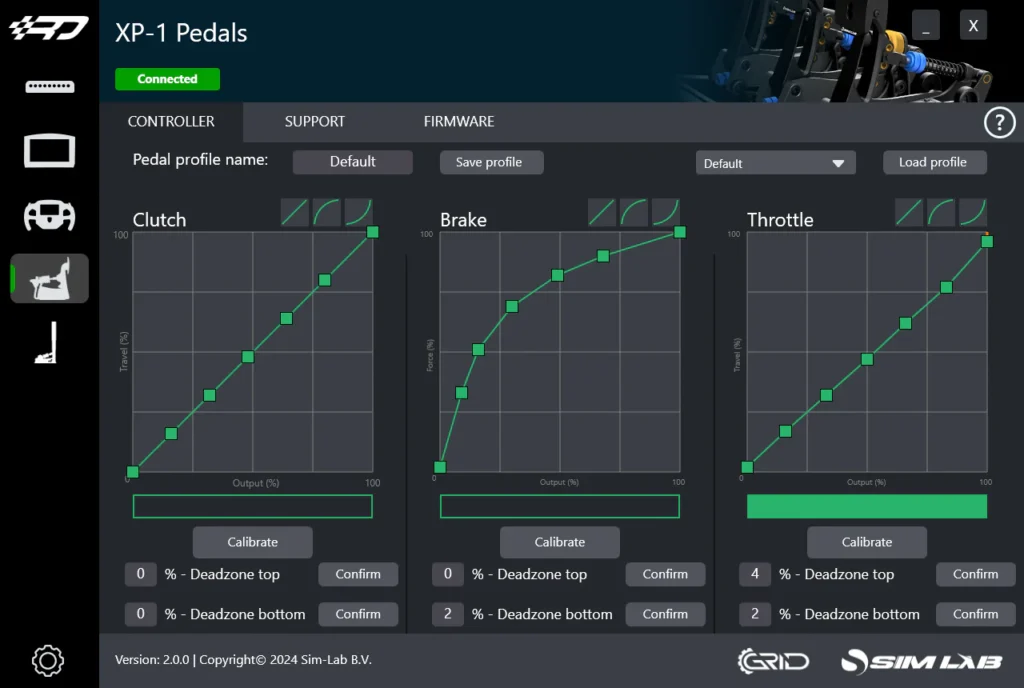
What I personally really like is that you can save multiple presets and easily switch between settings. For example, I have a separate setup for GT3 cars and a completely different one for open wheelers. The ability to quickly switch between these profiles makes using the software really powerful.
The software does not yet feel as comprehensive as, say, Heusinkveld's (with their SmartControl), but for most sim racers RaceDirector offers more than enough control to set your deadlines and linear or exponential response curves. All in all, the software is simple but effective.
User experience
In the end, of course, a pedal set is all about how they feel on the track. This is and always will be a personal experience and thus preference. Although I have tested many different types of pedals myself, I can honestly say: the XP1 Pedals do not disappoint in this. Indeed - they are among the most consistent and predictable pedals I have used so far. Whereas I normally have to get used to new or different pedals for some time, I didn't have that with these XP1 at all. I felt confidence right away.
During long stints in iRacing and endurance races in Automobilista 2, I noticed how much confidence these pedals give. The brake pressure is perfectly dosable, even when you are driving at the limit or want to apply just that little bit of trail braking. Especially the second part of the braking stroke - where most load cells often get a bit fuzzy - remains tight and controlled in feel. As a result, you can really make the most of each braking zone.
Sim Lab Discounts
The throttle performs just as convincingly. In GT3 cars, being able to manage traction when exiting corners is crucial and I never felt any unwanted spikes or inconsistencies here. The linear response makes it intuitive to apply just the right amount of throttle, which helped me stay consistent.
Of het nu brute hypercars zijn, Formule 1-wagens, FIA F4’s, GT3, GT4, LMP2’s of zelfs old-school GT1 monsters – de Sim Lab XP1 Pedals voelen in iedere setting direct vertrouwd. De pedalen geven je dat consistente, nauwkeurige rem- en gaspedaalgevoel dat je nodig hebt om vol vertrouwen te pushen. Tijdens mijn sessies op circuits als de legendarische Nordschleife, het altijd technische Spa-Francorchamps of de verrassend uitdagende Lausitzring in Raceroom merkte ik hoe goed de XP1 zich aanpast aan elke rijstijl en auto. Het maakt niet uit in welke sim of klasse ik me bevond – deze pedalen gaven me altijd het gevoel volledig in controle te zijn.
What is striking is how comfortable and stable these pedals continue to feel during longer race sessions. Nothing shifts, nothing creaks - it feels like everything is one integrated whole with my rig. I haven't experienced a second of fatigue or irritation, even after hours of racing.
What I do miss - especially compared to my other cockpit where I use VNM Pedals - is built-in haptic feedback. Once you get used to subtle vibrations that simulate ABS or grip loss, for example, it feels strange when that's not there. It just adds that extra layer of perception and control. So this is an upgrade I will undoubtedly add to these XP1 Pedals.
Advantages and disadvantages
Of course, no product is perfect. And so the XP1 also has pros and cons. It is good to include these in your consideration if you are considering an investment in this price range.
Advantages
- Solid construction
- High comfort and stability
- Choice of blue or black finish
- Very extensive and intuitive adjustment options
- Modern aesthetic design
Cons
- Plastic controller box feels cheap and out of tune
- Firmware updater is a separate tool
If you are looking for an extremely solid pedal set with unprecedented adjustment capabilities, the Sim-Lab XP1 pedals are an absolute must. Combining high-quality materials with smart engineering, the XP1 Pedals guarantee years of performance. The Sim Lab XP1 Pedals offer everything you need to race with confidence, control and fun.
Conclusion: are the Sim-Lab XP1 Pedals worth it?
The Sim-Lab XP1 Pedals position themselves in a notable segment within the sim racing market. Compared to brands like Fanatec or Moza, you might not get three pedals or baseplate as standard for a similar price - and that might seem less attractive at first glance. But that comparison ignores what these pedals really offer.
Because once you actually use the XP1, you understand the difference. The build quality is of another level, the adjustment options are unrivalled and the driving feel is downright impressive. These are pedals built for sim racers who want to fine-tune to detail, for whom control and consistency are paramount.
Looking at premium competitors like Heusinkveld or Asetek, Sim-Lab offers with the XP1 a fully-fledged alternative that even manages to surprise in several areas - and at a lower price. For anyone looking to get the most out of their simulator, without going straight towards €1000+ sets, this is a particularly attractive option.
The pedals are beautifully designed, modular and deliver performance that makes an immediate difference on the track. This is also reflected in the rating scores: with a average of 4.8 out of 5 On partial aspects such as build quality, adjustability and user experience, the XP1 is among the absolute top in its class.
Whether these are the best loadcell pedals on the market? That depends on your preferences, of course, but as far as I'm concerned, they are definitely one of the strongest all-round choices at the moment. Especially for pedals in this price category.
And that is a particularly handsome achievement from Sim-Lab, knowing that the XP1 are the first set of pedals from this Dutch manufacturer. As far as I am concerned, the Sim-Lab XP1 pedals a hit. And surely that is something to be proud of!
Sim-Lab XP1
Convinced of the power of the XP1 Pedals?Then consider making your purchase through our affiliate link. You pay exactly the same, but help our platform grow and ensure that we can continue to make honest and in-depth reviews in the future. Your support makes all the difference - thank you!
- 5% OFF
 SIMRACINGHUB5Copied
Sim Lab XP1 Pedals now with 5% discount!
Sim-Lab XP1 Pedals Review: Premium Performance, Maximum Control | SimRacingHub.nl
Sim-Lab XP1 Pedals review: Find out if these fully adjustable loadcell pedals with premium performance and maximum control are the best choice for your sim rig.
Product Brand: Sim Lab
Product Currency: EUR
Product Price: 399
Product In-Stock: InStock
4.8
Pros
- Solid construction
- High comfort and stability
- Choice of blue or black finish
- Very extensive and intuitive adjustment options
- Modern aesthetic design
Cons
- Plastic controller box feels cheap and out of tune
- Firmware updater is a separate tool
Have any thoughts?
Share your reaction or leave a quick response - we'd love to hear what you think!
-
 0
0
-
0
-
0
-
0
-
0
-
0


 Nederlands
  Deutsch
  English (UK)
  Français